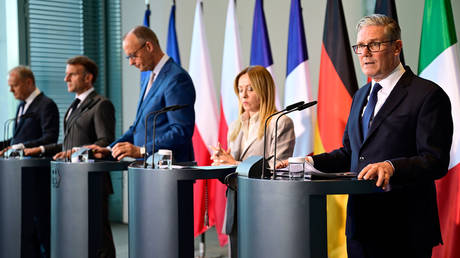
Ed Miliband polarizes opinion faster than almost anyone else in Westminster. To his supporters, he is a visionary green pioneer who wrote the world's first legally binding climate framework. To his detractors, he is an overly zealous ideologue pushing costly energy transformations without caring about the immediate hit to ordinary wallets.
Love him or hate him, you can't ignore his trajectory. After spending years in the political wilderness following his 2015 leadership defeat, Miliband rebuilt his profile as a relentless policy grinder. He returned to government in 2024 as Energy Security and Net Zero Secretary, before stepping into the Foreign, Commonwealth and Development Office in July 2026. This promotion turned a domestic climate architect into a global climate diplomat. Discover more on a connected issue: this related article.
Understanding how Miliband operates requires looking past the caricature. He isn't just a soundbite politician. He is a policy obsessive who treats climate legislation like a personal crusade.
The Early Blueprint That Started It All
Back in 2008, Gordon Brown appointed Miliband as the head of the newly minted Department of Energy and Climate Change. Almost nobody outside policy nerds cared about the portfolio at the time. Miliband used the anonymity to push through the Climate Change Act 2008. More reporting by The Washington Post highlights similar perspectives on the subject.
That single piece of legislation made the UK the first country on earth to establish legally binding carbon reduction targets. It set a precedent that every subsequent administration had to reckon with, whether they liked it or not.
Critics argued the targets were arbitrary and economically reckless. Miliband countered that failing to plan for a warming planet was the real financial gamble. This tension defines his entire career. He believes the state must actively force structural market changes rather than waiting for private enterprise to move organically.
The Wilderness Years and the Podcast Pivot
Losing the 2010 general election as Labour leader hurt. Losing the 2015 election ended his tenure at the top. Most politicians fade away or cash out on the corporate lecture circuit after suffering those kinds of defeats.
Miliband did something unexpected. He became a backbencher who actually did constituency work in Doncaster North and chaired local climate commissions. He also leaned into modern media, co-hosting the policy podcast Reasons to be Cheerful starting in 2017.
That project changed his public image. Instead of looking stiff on a debate stage, he sounded like an enthusiastic nerd geeking out over municipal solar panels and insulation schemes. It humanized him. When the Labour Party returned to power in 2024, Miliband wasn't viewed as a ghost from past election failures. He was seen as the resident expert ready to execute a complex green energy transition.
From Domestic Grid to Global Stage
When Prime Minister Keir Starmer shuffled the cabinet in July 2026, moving Miliband to the Foreign Office raised eyebrows. Domestic energy policy and international diplomacy sound like different jobs, but they share a core mechanic. You cannot fix domestic grid security without international supply chains, trade deals, and geopolitical alignment.
Miliband stepped into his foreign secretary role with a distinct mandate. Climate security is national security. Extreme weather events, shifting agricultural zones, and resource scarcity drive global migration and conflict. By placing a seasoned climate crusader at the head of British foreign policy, the government signaled that environmental diplomacy takes center stage alongside traditional defense alliances.
Yet, managing global climate negotiations is vastly different from passing acts through Parliament. International summits require cajoling reluctant superpowers and balancing development aid with carbon reduction demands. Developing nations want financial backing from wealthy historical polluters, and Britain faces tight fiscal constraints. Miliband has to convince international counterparts to speed up green transitions while domestic voters worry about their monthly utility bills.
What People Get Wrong About His Strategy
People often assume Miliband acts purely out of environmental idealism. That misses his economic argument. He consistently frames green energy as a massive industrial opportunity rather than an act of charitable self-denial.
During his stint driving energy security policy, the focus centered heavily on state-backed clean energy investments, solar rollouts for public buildings, and grid upgrades. The strategy relies on a simple premise. Nations that master renewable manufacturing and infrastructure will own the economic high ground of the twenty-first century. Countries that drag their feet will buy expensive fossil fuels from abroad and lose industrial competitiveness.
Of course, theory and execution rarely align smoothly. Energy grids are notoriously difficult to upgrade without triggering local planning backlashes over pylons and wind farms. Consumers want lower bills today, even if long-term wind and solar projects promise cheaper power down the road.
Miliband's career proves that persistence beats popularity in modern governance. He spent nearly two decades obsessing over a single existential file while other politicians chased short-term headlines. Now, as a heavyweight player on the international stage, his blueprint for green survival faces its ultimate stress test against real-world geopolitics.