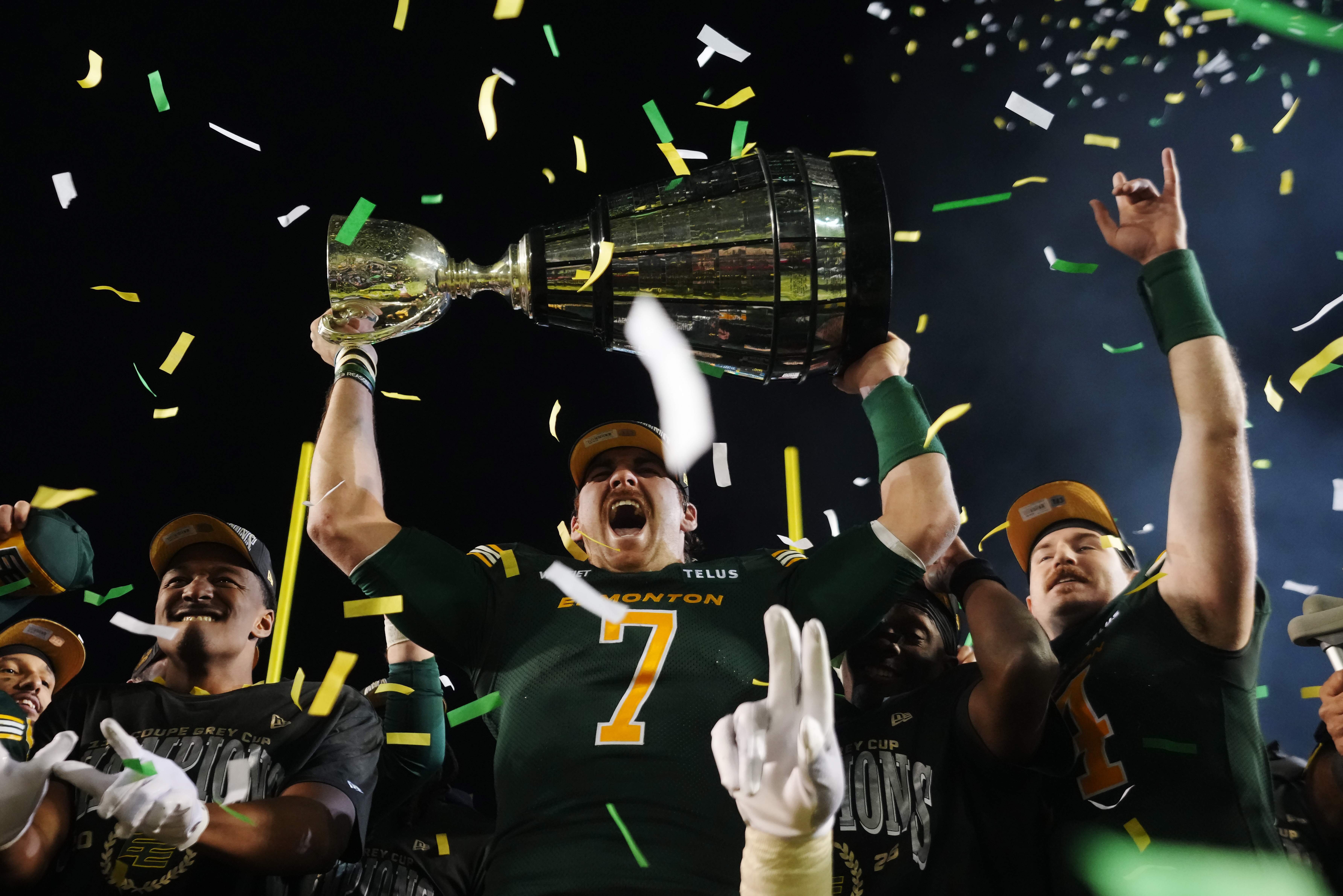
The Edmonton Elks captured the Grey Cup with a hard-fought 37-30 victory over the Montreal Alouettes, surviving a late fourth-quarter push to secure Canadian football's ultimate prize. In a championship showdown defined by momentum swings, physical trench warfare, and clutch special teams execution, Edmonton built an early two-score cushion before holding off a relentless Montreal comeback bid in the final two minutes. The victory ends a prolonged championship drought for the franchise and cements a remarkable organizational turnaround built on defensive discipline and opportunistic offense.
Standard game recaps stop at the box score. They list the touchdowns, tally the passing yards, and hand out the trophy. That surface-level reading misses the real story of how this championship was actually won. Beneath the final 37-30 margin lies a masterclass in tactical adjustment, roster construction, and the unique strategic pressures of three-down football.
The Trench Battle That Decided the First Half
Championship games in the Canadian Football League rarely hinge on trick plays. They are won in the murky, violent space between the tackles, where offensive lines either establish rhythmic control or surrender the pocket to relentless pass rushes. From the opening kickoff, Edmonton dictated the terms of engagement along the line of scrimmage.
Montreal entered the contest with a reputation for disguising coverage shells and bringing delayed blitzes from the boundary side. Against lesser offensive lines, that pressure forces quarterbacks into hurried throws and bad reads. Edmonton neutralized the threat immediately. By utilizing heavier personnel packages on first down and leaning heavily on inside zone runs, the Elks forced Montreal's linebackers to step forward rather than drop into passing lanes.
It worked. Every gain of five or six yards on first down created manageable second-and-short situations, stripping Montreal's defensive coordinator of his favorite exotic pressure packages. When you face second-and-three in the CFL, the entire playbook remains open. The defense cannot pin its ears back and rush the passer without risking a quick slant or an outside pitch that easily moves the chains.
Montreal's defensive front grew visibly fatigued by the middle of the second quarter. Defensive tackles who had dominated opposing centers all season found themselves locked in stalemates, unable to generate interior push. That subtle erosion of leverage allowed Edmonton's quarterback to step cleanly into his throws, picking apart the soft spots in Montreal's zone coverage.
Why Montreal's Second-Half Adjustments Nearly Worked
A lesser coaching staff would have folded down two scores at halftime. Montreal did the opposite. The Alouettes emerged from the locker room having completely rewritten their defensive script, shifting from passive zone coverage to aggressive press-man at the line of scrimmage.
The logic was simple. If Edmonton wanted to win with timing routes and quick hitches, Montreal would disrupt the receivers at the snap and force the quarterback to hold the ball for an extra beat. That extra beat is an eternity in professional football.
Suddenly, Edmonton's offense stalled. Three-and-outs replaced sustained drives, and field position began tilting sharply toward the Alouettes. Montreal's offense, stagnant for much of the first thirty minutes, finally found its rhythm by attacking the middle of the field with crossing routes and utilizing their running back as a safety valve out of the backfield.
When Montreal punched in a touchdown early in the fourth quarter to cut the deficit to a single possession, the entire energy inside the stadium shifted. The Alouettes were playing downhill, feeding off turnover momentum and forcing Edmonton's defense to stay on the field for extended stretches. In three-down football, a seven-point lead feels like nothing when the opposing offense finds its tempo.
The Hidden Role of the Waggle and Pre-Snap Motion
To fully appreciate how both offenses generated explosive plays in the second half, you have to look at the geometry of the CFL field. The wider, longer playing surface—combined with unlimited pre-snap motion for receivers—creates defensive nightmares that simply do not exist in four-down American football.
Montreal exploited this space brilliantly during their comeback surge. By sending three receivers into full-speed motion toward the line of scrimmage before the snap, the Alouettes forced Edmonton's defensive backs into impossible communication binds. If a cornerback hesitates for a fraction of a second while passing off a crossing receiver, a ten-yard gain instantly turns into a forty-yard sprint down the sideline.
Edmonton countered with their own pre-snap discipline. Rather than allowing their defensive backs to get caught flat-footed, the Elks began rotating their safeties late in the play clock, masking their true coverage until the ball was snapped. It was a high-wire act. One miscommunication meant giving up a game-tying touchdown, yet the secondary held its nerve when the pressure peaked.
Special Teams and the Invisible Yardage War
Ask any veteran CFL coach what separates a Grey Cup champion from a runner-up, and the conversation inevitably turns to the kicking game. With only three downs to gain ten yards, starting field position dictates offensive survival. Beginning a drive on your own 45-yard line versus your own 20-yard line fundamentally alters play-calling probability.
Throughout the night, Edmonton won the invisible yardage war. Their punt coverage unit consistently pinned Montreal deep in their own territory, forcing the Alouettes to march eighty or ninety yards against a disciplined defense. Even when Edmonton's offense stalled in the third quarter, booming punts and disciplined lane integrity prevented Montreal from flipping the field easily.
Consider the single-point rouge, a uniquely Canadian rule that often baffles casual observers until it decides a championship. In a game decided by seven points, every single point tallied on missed field goals or punts through the end zone carried immense psychological weight. Edmonton's willingness to take points whenever they crossed the 40-yard line ensured that Montreal always needed a touchdown, rather than a simple field goal, to draw even in the final minutes.
Anatomy of the Final Drive
With just over three minutes remaining and the score sitting at 37-30, Montreal took possession with a chance to orchestrate a legendary championship-tying drive. The stadium buzzed with the specific tension that only exists when a season comes down to a handful of snaps.
Montreal moved the ball efficiently across midfield, converting a critical third-and-two with a quarterback sneak that barely cleared the marker. The Alouettes' sideline erupted. Two plays later, a crisp out-route pushed them inside Edmonton's 35-yard line, well within striking distance of the end zone.
Then came the sequence that defined the game. Facing second-and-seven from the 31-yard line, Montreal dialed up a play-action pass designed to isolate their top slotback against a linebacker. Edmonton's defensive coordinator anticipated the look. Instead of bringing the blitz Montreal expected, Edmonton dropped eight defenders into coverage, flooding the intermediate zones where the Alouettes wanted to throw.
The quarterback held the ball. He looked left, saw nothing, and tried to reset his feet to check down to his running back. By the time he turned his hips, Edmonton's defensive end had beaten the left tackle around the edge, forcing an errant throw that sailed harmlessly out of bounds.
On third down, Montreal had no choice but to go for the end zone. The Alouettes aligned in an empty backfield, spreading five receivers across the width of the field to stretch Edmonton's secondary horizontally. At the snap, Edmonton brought a delayed safety blitz right up the A-gap. The unblocked rusher forced the quarterback to step up into a collapsing pocket, where he released a desperate heave toward the back corner of the end zone. Two Edmonton defenders converged on the ball simultaneously, batting it down to the turf and sealing the 37-30 victory.
What This Victory Means for the Franchise and the League
Winning a Grey Cup does more than fill a trophy case; it validates an entire organizational philosophy. For years, Edmonton struggled to find stability both on the sidelines and in the front office, cycling through coordinators and quarterbacks while watching rival franchises hoist the trophy.
The turnaround did not happen by accident, nor was it built on a single superstar acquisition. Instead, Edmonton invested heavily in Canadian talent along the offensive line and in the secondary—the exact areas where CFL rosters are won and lost due to ratio requirements. By developing domestic players who could start and thrive without forcing tactical compromises elsewhere on the roster, the Elks built a sustainable competitive advantage.
For Montreal, the loss stings precisely because they proved they belonged on the same field until the final whistle. Scoring thirty points in a championship game is usually enough to win. The Alouettes' offense showed remarkable resilience, and their coaching staff made the exact tactical adjustments required to erase a multi-score deficit. Ultimately, they simply ran out of clock against an opponent that refused to make the catastrophic mistake.
The Thin Margin Between Dynasty and Heartbreak
Look closely at the box score of any classic championship game, and you will find three or four isolated plays that swung the outcome. A dropped pass on second down. A penalty that negated a thirty-yard punt return. A tackle made half a yard short of the first-down marker.
Edmonton's 37-30 triumph over Montreal will be remembered for its explosive plays and dramatic fourth-quarter tension, as it should be. Yet the true lesson of the night lies in preparation and composure. When the stadium noise reached a deafening roar and Montreal's offense threatened to steal the trophy in the final seconds, Edmonton did not panic or abandon its principles. They trusted their defensive structure, won their individual matchups at the point of attack, and closed the door when it mattered most.