Justice delayed isn't just justice denied. In the remote expanses of Western Australia, an eight-year gap between the first allegations and actual accountability for a high-ranking cleric laid bare everything that remains broken in institutional self-regulation.
When former Broome Bishop Christopher Saunders was finally convicted and sentenced to prison for sexually abusing young Indigenous men, the public relief was mixed with a heavy dose of frustration. How did a man stationed in one of the most isolated dioceses in the world evade criminal consequences for nearly a decade while rumors swirled?
The Anatomy of an Eight Year Lag
Let's look at the timeline. Initial claims against Saunders surfaced years before police laid formal charges in 2024. During that window, the Australian Catholic Church pointed to modern protocols born from the brutal lessons of the Royal Commission into Institutional Responses to Child Sexual Abuse. Archbishop Timothy Costelloe, president of the Australian Bishops Conference, defended the church's hands-off stance, arguing that once law enforcement steps in, religious bodies must step back to avoid contaminating criminal investigations.
Sounds reasonable on paper. But theory and reality rarely match when power imbalances are baked into the geography.
The Broome Diocese covers an area larger than France, yet supports a tiny population where the church holds immense social and economic sway. Many local Catholics are Indigenous Australians, a community historically conditioned to distrust state authorities due to systemic marginalization. When victims tried speaking up early on, the friction between local police constraints and church gatekeeping created a vacuum.
Why the Institutional Defense Falls Flat
Church leadership insists that the eventual breakthrough came because independent investigators built trust where police initially stalled. The Vatican itself launched an internal probe in 2022, eventually handing a 200-page dossier to Western Australia Police that breathed new life into the criminal case.
Critics aren't buying the self-praise. If internal church structures possessed the means to gather compelling evidence, why did it take years of media pressure and independent reporting—such as investigations by outlets like 7NEWS—to force actual movement? Relying on an internal ecclesiastical tribunal to do the heavy lifting before handing notes over to cops creates an uncomfortable dynamic. It allows religious hierarchies to manage the narrative, control timelines, and protect institutional reputation long before a courtroom ever sees the files.
Furthermore, the nature of the offenses—involving adult Indigenous men who were groomed with alcohol, cigarettes, and cash inside church-owned properties—highlighted a blind spot in how historical canonical laws treated abuse outside strict pedophilia definitions.
What Needs to Change Right Now
Defending a sluggish process by hiding behind the complexity of an investigation doesn't cut it anymore. If religious institutions genuinely want to transform into safe environments, transparency cannot be a retroactive luxury deployed only after a jury delivers a guilty verdict.
Accountability requires immediate external reporting, zero administrative grace for accused leaders, and active dismantling of the geographic and social isolation that protects predators in remote dioceses.
Stop accepting administrative patience as a virtue when survivors spend years waiting for the system to care. True reform means cutting response times from years to days.
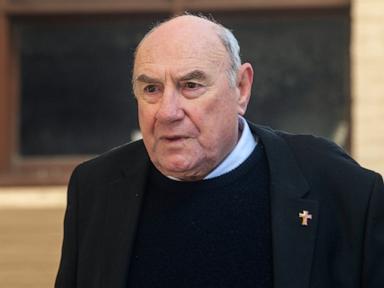
Former bishop of Broome behind bars | 7NEWS
This news segment details the sentencing of former Bishop Christopher Saunders and reflects on the years of investigative reporting required to bring the case to light.