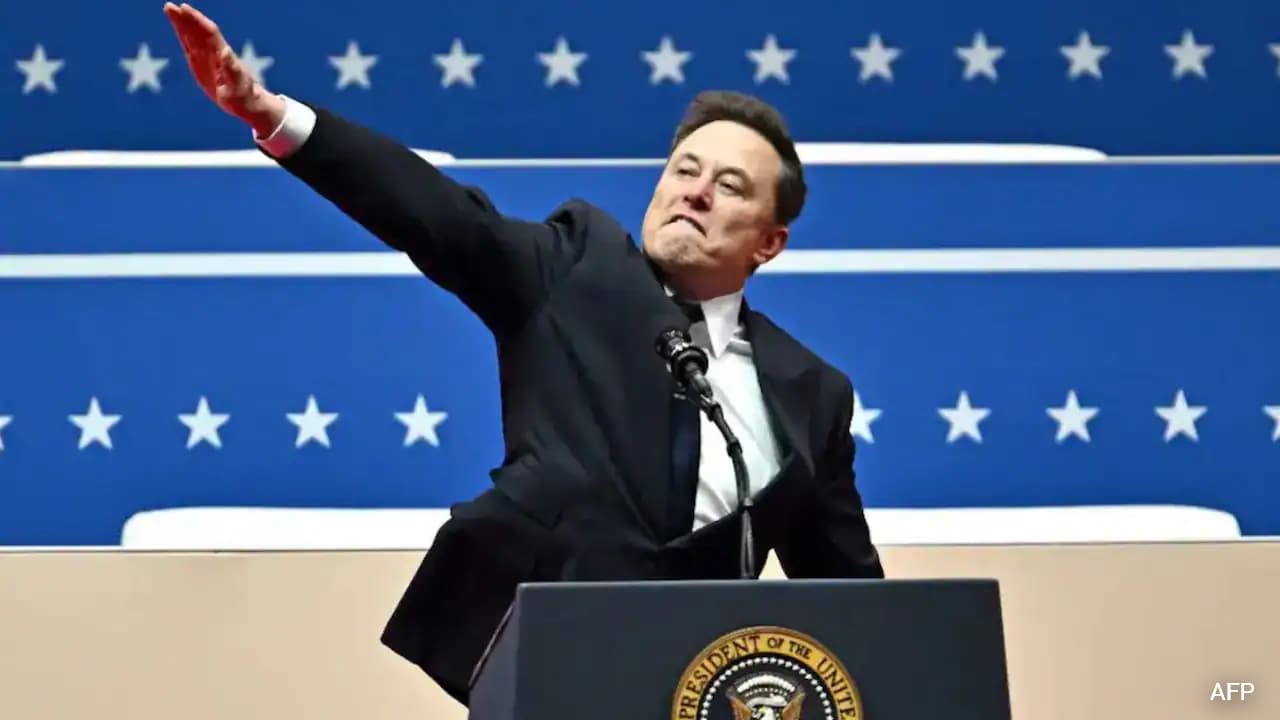
Elon Musk dropped roughly Rs 4,700 crore—around $560 million—into the 2026 midterm elections, and it might turn out to be the most expensive boomerang in modern corporate history.
When you're the richest person on the planet, writing a nine-figure check feels like pocket change. Yet in Washington, money doesn't just buy influence; it paints a massive target on your back. Following the November 2026 midterm results, where Democrats secured key congressional oversight leverage despite massive Republican spending, Musk's sprawling empire of federal contracts, subsidies, and regulatory waivers is suddenly looking remarkably exposed.
I've watched Silicon Valley billionaires try to play Washington power games for two decades, and they almost always make the same mistake. They treat politics like a hostile takeover or a software rollout, forgetting that lawmakers don't operate on quarterly earnings calls. They operate on memory and subpoena power.
The Anatomy Of A Rs 4,700 Crore Political Bet
Let's look at the sheer scale of what just happened. Spending Rs 4,700 crore on a non-presidential election cycle isn't normal political giving. Even by post-Citizens United standards, where billionaire megadonors routinely bankroll super PACs, Musk's 2026 midterm blitz shattered historical records for individual political expenditure.
He didn't just write checks from the sidelines. Through his political action committees—most notably America PAC—Musk turned his personal brand, his algorithm on X, and his checkbook into a centralized campaign apparatus. He funded ground games in swing districts, poured millions into Senate battles, and openly attacked Democratic incumbents across key states.
Here's why that matters now. When you spend quietly through trade associations or dark money groups, you maintain plausible deniability. When you put your face on the campaign trail and drop the equivalent of Rs 4,700 crore in public filings, you personalize every single political loss your opponents suffer.
Democrats didn't just lose races where Musk spent heavily; they watched him actively mock their candidates to over 200 million followers on X. Now that the dust has settled and Democratic committee chairs hold investigative gavels heading into the 2027 congressional session, nobody on Capitol Hill is feeling particularly forgiving.
Why SpaceX And Starlink Are Suddenly Vulnerable
If Musk only sold consumer gadgets, congressional anger wouldn't mean much. People buy iPhones or Teslas regardless of what a senator thinks.
SpaceX is a completely different story.
SpaceX isn't just a private rocket company; it's essentially an outsourced arm of the U.S. government. Between NASA's Artemis lunar contracts, Pentagon national security launches, and the rapidly expanding Starshield military satellite network, SpaceX relies on billions of dollars in federal appropriations. According to public procurement databases like USAspending.gov, SpaceX has secured well over $15 billion in federal contracts over the past decade.
Democratic lawmakers on the House Armed Services Committee and the Senate Commerce Committee don't need to pass new laws to make Musk's life miserable. They just need to start asking tough questions about single-source dependency.
For years, defense officials quietly worried that the U.S. government had become overly reliant on one company—and one unpredictable CEO—for orbital access. Musk's massive midterm spending gave congressional Democrats the exact political cover they needed to turn those quiet worries into formal investigations.
Expect immediate scrutiny on three fronts:
- National security clearances and foreign ties. Lawmakers have already raised eyebrows over Musk's business dealings in China and his private conversations with foreign leaders. A hostile congressional committee can easily demand Pentagon reviews of whether his top-secret clearances remain appropriate.
- Contract diversification mandates. Congress holds the purse strings. Armed Services committees can insert language into the annual National Defense Authorization Act requiring the Pentagon to split launch contracts more aggressively with competitors like United Launch Alliance or Blue Origin, cutting directly into SpaceX's margins.
- Starlink regulatory bottlenecks. The Federal Communications Commission (FCC) controls spectrum allocation and orbital slots. While independent in theory, FCC commissioners pay very close attention when powerful Senate committee chairs start holding public hearings on satellite interference and rural broadband subsidies.
Honestly, SpaceX's engineering is unmatched. Nobody else can land orbital boosters at that cadence. Yet in Washington, technical superiority doesn't protect you when appropriators decide your company poses a governance risk.
Tesla Faces A Regulatory Minefield On Autopilot And Tax Credits
While SpaceX deals with Pentagon contracts, Tesla faces an even more immediate threat from federal regulators.
For years, Tesla's sky-high valuation hasn't been based on its current auto margins. It's been built on the promise of Full Self-Driving (FSD), Cybercabs, and artificial intelligence. To turn those promises into actual revenue, Tesla needs federal regulators to play ball.
Specifically, Tesla needs the National Highway Traffic Safety Administration (NHTSA) to approve autonomous vehicles without steering wheels or pedals, and it needs the Department of Transportation to create a unified federal framework for self-driving cars.
Look at what's happening instead. NHTSA has already opened multiple investigations into Tesla's Autopilot and FSD software following crashes involving emergency vehicles and low-visibility conditions. With Democrats flexing oversight muscle in Congress, lawmakers can haul NHTSA administrators before committees every single month to demand why Tesla's software is still permitted on public roads without stricter geofencing or hardware upgrades.
Then there's the financial lifeblood of Tesla's domestic sales: the $7,500 EV tax credit established under the Inflation Reduction Act.
It's a bizarre irony. The very legislation that subsidizes Tesla's American buyers was passed entirely by Democrats without a single Republican vote. While Republicans have repeatedly threatened to repeal those EV credits, Democrats are now eyeing ways to tighten eligibility rules—specifically around domestic union labor requirements and stricter battery mineral sourcing—that would disproportionately squeeze non-union automakers like Tesla while favoring legacy Detroit manufacturers.
The X Factor And Antitrust Headwinds
You can't talk about Musk's midterm spending without talking about X.
Throughout the 2026 cycle, critics and campaign finance watchdogs argued that Musk used X's algorithmic amplification as an unreported in-kind political contribution. Under Federal Election Commission (FEC) rules, corporations are barred from making direct contributions to federal candidates, though media exemptions exist for traditional news outlets.
Does a social media platform owned by a billionaire who personally donates Rs 4,700 crore qualify for a press exemption when he uses the platform to boost his preferred candidates? That's a legal gray area that Democratic lawmakers and state attorneys general are itching to test in court.
Beyond campaign finance complaints, X faces severe antitrust and consumer protection pressure from the Federal Trade Commission (FTC). The FTC has been investigating whether X violated its 2022 consent decree regarding user data privacy and security after Musk gutted the company's trust and safety teams.
If the FTC decides to seek massive civil penalties or structural injunctions against X, Musk will find very few allies on Capitol Hill willing to go to bat for him. Even some moderate Republicans who gladly took his super PAC money during the campaign trail have privately expressed frustration over the chaos his online rhetoric creates for their legislative agendas.
What Most People Miss About Billionaire Political Spending
There's a common misconception that billionaires spend hundreds of millions on elections because they expect a direct, dollar-for-dollar return on investment. People assume Musk spent Rs 4,700 crore just to get a few tax breaks or regulatory favors.
That's far too simplistic. When you're worth hundreds of billions of dollars, money stops being about accumulation and starts being about control and ideology. Musk genuinely believes he's fighting an existential battle against what he calls the "woke mind virus" and government overreach.
From an investor's perspective, however, his motives don't change the balance sheet risk.
I've analyzed corporate governance risks across dozens of founder-led tech companies, and "key man risk" usually refers to what happens if a visionary CEO gets hit by a bus or burns out. Musk invented a brand-new category of key man risk: self-inflicted political retaliation.
Think about how institutional investors view Tesla right now. Pension funds and asset managers don't care about partisan culture wars. They care about predictable regulatory environments and steady cash flows. When a CEO turns himself into the primary villain of half the U.S. government, every environmental permit for a new Gigafactory, every FDA clinical trial approval for Neuralink, and every FAA launch license for Starship becomes a potential political football.
You could already see the friction earlier in 2026 when the Federal Aviation Administration delayed Starship test launches over environmental and water-deluge reviews, prompting Musk to threaten lawsuits against the agency. Multiply that friction across seven different federal agencies over the next two years, and you start to see the real cost of that Rs 4,700 crore political bet.
How To Track The Fallout As An Investor Or Observer
If you're watching Tesla stock, following space industry developments, or simply trying to understand where American campaign finance goes from here, don't get distracted by daily social media drama. Watch the boring bureaucratic mechanisms where real power gets exercised.
Start paying attention to these specific indicators over the coming months:
- Committee subpoena schedules in early 2027. Watch the House Oversight Committee and Senate Commerce Committee dockets. If Musk or Tesla executives are called to testify under oath about FSD safety or Starlink contracts, that signals coordinated institutional pushback rather than empty campaign rhetoric.
- Department of Defense launch allocations. Look at the next round of National Security Space Launch (NSSL) awards. Any shift in percentage share away from SpaceX toward Blue Origin or Rocket Lab will tell you immediately whether Pentagon brass are responding to congressional pressure.
- NHTSA recall classifications. Pay close attention to whether NHTSA forces Tesla into physical hardware retrofits rather than allowing over-the-air software updates to resolve safety investigations. Hardware recalls cost billions; software patches cost almost nothing.
- Institutional shareholder proposals. Watch Tesla's upcoming proxy statements for governance proposals demanding independent board oversight of CEO political activities and corporate risk management.
Musk proved he has the cash to bankroll a national political operation on his own. Now he's about to learn an older, harder Washington lesson: winning an election cycle is expensive, but surviving the regulators you just declared war on costs a whole lot more.


