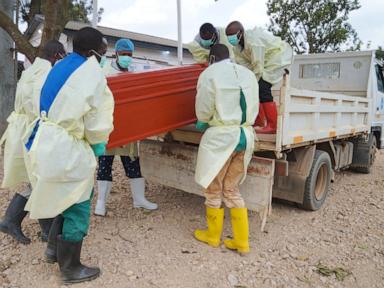
Every single time an outbreak headline drops, the playbook remains identical. The media screams about an epicenter. Global health bodies rush shipments of experimental jabs to the front lines. Health workers roll up their sleeves for photo ops, and the public breathes a collective sigh of relief, assuming science has once again outrun catastrophe.
It is theatre. Expensive, well-intentioned, and fundamentally useless for stopping the wildfire currently burning through the village.
When public health agencies announce that vaccinations are officially underway for frontline workers in an outbreak zone, they are celebrating an achievement in logistics while ignoring a catastrophic failure in epidemiology. By the time vaccines arrive, get cleared for deployment, and actually go into arms, the virus has already outpaced the intervention. We are trying to outrun a runaway freight train on a tricycle, and then patting ourselves on the back because we brought a helmet.
The Incubation Trap That Everyone Ignores
Let us talk about the timelines that bureaucrats prefer to obscure. The standard narrative suggests that dropping a ring vaccination strategy or mass prophylactic campaign into an infected district acts as a biological firewall.
It does not.
Filoviruses do not wait for cold-chain transport to arrive via bush plane or motorcycle courier. They move through human contact, traditional burial rites, and overcrowded clinics long before symptoms present loudly enough to trigger a response. When a worker gets vaccinated on day one of an emergency campaign, their immune system needs roughly ten to fourteen days to mount a protective antibody response. Meanwhile, the pathogen has a incubation period that can span up to three weeks, and community transmission has already doubled.
Vaccinating your way out of an active, raging outbreak is like installing a smoke detector after the house has already burned to the foundation. It protects the next generation of structures, perhaps, but it does zero for the building currently turning to ash.
I have watched international aid organizations burn millions of dollars on high-profile immunization drives that look phenomenal on a donor report and achieve next to nothing in operational containment. The obsession with the silver bullet of vaccination crowds out the boring, gritty, unglamorous work that actually stops hemorrhagic fevers: aggressive contact tracing, immediate isolation of suspected cases, and rebuilding local trust so people stop hiding their sick relatives from foreign medical teams.
The Real Beneficiaries of the Panic Cycle
Why do we keep running the exact same play when the data clearly shows diminishing returns during active crises? Because the global biodefense apparatus thrives on panic.
Every outbreak is treated as a marketing pitch for the next billion-dollar vaccine stockpile. Pharmaceutical companies and research consortiums love an emergency because it fast-tracks approvals, bypasses standard bureaucratic friction, and guarantees government procurement contracts. The focus shifts away from strengthening public health infrastructure in the regions that need it most during peacetime, and pivots toward emergency deployments that generate maximum press coverage.
If you actually want to stop outbreaks, you stop funding reactionary vaccine drops and start funding local health networks three years before the virus mutates. You put money into local clinics, reliable refrigeration at the district level, and community leaders who do not look like invading armies when they step out of a UN Land Cruiser.
The Honest Cost of Institutional Denial
Admitting that emergency vaccinations are a lagging indicator rather than an immediate cure is terrifying for institutional leaders. It means admitting that the headline-grabbing shipments arriving at the epicenter are primarily symbolic. It means acknowledging that for the current wave of patients, the shot is too late.
Yet until the global health establishment stops leaning on the comforting illusion of reactive immunization, we are doomed to repeat the same cycle. We will continue to vaccinate the epicenter while the epidemic quietly moves three steps ahead, laughing at our cold chains.
Stop waiting for the miracle injection to save a burning house. Fix the wiring before the spark ever lands.