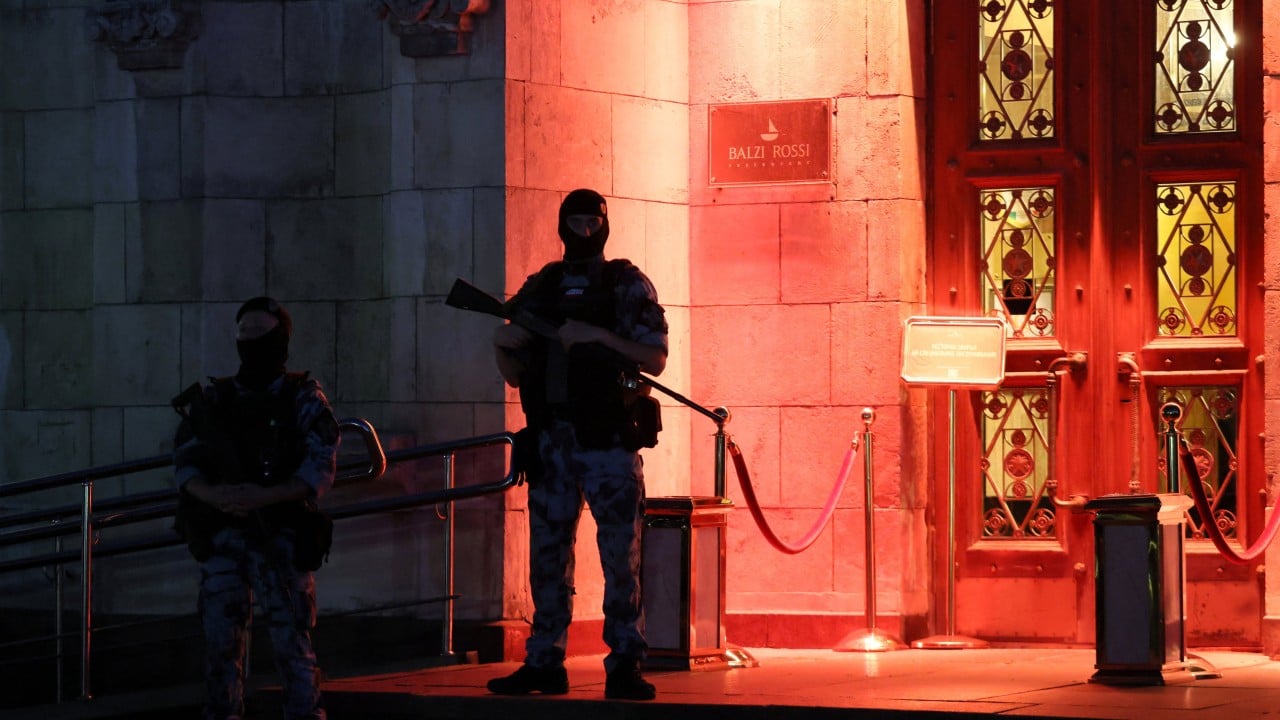
The standard narrative following any urban tragedy is predictable. Emergency services respond, casualty counts are tallied, and commentators lament the vulnerability of modern public spaces. This is the lazy consensus. It treats urban violence as an act of God rather than a failure of institutional architecture. When a bomb tore through a Moscow restaurant, leaving three dead and twenty-one injured, the media machine whirled into its familiar gear. Officials pointed fingers, security experts called for stricter perimeter checks, and restaurateurs panicked about insurance premiums.
Everyone is asking the wrong question.
The focus is never on the systemic design flaws that turn ordinary dining rooms into closed-circuit traps. I have spent two decades auditing high-risk urban hospitality venues across volatile global corridors. I have seen operators blow millions on cosmetic security theater—metal detectors that frustrate patrons and armed guards who lack situational awareness training—while ignoring the core physics of blast mitigation and crowd evacuation.
Let us clear away the noise. The prevailing assumption is that a restaurant is primarily a hospitality space that requires secondary security layers bolted on after the buildout. That perspective is backwards. In high-density urban environments, any venue serving alcohol and food to fifty or more people is a structural node in a broader security grid. Treat it like a coffee shop, and you invite disaster.
The Myth of the Hardened Perimeter
Security consultants love to sell the illusion of perimeter control. They advocate for heavy security doors, bag checks at the host stand, and exterior barriers. This approach fails on two distinct fronts.
First, it misunderstands urban consumer behavior. Diners do not want to pass through a checkpoint just to eat borscht or steak. If you introduce friction into the hospitality experience, patrons simply walk down the street to a competitor.
Second, and more importantly, static hardening creates a false sense of security while exacerbating internal lethality. When a detonation occurs inside a heavily fortified, compartmentalized room with limited egress points, the shockwave does not dissipate. It reflects inward. Concrete walls and reinforced structural pillars bounce blast energy back through the dining room, multiplying the shrapnel effect and turning interior fixtures into lethal projectiles.
I watched a luxury venue in Eastern Europe implement a fortress mindset following localized threat advisories. They installed reinforced glass and security vestibules. Six months later, a minor structural fire caused a panic. Because the exit corridors were funneled through a single narrow security choke point designed to keep unauthorized people out, patrons trampled each other trying to get back through the narrow funnel. The architecture of exclusion became an architecture of entrapment.
Redesigning the Indoor Dynamic
If perimeter checks and bunker mentalities fail, what actually works? Real security inside a restaurant relies on fluid acoustics, sacrificial materials, and immediate directional egress.
Instead of heavy masonry, modern high-risk spaces require flexible interior layouts that absorb kinetic energy rather than deflecting it. Acoustic paneling, heavily textured textiles, and modular furniture break up shockwaves. Furthermore, exit routes must never rely on a single primary foyer. Kitchen exits, service corridors, and floor-to-ceiling windows fitted with shatter-resistant films that pop outward under pressure provide multiple avenues for mass evacuation within seconds.
Let us run a thought experiment. Imagine a dining room where every booth functions as a blast deflection shield, angled away from the main entry vector, and where interior walls are built from composite materials designed to disintegrate upon high-pressure impact rather than splintering into jagged shards. Casualty rates drop by half immediately. Yet, operators refuse to build this way because it does not look like a traditional luxury establishment. They prioritize aesthetics over survival physics.
The Regulatory Blind Spot
Municipal safety codes are written by bureaucrats who have never managed a floor during a Friday night rush, let alone handled a critical incident. Current regulations focus on fire exits and maximum occupancy numbers based on square footage. They completely ignore kinetic threat vectors.
Inspectors check fire extinguishers and emergency lights. They do not test whether the staff can lock down ventilation systems in thirty seconds to prevent chemical dispersion, nor do they train floor managers in blast recognition patterns. This creates a dangerous regulatory hazard. Venue owners check the boxes to satisfy the city, believing they are safe, while remaining entirely exposed to real-world threats.
The fix requires an overhaul of how hospitality licenses are issued in major metropolitan hubs. Compliance should be tied to dynamic evacuation drills and architectural blast-mitigation audits, not static paperwork. If a restaurant manager cannot clear a room of one hundred people in forty seconds under simulated duress, they should not be open for business. Period.
The Cost of Complacency
The restaurant owners nursing their losses today are paying the price for systemic industry laziness. They relied on government protection and generic insurance policies to cover risks they refused to understand themselves.
Real protection is unglamorous. It is expensive, it disrupts traditional interior design, and it forces staff to train for scenarios they hope will never happen. But the alternative is repeating the cycle of tragedy every time a volatile actor targets soft civilian targets.
Stop waiting for the state to secure your dining room. Tear out the decorative bottlenecks, ditch the security theater at the front door, and rebuild your floor plan around the brutal reality of urban physics.