The smell of a hospital lobby at dusk is always the same: floor wax, stale coffee, and the faint, metallic tang of collective anxiety.
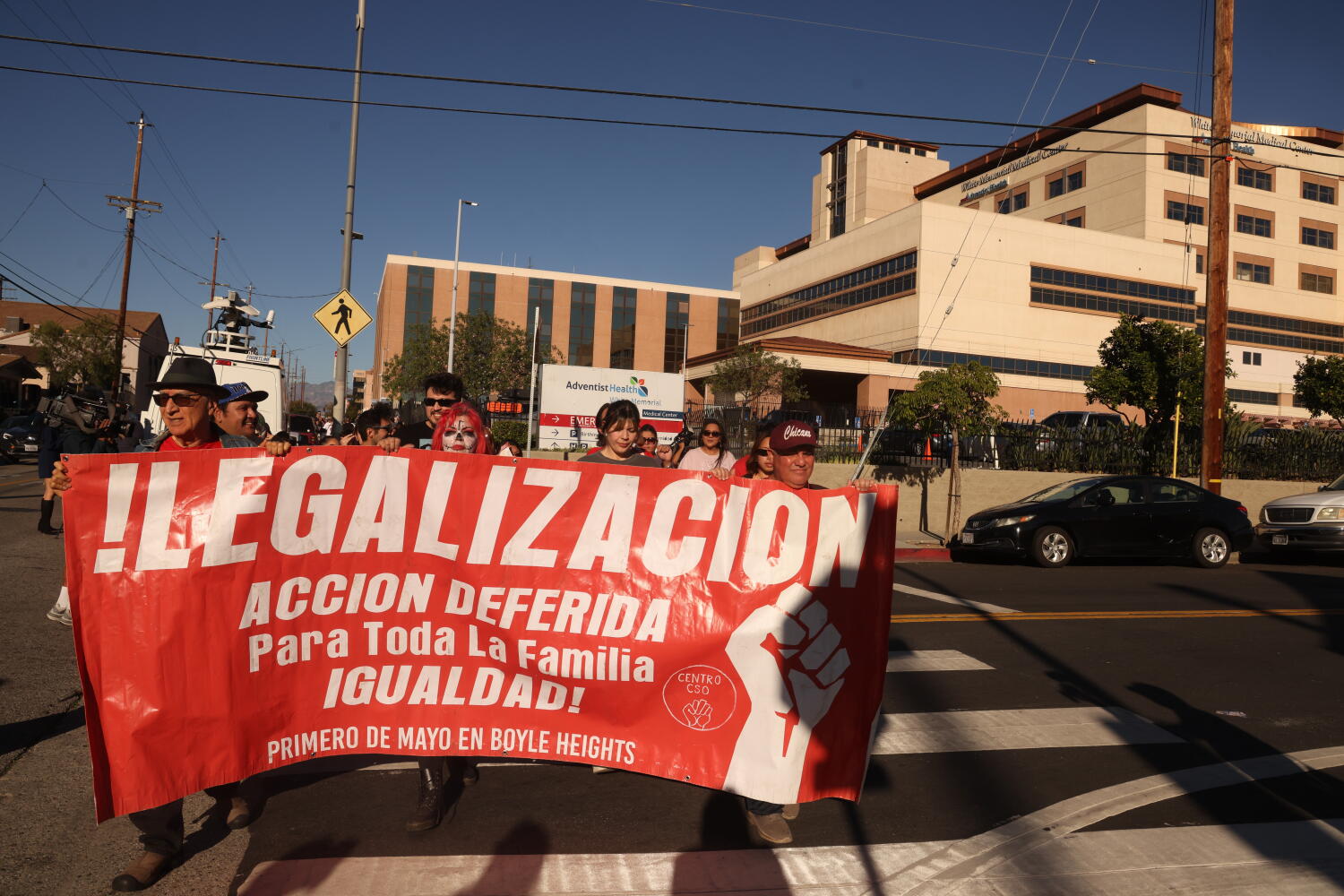
On a warm evening in Boyle Heights, right outside Adventist Health White Memorial, that familiar sensory hum shattered. Sirens wailed—not the rhythmic, urgent cadence of an approaching ambulance bringing a neighbor in from the 101 Freeway, but the sharp, pulsing yelp of patrol cruisers. Outside the sliding glass doors, a crowd had gathered, voices rising against the hum of Los Angeles traffic. Chants echoed off the concrete facades. Then came the scuffle, the flash of red and blue lights against stucco walls, and the sight of two people being led away in handcuffs during an anti-ICE protest right on the hospital grounds.
Read the standard local news brief, and you get the skeleton of the event. Two detained. A protest against Immigration and Customs Enforcement. A hospital in East Los Angeles. Done. Next story.
But skeletons don't bleed.
If you have ever sat in a plastic waiting-room chair at two in the morning, clutching a warm forehead or waiting for a doctor to tell you whether a shadow on an X-ray is harmless or fatal, you know what a hospital is supposed to be. It is a truce zone. Inside those doors, the outside world’s rules are supposed to pause. Your bank account, your accent, your paperwork—none of it is supposed to weigh as much as your pulse.
When handcuffs click shut on the sidewalk outside an emergency room, something invisible breaks. And the people who pay the price aren't the ones on the evening news.
The Invisible Chill in the Waiting Room
Consider a hypothetical scenario that plays out in real clinics across Southern California every single week. Picture Elena, a sixty-two-year-old grandmother living three blocks from White Memorial in Boyle Heights. She has lived in the neighborhood for twenty years, babysitting her grandchildren, paying cash at the corner panadería, and managing a stubborn case of Type 2 diabetes.
On Tuesday morning, Elena wakes up with a crushing tightness in her chest and a cold sweat soaking her nightgown. Her daughter begs her to get in the car. White Memorial is five minutes away.
Instead of grabbing her coat, Elena hesitates. She remembers the videos on her phone from the night before. She remembers the shouting outside the entrance, the police tape, the rumors swirling on neighborhood WhatsApp groups about federal agents near the medical center. Even if the facts on the ground are specific—a localized protest, two detentions by local law enforcement responding to a disturbance—the fear doesn't read fine print. Fear operates on broad strokes.
So Elena stays home. She drinks chamomile tea. She tells herself the pain is just indigestion.
This is the hidden cost that never makes the police blotter. Public health researchers have a clinical term for it: chilling effects. When immigration enforcement—or even the perceived proximity of it—collides with healthcare spaces, emergency room visits among undocumented immigrants and mixed-status families plummet. People wait until a treatable infection turns into sepsis. Pregnant mothers skip prenatal checkups. Parents treat raging pediatric fevers with over-the-counter syrups from a convenience store rather than risk walking past a uniformed officer at the hospital doors.
We like to pretend that border enforcement happens at borders—out in the deserts of Arizona or along the Rio Grande. That is a comforting fiction. In reality, enforcement lives in the nervous system of communities thousands of miles from any fence.
Why Sensitive Locations Matter
To understand why a protest outside White Memorial carries such raw voltage, you have to understand the unwritten social contract that governed American cities for decades.
For years, federal policy recognized the concept of "sensitive locations"—schools, churches, and hospitals. The logic was brutally pragmatic. Even if you hold the hardest line on immigration law, you do not want a measles outbreak in an elementary school because parents are terrified to vaccinate their kids. You do not want untreated tuberculosis spreading on city buses because sick workers are afraid to enter a county clinic. You do not want gunshot victims bleeding out in alleys because their friends are scared to drop them at the emergency bay.
Think of a hospital like the neutral medical tents on a nineteenth-century battlefield. Even warring armies understood that if you start shooting at the surgeons, everybody dies—including your own soldiers.
When policies shift, or when protests erupt because community members believe that sanctuary has been compromised, the neutral tent collapses. Whether ICE agents are actively sweeping a hallway or local police are detaining protesters outside the lobby, the visual message to a vulnerable neighborhood is identical: This place is no longer off-limits.
Boyle Heights isn't just a random pin on a map. It is one of the historic hearts of Mexican American and immigrant life in Los Angeles—a working-class neighborhood hemmed in by freeways, built by people who clean the city’s offices, cook its restaurant meals, and care for its elderly. White Memorial isn't merely a corporate medical facility to the people who live there; it is where their children were born and where their parents took their last breaths.
When tension boils over on that specific sidewalk, it isn't an abstract political debate. It is a collision at the front door of the neighborhood's safe house.
The Anatomy of a Flashpoint
Let’s look honestly at what happens when demonstrators, hospital security, and police collide at a medical center, because the reality is messier than any partisan slogan admits.
On one side, you have activists and community members driven by genuine urgency. When word spreads that immigration enforcement might be operating near healthcare facilities—or when broader federal crackdowns terrorize a neighborhood—staying quiet feels like complicity. Showing up at White Memorial with bullhorns and signs is an act of collective defense, a way of shouting to every frightened neighbor: You are not alone, and we are watching.
On the other side, you have a functioning hospital. Inside those walls, nurses are pushing crash carts down corridors. Surgeons are scrubbing in. Dialysis patients are hooked up to machines that keep their blood clean. Hospital administrators and local police operate under a rigid mandate: keep the ambulance bays clear, keep the entrances passable, keep the noise from penetrating the ICU.
I have stood in the middle of street demonstrations in Los Angeles where both truths collide at once, and it is deeply unsettling. You feel the righteous heat of the crowd—the genuine grief and rage of people watching their families hunted—and five feet away, you see an exhausted triage nurse staring through the glass doors, praying the ambulance carrying a stroke victim isn't delayed by sixty seconds because of a blocked driveway.
Two people were detained during the protest at White Memorial. In the cold calculus of municipal policing, two arrests at a demonstration barely register as a statistic. There was no mass riot, no burned squad cars, no dramatic helicopter chase.
Yet the smallness of the number is precisely why the story gets swallowed whole—and why we miss what it actually signifies. Those two detentions represent the exact friction point where civil resistance meets institutional control, right on the threshold of a place meant for healing.
What Happens Inside the Walls
It is easy to talk about "hospital policy" and "enforcement jurisdiction" from the comfort of a dry office. It is much harder when you are the emergency room doctor trying to figure out why a patient waited three days to come in with a ruptured appendix.
Healthcare workers across Los Angeles know this dance by heart. Under federal privacy laws like HIPAA, medical staff are not immigration officers. Doctors and nurses do not ask for papers to set a broken bone or deliver a baby. In fact, California state law goes further, restricting hospitals from sharing patient information with immigration authorities and designating public areas versus private patient-care zones where warrants are legally required for entry.
But legal protections written in Sacramento or Washington only work if people know they exist—and trust that they will be honored in the heat of the moment.
Imagine walking into an emergency room when your English is shaky, your heart is racing at 140 beats per minute, and the first thing you see outside the entrance is flashing police lights and two people in zip-ties. You don't stop to read a laminated poster about fourth-amendment protections and judicial warrants. Your body makes a split-second survival calculation: Danger.
And once a patient turns around and walks back into the night, the medical system loses its chance to save them. Later, when that same patient arrives in the back of an ambulance in critical condition, the human cost isn't the only price paid. Emergency stabilization is exponentially more expensive than preventative care—a financial burden absorbed by taxpayers, hospitals, and insured patients alike.
The cruel irony is undeniable. Policies and confrontations that drive immigrants away from clinics do not save public money or protect communities. They manufacture medical emergencies out of routine illnesses.
Knowing Where the Line Actually Stands
If you live in a neighborhood like Boyle Heights, or anywhere anxiety around immigration enforcement runs high, panic is the enemy. Information is the antidote.
Despite the chaos that can erupt on a sidewalk during a protest, the legal boundary inside a hospital remains real and enforceable. Waiting rooms and lobbies are generally considered public spaces, meaning law enforcement can physically enter them without a warrant. However, the moment a patient crosses into an exam room, a treatment bay, or an inpatient ward, that space becomes private. Immigration agents cannot legally enter private patient areas without a judicial warrant signed by a judge—not an administrative warrant signed by an ICE supervisor.
Furthermore, patients have the absolute right to remain silent about their immigration status, their place of birth, or how they entered the country. A doctor needs to know what medications you take and where it hurts. They do not need to know where you were born to treat a infection.
Community organizations across East Los Angeles have spent years training clinic staff and residents on these exact distinctions—turning abstract constitutional rights into practical muscle memory. Because when fear spikes, clarity is the only thing sturdy enough to hold a community together.
The Quiet After the Sirens
Eventually, the patrol cars pull away from White Memorial. The street sweepers clear the scattered flyers from the gutter. Inside the lobby, the fluorescent lights hum steadily, indifferent to the drama that unfolded fifty feet away on the asphalt.
A janitor pushes a mop across the tiled floor near the sliding glass doors, erasing the scuff marks left by boots and sneakers. An overnight nurse sips lukewarm coffee at the intake desk, waiting for the next walk-in patient to push through the entrance.
Out in the dark blocks of Boyle Heights, behind drawn curtains and locked deadbolts, people lie awake listening to the distant hum of the freeway, weighing the pain in their bodies against the fear in their minds, wondering whether tomorrow morning will be safe enough to walk through those doors.