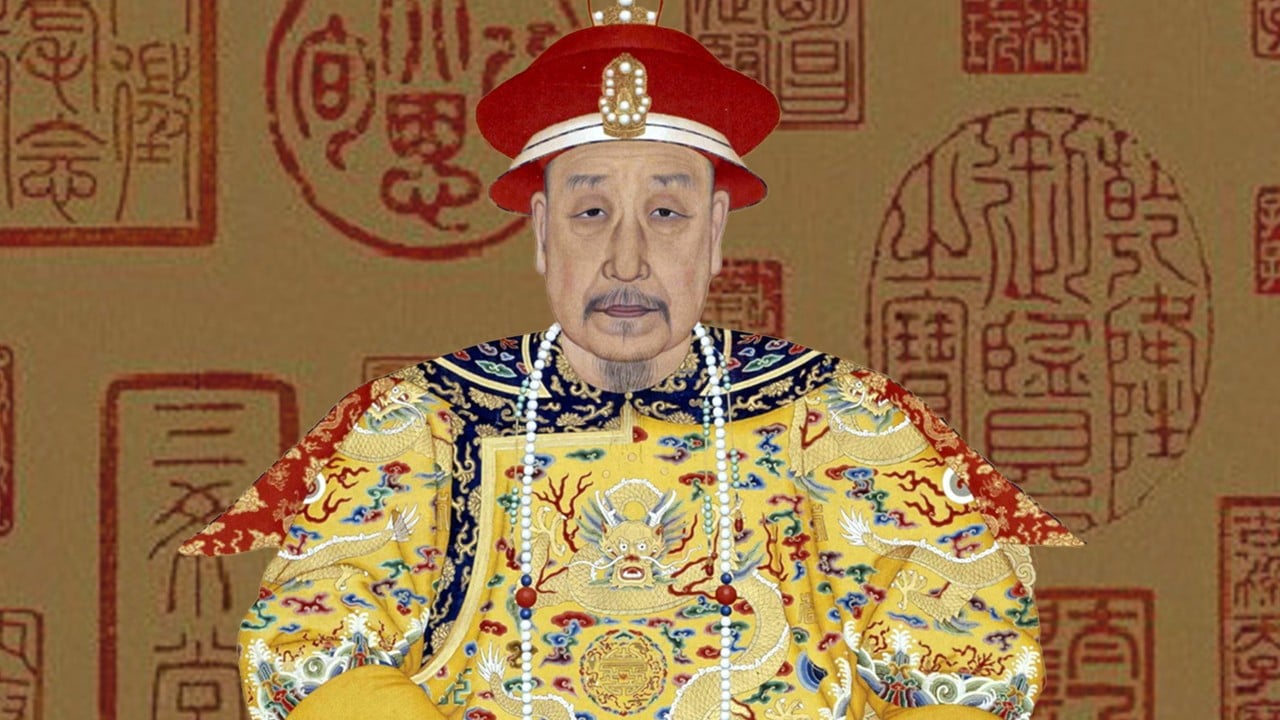
Art critics love to hate a winner. For decades, the high-brow consensus on the Qianlong Emperor has been a collective eye-roll. They call him "Stamp Boy." They mock his obsession with stamping his massive red seals across priceless Song and Yuan dynasty masterpieces. They claim he "defaced" the soul of Chinese art with his mediocre poetry and ego-driven ink.
This narrative is lazy. It’s a textbook example of modern elitism projecting 21st-century values onto an 18th-century titan.
If you think Qianlong was just a bored royal with a stamp collection, you’ve missed the point of the Qing Dynasty entirely. Qianlong wasn't ruining art; he was conducting the most successful, long-form brand integration campaign in human history. He understood that art is not a static object meant to be whispered about in a sterile white room. Art is power. Art is a living record of legitimacy.
By stamping those scrolls, Qianlong wasn't "vandalizing" history. He was claiming it. He was making the point that the Mandate of Heaven didn't just exist in the past—it lived through him.
The Myth of Artistic Purity
The primary argument against Qianlong is that his additions "interrupted" the composition of the works. This assumes that a painting like Dwelling in the Fuchun Mountains was ever meant to be a finished, untouchable product.
In the tradition of Chinese literati painting, a masterpiece is a conversation. For centuries before Qianlong ever touched a brush, collectors, scholars, and previous emperors added colophons and seals. This process is called liuchuan, or the "orderly transmission" of a work.
The critics who attack Qianlong for adding his voice to the scroll are essentially arguing for the death of the medium. They want art to be a specimen under glass. Qianlong treated art like a wiki. He engaged with it. He argued with it. When he added a poem to a 500-year-old landscape, he was linking his administration to the golden ages of the past.
Imagine a scenario where a modern tech mogul buys an original copy of the Magna Carta and adds a digital layer of commentary that explains how it influenced modern law. Some would scream about desecration. Others would realize that the document’s relevance just jumped by five centuries.
Qianlong did this physically. He used the "landscape" of the scroll to map out the Qing Empire's right to rule.
Curation as a Weapon of State
The "Stamp Boy" label suggests a lack of discernment. In reality, Qianlong was perhaps the most obsessive curator to ever live. He didn't just stamp things at random. He organized the Shiqu Baoji, a massive catalog of the imperial collection that remains the gold standard for provenance today.
The art world loves to benefit from his record-keeping while simultaneously bashing his taste. You can't have it both ways. Without his "intrusive" stamps, we wouldn't know half of what we know about the lineage of these works.
Qianlong used his collection to perform "Soft Power" centuries before Joseph Nye coined the term. By gathering the greatest works of the Han Chinese elite, he signaled to his subjects that the Manchu rulers were the true protectors of Chinese civilization. This wasn't vanity; it was survival. A foreign dynasty ruling a vast, often rebellious population needs more than just a big army. It needs cultural capital.
His stamps were the ultimate "Verified" checkmark. They told the world: This belongs to the empire. The empire belongs to me. Therefore, I am the rightful heir to every brushstroke in this room.
The Mediocrity Trap
"His poetry is bad," the scholars cry.
Sure. Compared to Du Fu or Su Dongpo, Qianlong’s 40,000+ poems are often utilitarian and dry. But judging an emperor’s poetry by the standards of a professional poet is like judging a CEO’s internal memos by the standards of a Nobel-winning novelist.
The volume was the point. The presence was the point.
Qianlong practiced a form of "extreme ownership" over the intellectual life of his country. He was the First Scholar. By writing his thoughts directly onto the masterpieces, he forced every future viewer to see the work through his eyes. He hijacked the narrative.
In modern marketing, we call this "controlling the frame." If you control the context in which a product is viewed, you control the product's value. Qianlong didn't just own the art; he owned the experience of looking at the art.
Why the Critics are Scared
The visceral hatred for Qianlong’s stamps usually comes from a place of insecurity. Modern curators want to be the sole gatekeepers of meaning. They want to tell you what a painting means from the safety of a plaque on a wall.
Qianlong’s red seals represent a person—a powerful, flawed, loud-mouthed person—refusing to be quiet in the presence of "Great Art." He treated the masters as peers, not as deities.
The "damage" people complain about is actually the most honest part of the object’s history. It shows that the painting was used. It was handled. It was part of a political struggle.
When you look at a scroll covered in Qianlong’s marks, you aren't just looking at a landscape. You are looking at a battleground of legitimacy. You are seeing the intersection of beauty and power. Removing those stamps (or wishing they weren't there) is an attempt to lobotomize history.
The Actionable Truth for the Modern Collector
Stop looking for "pristine" things.
The value of an object isn't found in its isolation from humanity, but in its friction with it. The scratches on a vintage watch, the notes in the margin of a first-edition book, and yes, the stamps of an emperor on a silk scroll, are what give the object a soul.
If you want to build something that lasts, stop trying to be "polite" with your influences. Don't just observe the industry you're in—stamp it. Put your mark on it so clearly that 300 years from now, people are still complaining about how much space you took up.
The critics will call you a "Stamp Boy." The historians will call you a visionary.
Pick your side.