The shipping manifest on the desk in Berlin does not look like history in the making. It looks like an Excel spreadsheet. But to the procurement official staring at it in the quiet gray of a Tuesday morning, it reads like a foreclosure notice.
Near the bottom of the page, next to an itemized request for Patriot Advanced Capability-3 interceptor missiles, the delivery date field has been wiped clean. In its place is a single, chilling acronym: TBD. To be determined.
For three generations, Western Europe operated under a comfortable theological assumption: if the sky began to fall, America would provide the umbrellas. You paid your dues, or perhaps you skimped on them, but when the crisis came, the gray transport ships would steam across the Atlantic, their hulls heavy with the high-tech machinery of salvation.
That theology just collided with arithmetic.
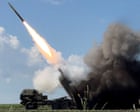
The machinery is gone. It was spent in the skies over Ukraine. It was burned through in the sands of the Middle East during the frantic, high-intensity conflict with Iran. When American warships fired a thousand Tomahawk cruise missiles in a matter of months, they weren't just defending a shifting line on a map. They were emptying the basement.
Now, as leaders gather for the NATO summit in Ankara, the reality is setting in like an autumn chill. The American defense industrial base is no longer a bottomless well. It is a finite, sputtering engine. Even if Washington possesses the political will to shield its oldest allies, it no longer possesses the spare parts.
Consider a hypothetical country on the Baltic coast. Let us call her Anna. She is a radar technician stationed near the eastern border, where the pine forests stretch out toward Russia. For years, her confidence relied on the invisible umbilical cord connecting her radar terminal to a manufacturing plant in Arkansas. If her screen lit up with a barrage of incoming ballistic missiles, she believed the interceptors would be there to meet them.
But today, those interceptors are sitting in empty casing tubes or resting at the bottom of foreign gulfs. The American stockpile of Patriot missiles has been depleted by half. To replace what was lost will take the Pentagon an estimated 42 months of uninterrupted, round-the-clock factory production. And there are twenty nations standing in line ahead of Anna, all holding empty buckets, all waiting for a drop of rain.
The real problem lies elsewhere, buried beneath the political theater of defense spending targets.
For a year, the White House has demanded that European allies increase their military budgets to an unprecedented five percent of GDP. The argument was simple: pay your way, buy American weapons, and the shield remains intact. So Europe wrote the checks. Billions of euros were ploughed into transatlantic defense contracts.
But a check cannot conjure a missile out of thin air when the factory floor is choked by supply chain bottlenecks and a lack of specialized labor. The realization blooming in Paris, Warsaw, and London is terrifyingly simple: Europe is not customer number one. When a finite resource is stretched across global fires, someone gets the steel, and someone gets the spreadsheet with the blank delivery date.
The numbers coming out of the alliance's force planning sessions tell the story of a quiet, systematic evaporation. The American fighter jets designated for European defense have been slashed by a third. The fleet of long-range Reaper drones has been cut exactly in half. Crucial refueling tankers, maritime patrol aircraft, and anti-submarine destroyers are being peeled away from the continent to meet obligations in Asia and the Middle East. Even the lone American submarine carrying cruise missiles in European waters has been crossed off the ledger.
NATO officials insist that European nations are stepping up to fill these massive, gaping holes in the line. They speak of "alternate capabilities with matching effect" and point to joint ventures to build new factories on European soil.
But factories are built out of concrete, steel, and time. It takes five to ten years to construct a sophisticated missile production line from scratch and train the technicians who run it. Geopolitics, unfortunately, rarely respects a five-year construction schedule. If the protective umbrella is pulled back now, it leaves a dangerous, naked window—a multi-year gap where Europe must learn to defend itself without the very weapons it was taught to rely upon.
This is the hidden cost of a decades-long dependency. When you outsource your survival, you don't just lose your factories; you lose the muscle memory of how to survive.
In the hallways of European ministries, the conversation has shifted from anger to a kind of pragmatic dread. Diplomats can no longer afford to seethe over cancelled shipments of Tomahawks or delayed batteries of mobile rocket artillery. They are forced to contemplate a radical, unsettling reassessment of the future. They are asking a question that would have been unthinkable five years ago: How do we fight if we cannot fight like Americans?
American warfare is beautiful, expensive, and hyper-technological. It relies on total air supremacy, a massive constellation of spy satellites, and a relentless hail of precision-guided munitions that cost millions of dollars per strike. It is a way of war designed for a superpower with an endless treasury and an industrial heartland safely isolated between two oceans.
Europe has none of those things. It has vulnerable borders, strained economies, and an empty arsenal.
To survive the coming decade, the continent will have to pioneer a different way of war. It will mean abandoning the pursuit of pristine, gold-plated systems in favor of cheap, mass-produced, and expendable technology. It will mean relying on swarms of low-cost drones instead of missing fighter squadrons. It will mean building regional alliances that function independently of Washington's political whims.
It is a lonely prospect. The ultimate guarantor of Western European freedom—the American nuclear and conventional umbrella—is fraying at the edges, torn by the friction of a multi-polar world that demands too much from a single nation.
Back at the radar station near the eastern pines, the screen continues to sweep its steady, green arc across the dark. The sky looks peaceful. The clouds are empty. But for the first time in a generation, the people watching that sky know that if something comes out of the dark, the response will have to come from their own soil, their own factories, and their own hands. The cavalry across the ocean is out of ammunition.