The wood of the dining table has faded where the sunlight hits it every afternoon at three o'clock. If you run your fingers over the grain, you can feel the slight dip where three decades of polish, dust, and resting hands have worn it down. There are five chairs around this table. One of them is never sat in. It is not kept empty out of superstition, nor is it a shrine. It is simply waiting.
When a person vanishes from a family, time does not heal the wound. It stretches it. The clock ticks differently in a house that is missing a piece of its soul. For thirty years, while the outside world moved from analog tape to digital clouds, while hair turned gray and children grew into parents, one family has remained suspended in a terrible, permanent state of punctuation. A question mark that refuses to bend into a full stop.
This is what happens when justice loses its scent, and a cold case becomes a frozen life.
The Geography of an Absence
Imagine waking up every morning to a silence that speaks louder than any noise.
In the vocabulary of criminal justice, we use words like "cold case" or "unsolved homicide." These terms are clinical. They belong in cardboard boxes stacked on metal shelves in the basement of a precinct, smelling of old paper and stale coffee. They imply a file that has been closed, a neat package of facts waiting for a random stroke of luck.
But for the people who left the porch light on for ten thousand nights, there is nothing clinical about it.
Consider a hypothetical mother, whom we will call Margaret, though she represents a thousand real mothers who have stood at identical windows. When her daughter failed to come home three decades ago, the world changed shape. In the first week, the geometry of life is bounded by the telephone. You stare at it. You pray for it to ring, and then, when it does, your throat constricts with the terrifying certainty that the voice on the other end will break you.
By the first year, the geography expands to the streets. Every face in the supermarket crowd becomes a possibility. Is that her haircut? Does that person walk with that slight, familiar tilt to the left? You find yourself driving past the intersection where she was last seen, slowing down, searching the asphalt as if the road itself could remember the impression of her shoes.
By year ten, the isolation settles into the bone. The world tells you to move on. Friends stop bringing up her name because they do not want to make you sad, not realizing that the silence is what truly crushes you. To speak her name is to keep her blood warm. To bury her name in polite conversation is to participate in her disappearance.
The Math of Grief
The statistics of long-term missing persons cases are easy to find, but they are impossible to truly digest. Thousands of files remain open across the country. Detectives retire. Files are handed off to younger officers who were not even born when the yellow crime scene tape was first unrolled.
The true math, however, is measured in milestones.
- Three decades equals thirty Thanksgivings where the gravy got cold while everyone pretended not to look at the empty space between the salt shaker and the bread basket.
- It equals 1,560 weekends of wondering if today is the day the phone call comes from a construction site, a state park, or a riverbank.
- It equals the precise number of days it takes for a young woman's peers to become grandmothers, while she remains forever twenty-two, frozen in a glossy photograph with a feathered haircut and a denim jacket.
The weight of this duration does something strange to the human mind. It creates a dual reality. In one reality, you know the truth. You know that people do not walk out to buy a pack of gum and choose to stay gone for thirty years without a single whisper. You know that someone took her. You know that her final moments were likely filled with a terror that you are forced to re-imagine every time the wind rattles the windowpanes at night.
In the other reality, the stubborn, irrational human heart refuses to accept the verdict of probability. You keep the old winter coat in the closet. You don't change your phone number, even when the telemarketers become unbearable, because what if? What if she lost her memory? What if she is out there, trapped, and that specific sequence of seven digits is the only anchor she has left to the shore of her childhood?
The Burden of the Fresh Appeal
Then comes the morning when the family decides to stand before the microphones again.
It requires a specific kind of bravery to look into a television camera and beg the public for crumbs of memory. By now, the parents are frail. Their voices lack the sharp, frantic energy of the early days; instead, they possess the heavy, resonant ache of people who have spent half their lives in a courtroom of their own making.
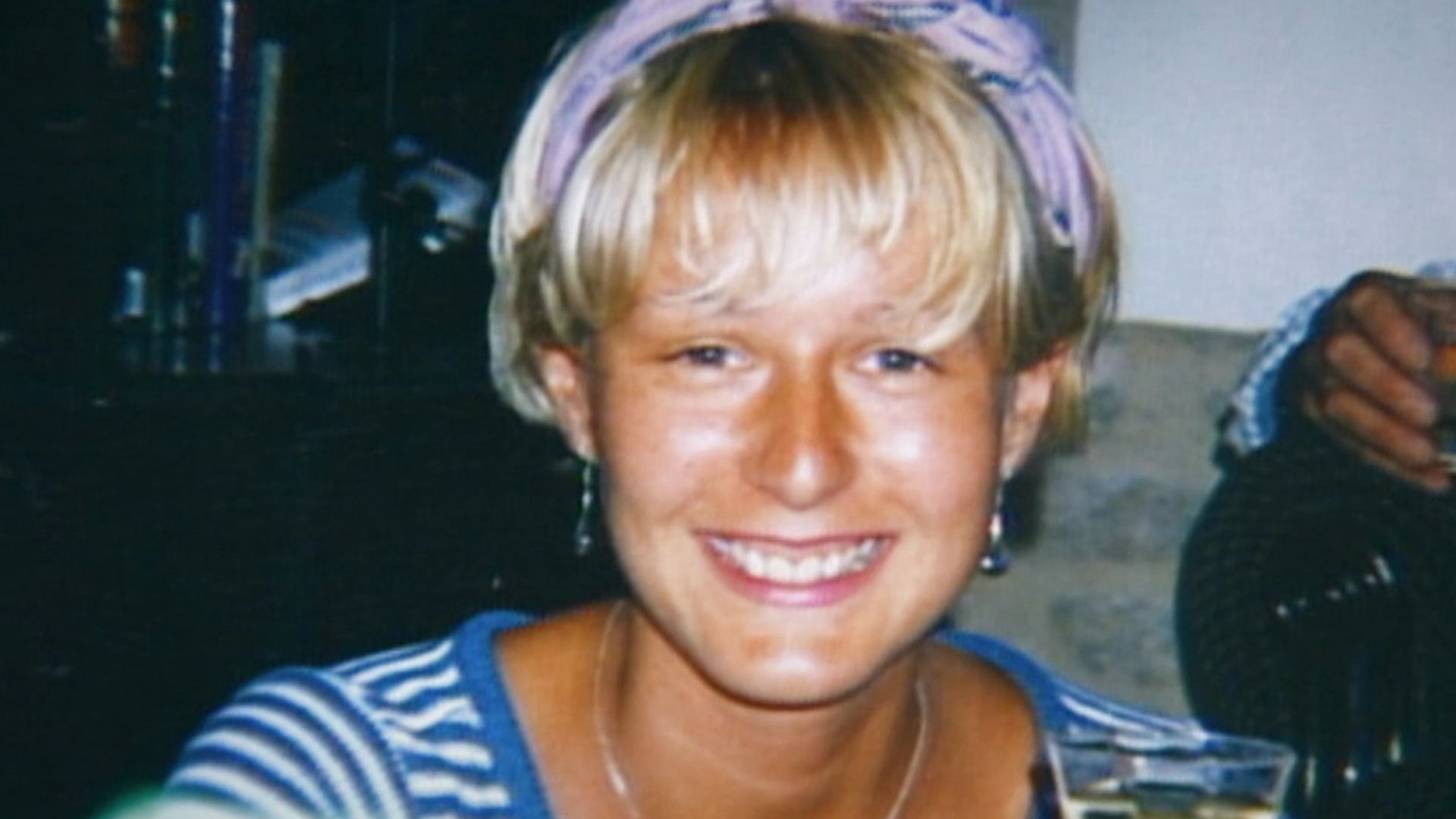
They hold up the picture. The photograph is grainy now, a relic of an era before high-definition sensors. It looks like history to the viewer watching the evening news while chopping vegetables for dinner. But to the brother standing at the podium, that photo is just yesterday.
"Someone knows something," they always say.
It sounds like a cliché. We have heard it a hundred times on true-crime documentaries and police procedurals. But it is a literal truth. Murders are rarely committed in absolute vacuums. There is almost always a witness, an accomplice, a confidant, or a killer who dropped a hint in a bar or let a detail slip during an argument twenty-five years ago.
The secret lives inside someone else's chest. It sits there, growing heavier over the decades, perhaps mutating into guilt, or perhaps hardening into a cynical belief that they got away with it. The fresh appeal is not really directed at the general public. It is a direct missile aimed at the conscience of that one person who has been carrying a dead woman's secret through their own life.
The Chemistry of Rumor and Time
The great enemy of an old investigation is not a lack of effort; it is the decay of context.
When a crime occurs, the neighborhood is alive with texture. People know who drove which car. They remember that the man down the street had a temper, or that a specific blue sedan was parked where it shouldn't have been on a Tuesday night.
Thirty years later, the neighborhood has changed. The houses have been repainted three times over. The eyewitnesses have passed away, taking their unshared observations to the grave. The suspects have moved across the country, built new identities, or perhaps died of old age, taking the location of a shallow grave with them into the earth.
But time can also be an ally.
Relationships fracture. Alliances that seemed unbreakable in 1996 dissolve by 2026. A spouse who kept her husband's dark secret out of fear or misplaced loyalty might now be divorced, disillusioned, or facing her own mortality. A friend who helped cover up a frantic mistake in his youth might now have daughters of his own, looking at them and finally understanding the monstrous nature of what he helped conceal.
This is what the family counts on when they step into the light once more. They are gambling that thirty years of living has softened someone's hardened heart. They are betting that the burden of silence has finally become greater than the fear of the truth.
The True Cost of Silence
We often treat justice as a transaction between the state and the criminal. A law is broken, a trial is held, a sentence is served. The ledger is balanced.
But the ledger is never balanced for those left behind.
Without an answer, there is no grief. There is only a chronic state of emergency. Grief has an trajectory; it is a long, dark valley that eventually climbs out into a landscape where the pain can be managed, where memories bring smiles instead of tears. But ambiguity is a trap. It keeps the nervous system on high alert. It is an endless loop of a movie that cuts to black right before the climax.
Consider the siblings who grew up under the shadow of this absence. They became the protectors of their parents, watching their mother's hair turn white prematurely. They learned early that joy was a dangerous thing to indulge in too fully, because any moment of laughter could be interrupted by the sudden realization that she wasn't there to share it. They carried the grief of their parents on top of their own, becoming caretakers of a ghost.
This is the invisible collateral damage of an unsolved crime. It does not just end one life; it alters the DNA of an entire family tree, bending branches toward the ground, ensuring that every wedding, every birth, and every graduation is tinted with a specific, melancholy shade of grey.
The Final Light
There is a small lamp in the hallway of that house. It has a yellow bulb that casts a warm, soft glow against the front door. It uses very little electricity, but it has been on since a cold night thirty years ago.
The family knows the odds. They know that finding her alive is a miracle that belongs to fiction, not the hard reality of the suburbs. They know that what they are likely looking for now is not a reunion, but a collection of bones. A patch of woods. A name on a stone.
They want the small, terrible peace of a funeral. They want to be able to visit a place where they know she definitively resides, rather than looking at the entire world and seeing her nowhere and everywhere all at once.
Until that happens, the lamp stays on. The chair stays empty. The family will continue to stand before the cameras, offering their hearts up to be broken again and again, hoping that among the millions of people watching, one person will look at the faded photograph, remember a night from a lifetime ago, and finally decide to pick up the phone.