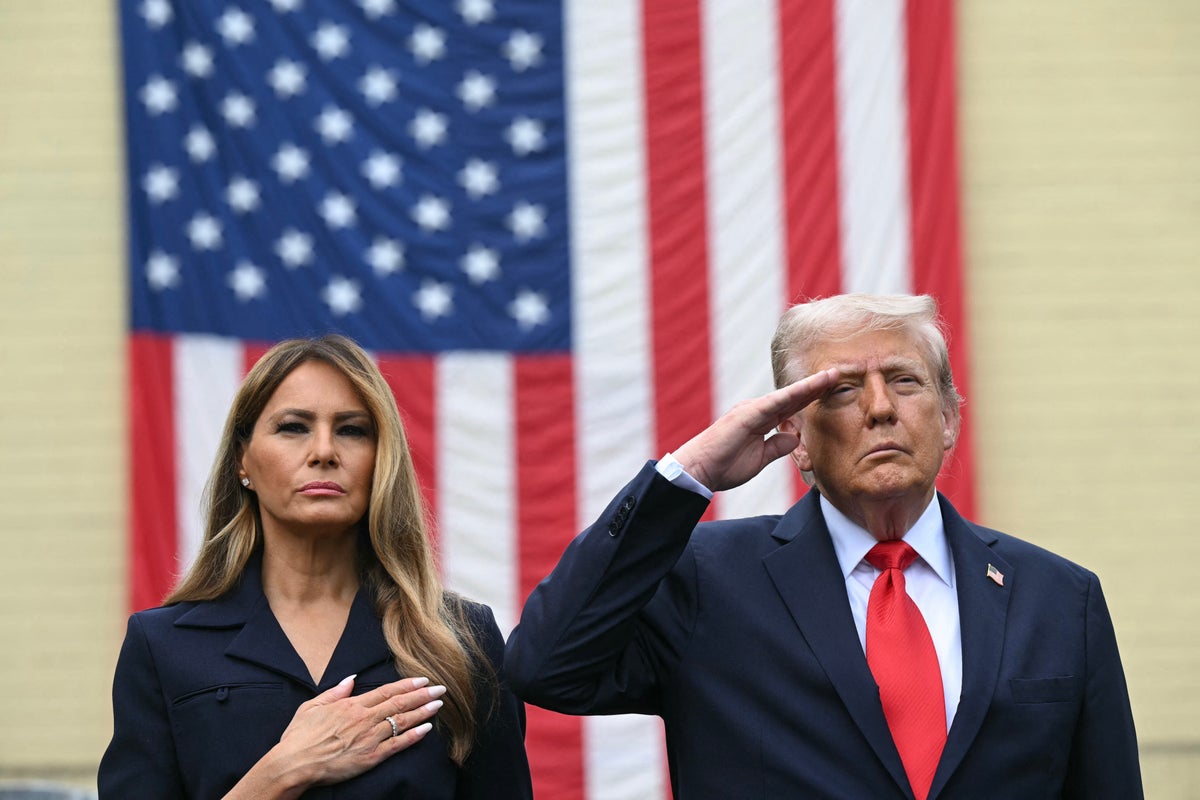
The morning air in lower Manhattan carries a very specific weight every September. It smells of salt from the harbor, roasted coffee from the carts rattling along Church Street, and something older. Something heavy. It is the ghost of an ordinary Tuesday turned inside out, a scar that never quite stops aching beneath the skin of the city.
Every year, the plaza at Ground Zero fills with names. Whispered names. Crying names. Names spoken through cracked voices by mothers and fathers who are older now, their hands trembling as they hold laminated photographs of firefighters who never came home, of brokers who kissed their spouses goodbye in the elevator, of strangers who shared a final, terrible choice in the stairwells. Read more on a connected topic: this related article.
The ritual is stark in its simplicity. No grand standing ovations. No political rallies. Just the solemn reading of the list. A metronome of grief.
Then came the absence. Further reporting by The Washington Post delves into similar perspectives on this issue.
Donald Trump decided to skip the remembrance at the plaza. The reason, stripped of spin and political maneuvering, was remarkably straightforward: the organizers would not let him give a speech.
Think about that for a moment.
Imagine standing at the edge of the deepest wound modern America has ever suffered, looking out over a sea of survivors and mourning families, and turning your back because nobody handed you a microphone.
It tells you everything you need to know about the modern theater of public life. For some, memory is a sacred vault. For others, it is merely a stage.
Consider what happens next. The press releases go out. The pundits take their corners. Fox News frames it through one lens, CNN through another, and the digital noise machine roars into life, turning a moment of national reflection into yet another partisan football. We have become terrifyingly accustomed to this reflex. Every single public event, no matter how sacred, is instantly colonized by ego.
I remember standing near Fulton Street years ago, long after the dust had settled and the reflective pools had been carved into the footprints of the towers. A woman was tracing the bronze lettering of a name with her thumb. She wasn’t looking at the cameras. She wasn’t checking the news ticker. She was talking softly to the metal, whispering about a birthday party that never happened.
That is the reality of Ground Zero. It is an intimate, fragile space. It does not belong to politicians. It certainly does not belong to podiums, teleprompters, or applause lines.
When an individual views a memorial through the prism of airtime, the fundamental contract of leadership is broken. A leader is supposed to absorb the grief of the community, to stand shoulder-to-shoulder in the crowd, to be small so that the collective sorrow can be large. Demanding the spotlight at a funeral is a profound misunderstanding of the room. It is shouting during a moment of silence because you cannot bear the thought of not being heard.
The absence spoke volumes. Far louder than any campaign speech ever could.
We live in an era obsessed with visibility. If you are not seen, you do not exist. If you are not talking, you are losing. This hyper-performative anxiety has bled into every corner of our culture, turning tragedy into branding opportunities and solemnity into a slight.
But grief rejects branding. The families standing in the plaza did not need a stump speech about economic policy or border security or the grievances of the past election cycle. They needed silence. They needed dignity. They needed to know that the world had not entirely forgotten the human cost of that day in exchange for cheap political theater.
By choosing his ego over the collective embrace of the city, the former president made a choice that laid bare the mechanics of his public persona. For him, there is no private grief. There are only audiences. And if the audience is not there to cheer for him, there is no reason to show up at all.
The names on the bronze panels remain. They do not care who speaks. They do not care who stays away. They simply anchor the memory of a city that learned, the hard way, how quickly the sky can fall.
The podium remained empty. And sometimes, an empty space tells the truest story of all.