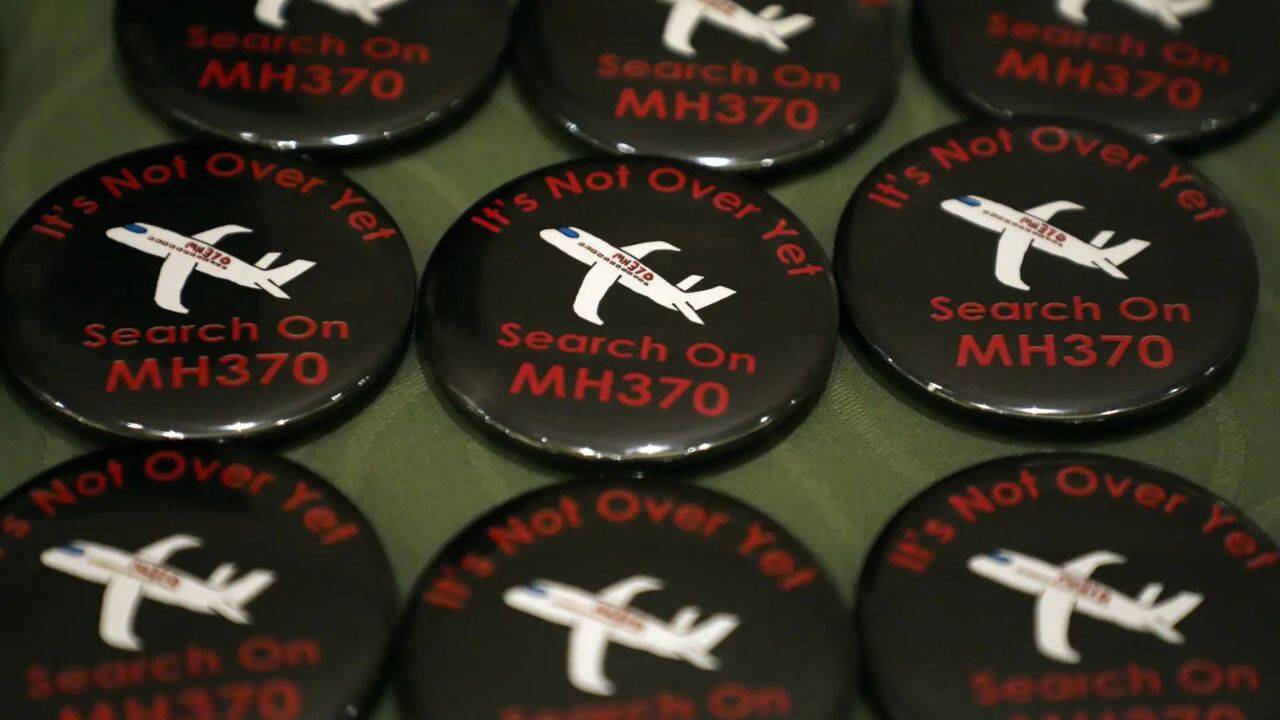
The clock in a quiet suburban home outside Kuala Lumpur does not tick like other clocks. For twelve years, its sound has been a heavy, rhythmic interrogation. Every second is a question mark. Every minute is an anniversary of an absence.
When Malaysia announced it would extend the search for Flight MH370 for one more year, the news did not arrive as a sudden shockwave. It filtered into living rooms as a familiar, low-frequency hum. It was a renewal of a vow. For the families of the 239 people on board, the decision is not a matter of geopolitical budget lines or maritime logistics. It is a lifeline thrown into a pitch-black abyss.
Consider a hypothetical woman named Sarah. She represents dozens of next of kin who have spent more than a decade suspended in a unique form of psychological torture known to experts as ambiguous loss. Her husband’s shoes still sit by the front door. To move them feels like a betrayal; to leave them feels like a monument to grief. When a commercial airliner vanishes into thin air, the normal architecture of mourning collapses. There is no grave to visit. There is no final chapter to read. There is only a vast, empty stretch of water and a government press release promising twelve more months of looking.
The Weight of Twelve More Months
Governments usually prefer certainty. They like projects with clear start dates, predictable expenditures, and quantifiable outcomes. The search for MH370 defies every conventional rule of statecraft. Extending the operation for another year means committing millions of dollars, deploying specialized vessels, and tasking oceanographers with scanning some of the most unforgiving terrain on the planet.
Why do it now? The decision rests on a delicate mix of fresh scientific modeling and a lingering moral obligation. Over the past year, independent researchers and ocean exploration firms have quietly refined their data. They are not chasing ghosts; they are tracking sophisticated drift analyses and reviewing radio signal anomalies that occurred on that fateful March night in 2014.
The ocean floor is a place of profound hostility. Deep beneath the southern Indian Ocean lies a region of underwater mountains, yawning trenches, and jagged valleys that make the Grand Canyon look like a minor ditch. Sunlight dies a few hundred meters below the surface. Below that, the water pressure is immense enough to crush a standard submarine like an aluminum soda can.
To search this environment is to look for a needle in a haystack while blindfolded, using a pair of tweezers guided by a remote-control camera.
Consider what happens next when a new search zone is designated. Ships do not simply sail out and drop anchors. They deploy underwater drones that glide mere meters above the mountainous seabed, using sonar to paint a digital map of the darkness. A single run can take days. The data collected must be painstakingly analyzed, pixel by pixel, looking for any shape that looks too straight, too angular, or too metallic to have been made by nature.
The Technological Ghost Hunt
The tools required for this extended effort represent the absolute limit of human engineering. Marine archeologists and deep-sea salvagers rely on autonomous underwater vehicles that can operate independently for hours at a time. These machines are packed with side-scan sonar, synthetic aperture sonar, and high-resolution cameras.
But technology is only as good as the hypotheses guiding it. The original search areas were based on satellite pings—a series of seven handshakes between the aircraft and an Inmarsat satellite network. This data gave scientists a massive arc across the globe, but it could not pinpoint an exact coordinate. It was an abstract math problem with terrifying real-world consequences.
The new twelve-month extension relies on a tighter, more focused theory. Oceanographers have spent years studying how debris moves through the water currents of the southern hemisphere. By looking at the few confirmed pieces of the plane that washed up on the beaches of East Africa and various island nations, researchers have worked backward. They are reverse-engineering the ocean.
It is a terrifyingly complex puzzle. Think of it like dropping a single leaf into a rushing, turbulent river, waiting a month, and then trying to calculate exactly which overhanging branch it fell from based purely on where it drifted downstream. The margin for error is microscopic. A shift of one degree in a current model can move the projected impact site by dozens of miles.
The Human Toll of the Unknowing
For the public, MH370 is a mystery to be debated on internet forums or watched in late-night documentaries. It is an intellectual puzzle. For the families, it is an open wound that refuses to scar over.
The psychological toll of a twelve-year wait cannot be overstated. When a loved one dies in an ordinary accident, the mind eventually accepts the finality. The funeral happens. The community gathers. The process of rebuilding a fractured life begins.
But when a plane vanishes without a trace, the mind plays cruel tricks. In the early years, many relatives confessed to secretly checking their loved ones' phone numbers, hoping against all logic that a signal might suddenly ping. They kept bank accounts open. They wondered if, through some impossible sequence of events, the passengers were alive on a remote island.
As the years ground on, those desperate hopes faded into a deeper, quieter desire: the simple wish for a body to bury.
The decision by the Malaysian government to extend the search acknowledges this profound human need. It is an admission that a society cannot simply walk away from hundreds of its citizens without providing an answer. To stop searching is to declare that some mysteries are too expensive to solve, that some lives are too difficult to account for.
The Ocean Always Keeps Its Secrets
There is an inherent arrogance in our modern world. We believe that because we have smartphones in our pockets and satellites orbiting the globe, we have conquered the earth. We assume everything is mapped, tracked, and archived.
The southern Indian Ocean laughs at that assumption. It remains one of the final wildernesses, a place where nature operates on a scale that humbles human ambition. The roaring twenties and furious fortunes—the fierce winds that whip across these latitudes—make surface operations hazardous for months out of the year.
Even if the search vessels pass directly over the wreckage during this new twelve-month window, success is not guaranteed. Over twelve years, the currents have shifted silt and sand across the ocean floor. The plane’s aluminum hull may now be buried beneath layers of marine sediment, disguised as just another ridge in an endless underwater desert. Marine life may have claimed it. Nature assimilates human tragedy remarkably fast.
Yet, the crews on these exploration vessels continue their work with a quiet, almost reverent focus. They know the stakes. They understand that their daily routine of monitoring sonar screens and calibrating sensor arrays is the only bridge between a family’s agonizing doubt and a long-overdue peace.
The Final Twelve Months of Waiting
This extension is likely one of the final chapters in this saga. Budgets are finite, political will erodes, and new global crises constantly demand the attention of world leaders. If this year yields nothing, the pressure to permanently close the books will become overwhelming.
The next of kin know this. They watch the calendar with a mix of profound hope and absolute dread. Each passing month is an opportunity for a breakthrough, but it is also a countdown toward a potential permanent silence.
The real story of MH370 is not found in the black boxes that remain hidden in the dark. It is found in the resilience of the people left behind, who refuse to let the world forget the names of those who boarded a routine flight on a warm March night and simply stepped out of history.
As the search vessels slide back into the gray, churning waters of the southern ocean, they carry more than just sonar equipment and computer servers. They carry the collective conscience of a world that demands an answer. The sea is deep, cold, and silent. But for twelve more months, humanity will keep shouting into the dark, waiting for an echo to return.