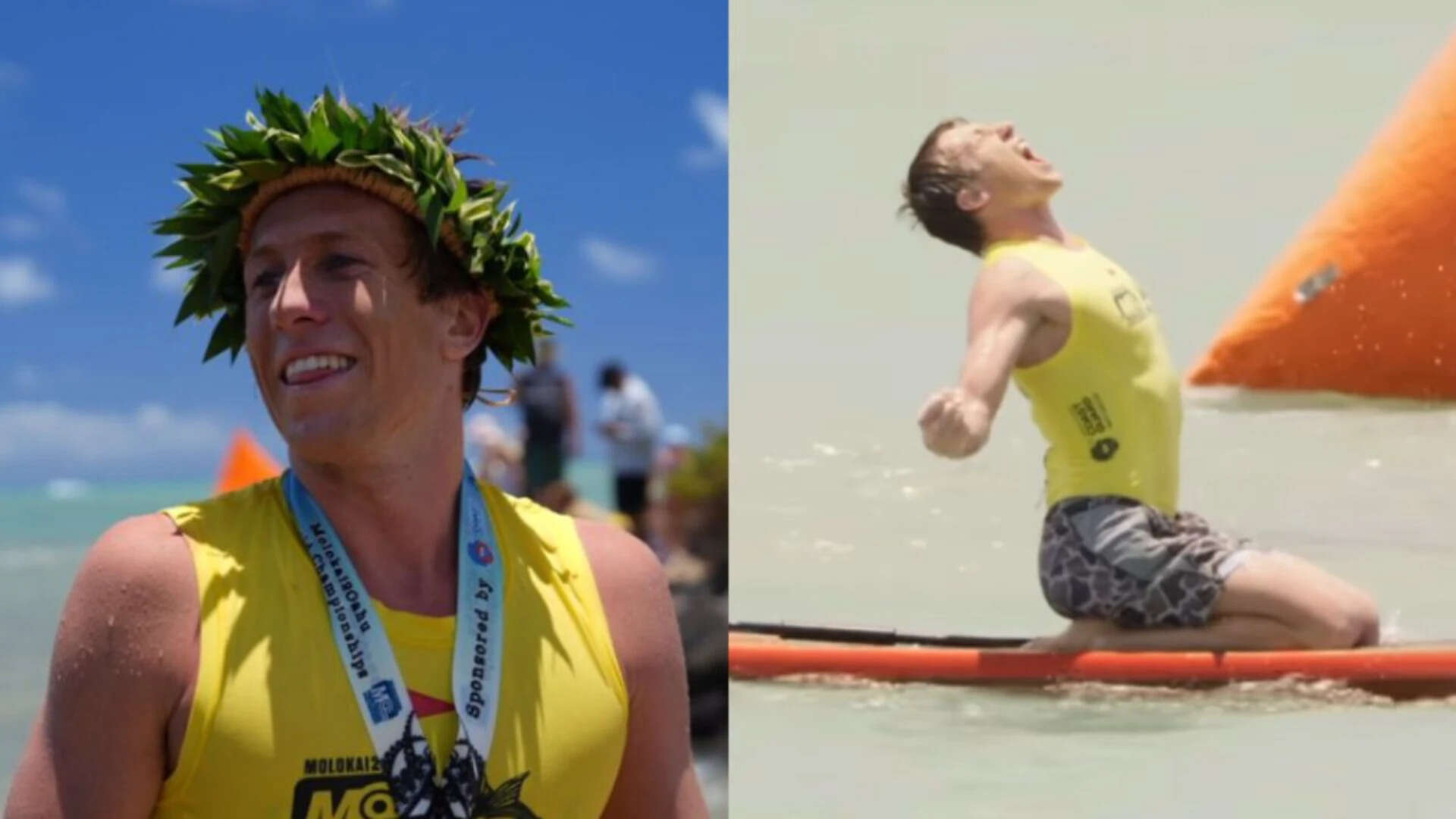
The Mechanics of Extreme Endurance: Deconstructing Charlie Verco and the World Paddleboarding Record
Physical milestones achieved under acute physiological stress are frequently reported through the lens of human interest, emotional triumph, and inspirational narrative. This reporting style, while effective for general engagement, obscures the underlying biomechanical, psychological, and logistical systems that govern extreme athletic output. When Charlie Verco broke the world paddleboarding record—having previously survived a shark attack—the media framing focused heavily on the dramatic narrative arc of survival followed by athletic redemption.
Strip away the biographical narrative, however, and the event presents a controlled study in ultra-endurance stress management, mechanical efficiency, and risk mitigation. Achieving a distance record via prone or stand-up paddleboarding across open ocean requires the absolute optimization of energy systems, thermoregulation, and cognitive endurance. Evaluating this feat through a structured analytical lens reveals the distinct variables required to sustain multi-hour maximum voluntary exertion in dynamic marine environments.
The Triad of Ultra-Endurance Performance
Sustaining high-output physical labor over extended durations relies on three primary variables: metabolic efficiency, biomechanical consistency, and thermal homeostasis. When any single component of this triad fails, cumulative fatigue transitions rapidly into systemic collapse.
Metabolic Efficiency and Substrate Utilization
Over extended durations measured in days or continuous hours, the human body exhausts its primary glycogen stores within the first few hours of exertion. Performance past this threshold depends entirely on the efficiency of lipid oxidation and exogenous carbohydrate replenishment.
Paddleboarding presents a unique metabolic challenge compared to running or cycling. The upper body musculature—specifically the latissimus dorsi, deltoids, and core stabilizers—recruits a higher proportion of fast-twitch and mixed-fiber motor units than lower-body dominant endurance disciplines. These upper-body muscle groups possess lower capillary density relative to trained endurance legs, increasing the rate of localized lactate accumulation and muscular micro-trauma.
To maintain forward momentum without hitting a metabolic wall, athletes must calibrate their output strictly beneath their anaerobic threshold. Exceeding this threshold introduces a reliance on glycolytic pathways that cannot be sustained indefinitely. Energy intake strategies must mirror the exact hourly caloric deficit calculated through basal metabolic rate plus active energy expenditure, factoring in the suppressed gastric motility caused by sustained sympathetic nervous system activation.
Biomechanical Consistency Under Fatigue
As physical fatigue accumulates, neuromuscular coordination degrades. In water sports, minor variations in stroke mechanics compound exponentially over thousands of repetitions. A two-degree vector deviation in a paddle entry angle wastes mechanical energy and introduces compensatory strain on the rotator cuff and lumbar spine.
World-record endurance performances are ultimately exercises in error minimization. The physics of paddleboarding rely on maximizing the catch phase while minimizing hydrodynamic drag on the board and the athlete's body. Fatigue induces shoulder internal rotation and forward head posture, which compromises lung capacity and reduces the effective surface area engaged during the power phase of the stroke.
Maintaining output requires structural pacing protocols where power delivery is intentionally varied to shift load distribution across muscle groups, preventing localized overuse injuries before structural failure occurs.
Thermal Homeostasis and Environmental Variables
Open-water environments impose extreme thermodynamic demands. Immersion and wind exposure accelerate convective and conductive heat loss, while solar radiation and metabolic heat generation risk hyperthermia during high-output intervals.
The human body regulates core temperature at the expense of cardiovascular efficiency. Peripheral vasodilation required for heat dissipation diverts blood flow away from working skeletal muscles, increasing heart rate for a given workload—a phenomenon known as cardiac drift. Managing this variable demands continuous adjustments to hydration and exposure mitigation.
The Risk Architecture of Open-Ocean Expeditions
Endurance events conducted in pelagic or coastal marine environments operate within a complex risk matrix. Unlike controlled laboratory settings or closed-course endurance tracks, the open ocean introduces stochastic variables that cannot be predicted by deterministic training models.
Navigating the Marine Predator Variable
The inclusion of a shark attack survivor in records of extreme athletic feats often triggers sensationalized media coverage. From a risk management perspective, however, a prior predatory encounter represents a distinct historical data point that alters an athlete's psychological risk profile and operational protocols.
Statistically, unprovoked predatory interactions are rare, but their consequence severity is maximum. In structured risk analysis, low-probability, high-severity events require explicit redundancy protocols. For an open-ocean paddleboarding expedition, these redundancies include:
- Geospatial routing: Avoiding known pinniped rookeries, river mouths during runoff periods, and twilight feeding windows.
- Acoustic and electronic deterrents: Integrating active electromagnetic or sonic field generators designed to disrupt ampullae of Lorenzini receptors in elasmobranchs.
- Support vessel telemetry: Maintaining a synchronized chase or safety boat equipped with emergency medical extraction capabilities and real-time surface radar.
The psychological component of returning to the environment of a traumatic event involves cognitive reframing. High-performance competitors must compartmentalize fear responses to prevent the hyper-vigilance that triggers excessive sympathetic nervous system arousal, which in turn accelerates metabolic fatigue.
Oceanographic Conditions and Hydrodynamic Drag
Tidal currents, swell periods, wind chop, and water temperature dictate the kinetic energy required to cover a fixed distance. A static distance metric (such as total kilometers paddled) is fundamentally flawed without normalizing for current vectors.
A paddler moving against a prevailing tidal stream expends significantly more energy per meter than one moving with a following sea, even if surface speeds appear identical relative to the water. Strategic record attempts require precise meteorological forecasting to align the departure and transit windows with optimal tidal flushing and wind patterns.
Quantifying Physiological Cost Functions
To understand how an athlete sustains multi-hour or multi-day efforts, we must examine the cost function of endurance. The cost function $C$ can be conceptualized as a summation of energy expended $E$, structural degradation $S$, and cognitive load $L$, offset by recovery capacity $R$.
$$C = \frac{E + S + L}{R}$$
When $C$ exceeds a critical threshold, physical failure occurs. Elite athletes manage this equation not by increasing numerator capacity indefinitely, but by aggressively minimizing the components of the numerator through technique refinement and equipment optimization, while maximizing $R$ through pacing and nutrition.
The Role of Equipment Optimization
The interface between the athlete and the medium is the paddleboard itself. Board length, width, hull displacement shape, and material stiffness dictate the hydrodynamic drag coefficient.
A wider board provides stability, reducing the core stabilization energy required to maintain balance, but increases wetted surface area and frictional drag. Conversely, a narrow displacement hull minimizes drag in calm conditions but exacts a high cognitive and muscular toll in cross-chop or following seas due to the constant requirement for micro-corrections.
Record-level attempts require custom equipment configurations matched precisely to the expected sea state parameters of the chosen route.
Strategic Operational Protocol for Ultra-Distance Attempts
Analyzing the architecture of a successful open-ocean record attempt yields a repeatable operational blueprint for managing extreme human exertion under variable environmental conditions.
Phase One: Baseline Environmental Modeling and Route Selection
The initial planning phase requires granular analysis of historical marine data. This includes mapping localized wind roses, current velocity tables, and seasonal water temperatures. The objective is to identify the narrow temporal window where environmental resistance is minimized.
- Establish maximum and minimum acceptable thresholds for wind speed and wave height.
- Model tidal gates to ensure the athlete does not attempt to transit constrained channels during peak ebb or flood cycles.
- Establish primary and secondary abort coordinates along the route for emergency extractions.
Phase Two: Physiological Threshold Mapping
Before undertaking the physical attempt, athletes must undergo laboratory testing to establish precise physiological markers.
- Determine ventilatory thresholds one and two to define clean training and execution zones.
- Calculate sweat sodium concentration rates to design a hyper-personalized hydration and electrolyte replacement schedule.
- Establish baseline upper-body power output degradation curves over simulated multi-hour efforts.
Phase Three: Real-Time Telemetry and Adaptive Pacing
During the execution phase, rigid adherence to a pre-planned schedule often fails due to changing ocean conditions. Real-time data collection becomes the primary driver of tactical adjustments.
- Monitor core body temperature and heart rate variability via continuous wearable telemetry to detect early onset heat exhaustion or systemic overreaching.
- Adjust stroke rate and nutritional intake frequencies dynamically based on current velocity feedback from support craft instrumentation.
- Enforce mandatory micro-rest intervals to clear metabolic byproducts from localized muscle beds before acute cramping compromises range of motion.
Strategic Execution Framework
Maximizing output in extreme endurance scenarios relies on the systematic removal of variables that drain physical and cognitive reserves. The distinction between an amateur endurance test and a verified world record lies in the rigor of the preparation matrix—treating the ocean not as an adversarial narrative backdrop, but as a complex fluid dynamics problem to be solved through structured energy management, precise environmental modeling, and uncompromising mechanical efficiency.