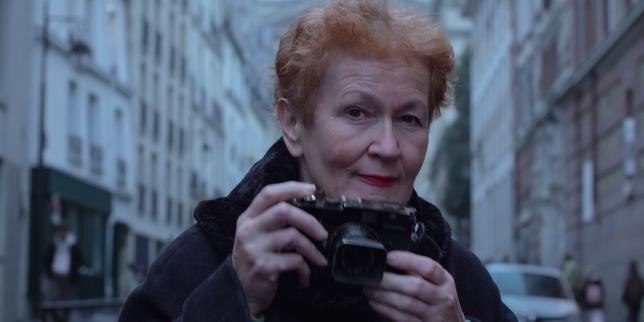
Victoria Ivleva is a veteran Russian photojournalist, World Press Photo winner, and humanitarian activist who relocated to Ukraine to document the Russo-Ukrainian war from the Ukrainian side of the front lines. Rather than operating as an embedded state correspondent for Moscow or retreating into comfortable exile in Western Europe, she embedded herself directly within the communities enduring Russian artillery, turning her camera and her personal vehicle into instruments of documentation and evacuation. Her career represents a sharp break from the traditional rules of conflict reporting, challenging the institutional demand for clinical detachment when a reporter's own government is the aggressor.
The decision did not happen in a vacuum. Long before February 2022, Ivleva spent decades covering the collapse of the Soviet Union, the Rwandan genocide, and the conflicts in Chechnya and Nagorno-Karabakh. That history matters. Most observers look at a Russian citizen working in Kyiv or Kharkiv and see a simple political defection, an act of moral rebellion against Vladimir Putin. That reading is too shallow. To understand why Ivleva crossed the border and stayed, you have to examine the structural decay of Russian independent media, the psychological weight of imperial guilt, and the operational realities of modern war photography where the line between observer and participant has completely dissolved.
The Myth of Objective Distance in Asymmetric Wars
Western journalism schools still teach the doctrine of strict neutrality. The camera is supposed to be a piece of glass, recording events without altering them, standing equidistant between the shooter and the target. Anyone who has spent twenty years covering dirty wars knows that doctrine collapses the moment shells start landing on civilian apartment blocks.
Ivleva abandoned the pose of the detached observer years ago. During the 2014 annexation of Crimea and the outbreak of war in the Donbas, she began traveling to Ukraine not merely to shoot assignments for publications like Novaya Gazeta, where she worked alongside the late Anna Politkovskaya, but to deliver humanitarian aid and help evacuate stranded civilians. When the full-scale invasion began in 2022, she made the permanent move to Ukraine.
This shift exposes a deep fault line in contemporary photojournalism. Institutional media outlets rely on parachute journalists who fly into a war zone for three weeks, capture dramatic images of smoke and grief, file their dispatches, and fly back to London or New York. Ivleva rejected that extractive model. By living in Ukraine, learning the language, and driving her own car into pulverized towns in the Donetsk and Kharkiv regions, she traded institutional protection for unfiltered proximity.
Critics within the traditional press corps argue that a journalist who delivers food, evacuates pensioners, and openly condemns her home country’s military forfeits her credibility as an impartial witness. That argument confuses neutrality with objectivity. Objectivity is about getting the facts right, refusing to stage photographs, and showing the unvarnished reality of human suffering without propaganda. Neutrality, when applied to an unprovoked invasion, simply means giving equal weight to the arsonist and the firefighter. Ivleva’s photographs do not lie about what is happening on the ground; they simply refuse to pretend that both sides bear equal responsibility for the rubble.
From Chernobyl to Kyiv A Career Built Inside Collapse
You cannot understand Ivleva’s eye without looking at her early work. Born in Leningrad in 1956, she came of age during the late Soviet era, a period defined by official lies and quiet decay. She studied at the Moscow State University Faculty of Journalism, entering the profession just as Mikhail Gorbachev’s glasnost opened brief, chaotic windows into parts of Soviet reality that had been hidden for decades.
In 1991, she became the only photojournalist to enter the interior of the destroyed fourth reactor at the Chernobyl Nuclear Power Plant. Walking through the radioactive dark of the sarcophagus, she photographed the twisted metal and eerie light of a catastrophe that the Soviet state had initially tried to conceal from its own citizens. That assignment earned her the prestigious Golden Eye award at World Press Photo in 1992. More importantly, it established her core journalistic instinct: go where the state says you cannot go, and document the human cost of institutional lies.
Throughout the 1990s, she followed the violent fractures of the post-Soviet space. She photographed the civil war in Tajikistan, the conflict in Nagorno-Karabakh, and the brutal Russian military campaigns in Chechnya. In 1994, she traveled to Rwanda during the genocide, documenting the aftermath of mass slaughter at a time when international attention was scattered.
Those decades of field experience stripped away any romantic illusions about war. Young photographers often chase the adrenaline of combat—the muzzle flash, the advancing tank, the heroic silhouette against a burning sky. Ivleva’s archive looks almost entirely at the aftermath. Her frames focus on kitchens with shattered windows, elderly women refusing to leave their basements, stray dogs wandering through shelled courtyards, and the quiet, exhausting labor of survival. She shoots the domestic wreckage of war because she knows that political ideologies are abstractions, while a blown-out roof in the middle of winter is an immediate, lethal fact.
The Mechanics of Working as a Russian in Wartime Ukraine
Operating in Ukraine with a Russian passport after February 2022 is an administrative and psychological minefield. The competitor's framing often treats her presence in Ukraine as a straightforward story of bravery, glossing over the friction she faces from both sides. The reality is far more complicated and uncomfortable.
For Ukrainian authorities and ordinary citizens, every Russian citizen is a potential security threat. Even outspoken critics of the Kremlin face deep skepticism. Millions of Ukrainians view the invasion not merely as Putin’s war, but as the latest chapter in centuries of Russian imperial aggression—a project enabled by the passivity or active support of Russian society. Consequently, Ivleva does not enjoy automatic trust simply because she opposes the Russian government.
Navigating checkpoints, securing press accreditation from the Ukrainian military, and gaining entry into frontline villages requires constant verification and patience. A Russian accent in a town that was recently occupied by Russian troops triggers immediate fear and anger. Ivleva has spoken candidly about the shame she feels carrying a Russian passport and the necessity of accepting Ukrainian anger without defensiveness. She does not demand absolution from the people she photographs. Instead, she approaches them with radical humility, often putting down her camera entirely if her presence causes distress.
At the same time, her choices have severed her from her homeland. Inside Russia, independent journalism has been systematically dismantled through censorship laws, foreign agent designations, and prison sentences for anyone who refuses to use the Kremlin's approved euphemisms. By documenting Russian war crimes and living in Ukraine, Ivleva placed herself permanently outside the boundaries of what the Russian state tolerates. Return is impossible without facing immediate arrest.
Why Her Visual Language Rejects War Pornography
Modern conflict coverage is saturated with high-definition spectacle. Drone footage, GoPro combat videos, and telephoto shots of explosions dominate social media feeds, turning real death into an endless scroll of visceral entertainment. Photojournalists face immense pressure from editors and algorithms to produce dramatic, cinematic images that stop a viewer’s thumb.
Ivleva’s photography moves in the exact opposite direction. Her visual style is quiet, unhurried, and deliberately anti-heroic.
Consider how she frames her subjects. Instead of shooting from a low angle to make soldiers look monumental, or using wide-angle distortion to heighten chaos, she typically shoots at eye level. The camera sits at the height of a conversation. When she photographs an elderly resident in a ruined village in the Donbas, the composition gives equal weight to the person and the specific, mundane objects surrounding them—a plastic bucket, an icon hanging crookedly on a cracked wall, a pile of firewood.
This approach achieves two critical things:
- It restores individual agency. Subjects are not reduced to anonymous symbols of tragedy; they appear as stubborn, complex individuals with distinct histories.
- It indicts the violence through contrast. Showing a neatly made bed in a house whose outer wall has been sheared off by a Grad rocket communicates the violation of civilian life far more effectively than a photograph of a crater.
She also frequently works in black and white, stripping away the distracting drama of fire and blood to emphasize texture, shadow, and human expression. In an era where war imagery is increasingly weaponized for viral outrage, her restraint forces the viewer to slow down and actually look at the people bearing the cost of geopolitical decisions.
The Humanitarian Dilemma When the Camera Is Not Enough
A major blind spot in conventional profiles of Ivleva is how she resolves the ethical collision between journalism and direct aid. When you drive into a frontline settlement where the power grid is dead, the grocery stores are rubble, and the remaining residents are too old or sick to walk out, taking a picture and driving away feels grotesque.
Ivleva long ago stopped pretending that a photograph alone is a sufficient response to immediate physical danger. Over the years, she has organized crowdfunding campaigns, purchased medical supplies, delivered bread and medicine, and used her own car to evacuate civilians from active combat zones. During the earlier years of the war in eastern Ukraine, she famously helped evacuate Ukrainian prisoners and civilians across front lines, leveraging her status and sheer persistence to navigate bureaucratic dead ends.
In the strict orthodoxy of wire-service journalism, this is a fireable offense. Reuters, the Associated Press, and major newspapers prohibit reporters from giving money, transport, or material aid to subjects, arguing that doing so compromises independence and creates incentives for subjects to perform for the camera.
Yet that orthodoxy was written for reporters backed by massive corporate logistics, armored vehicles, and extraction teams. Freelancers and independent documentarians working in collapsed environments operate under a different moral calculus. Ivleva’s career demonstrates that direct humanitarian action and honest documentation do not have to cancel each other out, provided the journalist is transparent about their role and refuses to manipulate the visual record. She does not stage scenes to reward donors, nor does she hide her humanitarian work behind a facade of institutional neutrality.
The Burden of Collective Responsibility
What truly sets Ivleva apart from almost every other prominent Russian public figure is her refusal to hide behind the comforting narrative of "Putin’s war."
Following the 2022 invasion, a dominant talking point emerged among exiled Russian intellectuals and opposition figures: ordinary Russians are mere victims of a dictator, brainwashed by television and powerless to stop the tanks. That narrative conveniently absolves Russian society of any historical or moral accountability.
Ivleva rejects this evasion outright. Throughout her interviews, essays, and public statements, she insists on confronting the deep roots of Russian chauvinism and imperial indifference toward neighboring nations. She points out that the soldiers firing artillery at Ukrainian cities, the bureaucrats managing the occupation, and the millions of citizens cheering the destruction from their living rooms are products of a culture that never reckoned with its Soviet crimes.
This stance makes her an uncomfortable figure even within Russian opposition circles. Exiles often want to focus on their own persecution by the Kremlin or debate the future of a hypothetical "beautiful Russia of the future." Ivleva keeps dragging the conversation back to the immediate reality of Ukrainian graves and ruined cities. By choosing to live among the victims rather than gathering in safe European capitals to discuss Russian democracy, she exposes the gap between rhetorical opposition and genuine solidarity.
What Ivleva’s Career Reveals About the Future of Conflict Reporting
The trajectory of Victoria Ivleva offers a stark lesson for an industry undergoing rapid collapse. Traditional foreign bureaus are shrinking, budgets for long-term investigative photojournalism have dried up, and authoritarian regimes have mastered the art of banning independent witnesses while flooding information channels with state-sponsored lies.
Against this backdrop, Ivleva’s model—deep, long-term immersion combined with radical personal accountability—looks less like an eccentric anomaly and more like a necessary survival strategy for truth-telling. She proves that you do not need a staff position at a legacy magazine to produce work of enduring historical weight. You need stubbornness, fluency in the human terrain, and the willingness to bear the personal cost of your convictions.
She is now in her late sixties, navigating broken roads, military checkpoints, and the constant threat of drone strikes and artillery fire in a country that is not legally hers, documenting a war waged by the country she left behind. There is no neat resolution to her story, and no easy way to separate the photographer from the witness. She remains in Ukraine because the work is unfinished, and because looking away is the one luxury she has never permitted herself.