The power grid doesn't care about borders. When a sub-zero gale screams across the Great Plains, rattling the windows of a farmhouse in North Dakota, the heat keeping that family safe might owe its existence to a pipeline snaking down from the Canadian boreal forest. Conversely, when the neon lights of Toronto flicker during a summer heatwave, the surge often draws its breath from the interconnected arteries of the American Midwest. This is not just commerce. It is a biological necessity disguised as a balance sheet.
For decades, this relationship was treated like the plumbing in a house: vital, but invisible. You don’t think about the pipes until the water stops running. Now, as the countdown begins for the 2026 review of the Canada-United States-Mexico Agreement (CUSMA), the plumbing is being ripped out of the walls and laid onto the negotiating table.
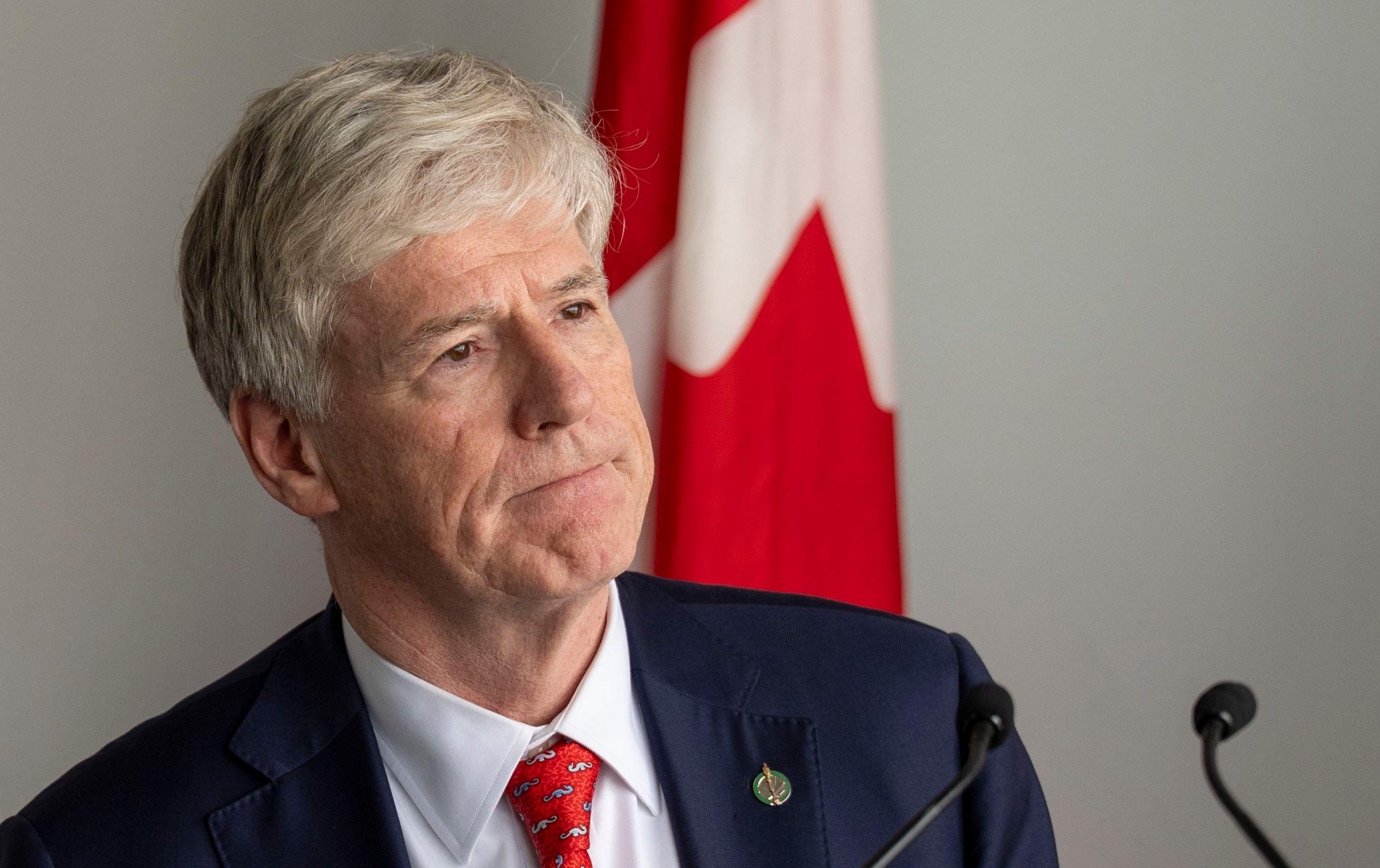
Canada’s Minister of Energy and Natural Resources, Jonathan Wilkinson, recently signaled a shift in tone that should make every industrialist and homeowner from Houston to Hudson Bay pay attention. He isn't just talking about trade quotas or tariff schedules. He is talking about the fundamental leverage of the Northern Lights. Canada is preparing to use its vast energy exports not as a friendly neighborly gesture, but as a strategic shield.
The Hand on the Valve
Consider a foreman at a manufacturing plant in the American Rust Belt. He oversees a floor where precision steel is forged into the components that build our modern world. To keep those furnaces roaring, he needs a steady, predictable flow of natural gas. If that flow becomes a political chip—if the price spikes because of a trade spat or the volume is throttled by a regulatory pivot—his world stops. The "leverage" Wilkinson speaks of isn't an abstract concept for this foreman. It is the difference between a thriving shift and a "Temporary Layoff" notice taped to the breakroom door.
Canada provides over 60% of U.S. crude oil imports and a staggering 85% of its electricity imports. In the dry language of trade reports, these are "vital statistics." In the reality of geopolitics, they are the strings on a marionette.
The strategy is clear: Canada knows that the United States cannot achieve its own goals of energy security or a green transition without the North. Whether it is the uranium for nuclear reactors, the hydroelectricity powering New York and New England, or the fossil fuels that still bridge the gap to the future, Canada holds the remote control.
But holding the remote is risky. If you press the buttons too hard, you might break the device.
A Marriage of Necessity and Friction
The 2026 review isn't a simple "check-in." It is a mandatory re-evaluation triggered by a sunset clause. It’s the moment when the three nations must decide if they still want to be in business together.
In previous eras, Canada often played the role of the polite junior partner, grateful for access to the massive American market. That era has ended. The shift in Ottawa reflects a realization that the global energy map has been redrawn. With the war in Ukraine destabilizing European markets and the rise of critical mineral dominance in Asia, North America has become an island of relative stability. Canada is the anchor of that island.
Wilkinson’s message is directed at a Washington that has grown increasingly protectionist. From "Buy American" provisions to the potential for renewed tariffs under a shifting political landscape, Canada is tired of being the collateral damage of American domestic policy. By framing energy as leverage, the Canadian government is telling the U.S.: If you want our minerals for your EVs and our gas for your factories, you cannot treat our other exports like an afterthought.
Imagine a game of poker where one player owns the table, the chairs, and the lights overhead. They might not have the best hand of cards, but they can decide when the room goes dark.
The Invisible Infrastructure of Trust
The complexity of this leverage lies in the physical reality of the infrastructure. You cannot simply "unplug" a cross-border pipeline and sell the oil elsewhere the next day. These are multi-billion dollar commitments of steel and concrete that take decades to build.
When a Canadian minister talks about using energy as a bargaining chip, they are navigating a razor's edge. Too much pressure and they spook the very investors they need to build the next generation of energy projects. Too little, and they leave Canadian workers vulnerable to the whims of American legislators who might not know—or care—where their electricity actually comes from.
The stakes are personal. They are felt in the pockets of a truck driver in Alberta who watches the price of Western Canadian Select like a hawk. They are felt by the tech CEO in California who relies on a stable, interconnected grid to keep data centers from melting down.
There is a certain irony in the fact that the "green" future relies so heavily on the old-school geopolitics of resource extraction. To build a wind turbine or a battery, you need the nickel, copper, and lithium that sits beneath the Canadian shield. To keep the lights on while those batteries are built, you need the gas and hydro that flows south. Canada is positioning itself as the "one-stop shop" for the entire transition.
The Looming 2026 Collision
The friction isn't just about what is being traded, but how it's being regulated. Disputes over dairy, automotive parts, and softwood lumber have long been the "usual suspects" in North American trade wars. Energy was usually the safe zone—the bedrock that stayed firm while other sectors crumbled.
That is no longer the case. By explicitly linking energy to the broader CUSMA negotiations, Canada is essentially "cross-pollinating" its grievances. They are saying that a win for the U.S. in the automotive sector must be balanced by a guarantee of energy flow and fair treatment for Canadian producers.
It is a high-velocity game of chicken.
The United States often assumes its demand is its greatest power—that the size of its market is an irresistible force. Canada is betting that the American need is an even greater force. You can live without a specific type of cheese or a certain brand of car. You cannot live without heat. You cannot run a digital economy without a constant, humming flow of electrons.
The Human Cost of Miscalculation
The danger of using energy as a "lever" is that levers can snap.
If the negotiations turn sour, the result won't just be a line on a graph or a dip in the TSX. It will be felt in the cost of a gallon of milk, which rises when the fuel for the delivery truck gets more expensive. It will be felt in the viability of small towns that exist solely to service the pipelines and transmission lines that cross the 49th parallel.
We often talk about "nations" negotiating, but nations are just collections of people trying to secure their future. The minister in Ottawa and the trade representative in D.C. are essentially haggling over the price of our daily lives.
There is an inherent vulnerability in admitting how much we rely on one another. For the U.S., admitting that Canada has "leverage" is a bruise to the ego of a superpower. For Canada, using that leverage is an admission that they have few other ways to get the world’s largest economy to listen to them.
The Final Chord of Interdependence
As 2026 approaches, the rhetoric will likely sharpen. There will be talk of "national interest" and "sovereignty." But beneath the noise of the headlines, the physical reality remains unchanged.
The wires are already strung. The pipes are already buried. We are stitched together by a web of copper and steel that doesn't recognize the flags flying above it.
Canada's move to use the energy sector as a bargaining tool is a bid for respect. It is a reminder that the "Great White North" is not just a scenic backdrop or a source of raw materials, but the very engine room of the North American project.
The lights are on today because of a fragile, complicated, and often tense agreement between neighbors. Whether those lights stay on—and at what cost—will depend on whether both sides realize that a lever used too aggressively eventually becomes a wedge that drives them apart. In a world that is becoming increasingly cold and unpredictable, staying connected isn't just a strategy. It's the only way to stay warm.