Europe is sleepwalking into a strategic vacuum. For decades, the continent’s industrial backbone relied on a steady flow of cheap energy and raw materials to transform bauxite into the "green metal" of the future. That era is over. Today, the European aluminum industry isn't just facing a temporary shortage; it is experiencing a systemic dismantling. Since 2021, over half of the European Union’s primary aluminum smelting capacity has gone offline. These plants aren't just idling—they are being mothballed or permanently decommissioned, leaving downstream manufacturers in automotive, aerospace, and packaging dangerously dependent on imports from the very geopolitical rivals the EU claims to be decoupling from.
The crisis is a math problem that no longer adds up. Aluminum production is effectively "solid electricity." To produce one ton of the metal, a smelter requires roughly 14 to 15 megawatt-hours of power. When energy prices spiked following the disruption of Russian gas supplies, the cost of production in France, Germany, and Spain soared far beyond the global market price set on the London Metal Exchange (LME). While North American and Middle Eastern competitors enjoy subsidized or stable energy, European firms are left to bid on a volatile spot market. This isn't a market correction. It is an existential threat to European sovereignty.
The High Cost of Green Ambition
Brussels wants to be the world’s first climate-neutral continent. It is a noble goal that is currently cannibalizing its own industrial base. The European Green Deal and the Carbon Border Adjustment Mechanism (CBAM) were designed to protect local industries from "carbon leakage"—the practice of moving production to countries with lax environmental standards. However, the execution has been clumsy.
European smelters are among the cleanest in the world, often powered by hydroelectric or nuclear energy. When these plants close, they are replaced by imports from China or India, where the carbon intensity of aluminum production is often three to five times higher due to a heavy reliance on coal. By forcing local plants to close under the weight of high carbon prices and energy costs, Europe is effectively exporting its pollution while importing finished goods. The net result for the planet is negative. For the European worker, it is a catastrophe.
The Smelter Trap
Running an aluminum smelter is not like operating a bakery. You cannot simply flip a switch and go home for the long weekend. The electrolytic cells—the "pots"—must remain at a constant, searing temperature. If the power fails or the plant is shut down improperly, the molten metal hardens into a solid block of waste, destroying the equipment.
Once a smelter goes cold, the cost to restart it can run into the hundreds of millions of dollars. Many companies are looking at the current regulatory environment and deciding that the risk isn't worth the reward. They are taking their capital to the United States, where the Inflation Reduction Act offers massive incentives, or to the Gulf States, where energy is a fixed, low cost. Europe is losing the "know-how" that took a century to build, and once that institutional knowledge leaves, it rarely returns.
The Russian Paradox
While the EU has been vocal about its desire to sever ties with Moscow, the reality on the ground is far more complicated. Russian aluminum, primarily produced by Rusal, remains a thorn in the side of European policy. Unlike oil or coal, aluminum has largely avoided blanket EU sanctions. The reason is simple: Europe is terrified of what happens if it loses that supply.
Rusal provides a significant portion of the low-carbon aluminum used by European carmakers. If that supply were cut off tomorrow, the price of everything from soda cans to electric vehicle battery casings would skyrocket. This has created a two-tier market. Some European buyers are "self-sanctioning," refusing to touch Russian metal for ethical or reputational reasons. Others, facing bankruptcy, are quietly snapping up discounted Russian ingots to keep their lines moving. This fragmentation creates price instability and rewards the least scrupulous actors in the supply chain.
The Recycling Myth
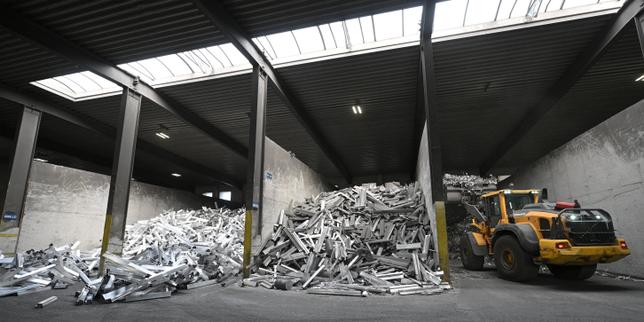
Proponents of the circular economy argue that Europe can bridge the gap through recycling. It sounds perfect on paper. Recycling aluminum requires only 5% of the energy needed to produce "primary" metal from ore. We should just melt down our old scrap and call it a day.
The math, unfortunately, fails again.
Aluminum is not a monolithic substance. It is an alloyed material. The aluminum in a soda can is vastly different from the high-strength alloy in an airplane wing or the specialized casting in an engine block. When you throw all that scrap into a giant melting pot, you get "tramp elements"—impurities that degrade the quality of the metal.
We currently lack the sophisticated sorting technology and the sheer volume of high-quality scrap needed to replace primary production. You cannot build a 2026 fighter jet or a high-performance EV battery out of recycled beer cans. Primary aluminum is the "dilutant" that makes recycling possible by bringing the alloy back to specification. Without a local source of primary metal, the European recycling industry is eventually doomed to produce lower-grade products for less critical applications.
The Silicon Connection
The crisis isn't limited to aluminum alone. To make usable aluminum alloys, you need additives. Silicon metal is one of the most critical. Like aluminum, silicon production is energy-intensive. As European silicon plants shut down for the same reasons as the smelters, the dependency on China deepens.
China currently controls nearly 80% of the world's silicon production. By allowing its domestic supply chain to wither, Europe is handing the keys to its "Green Revolution" to a systemic rival. If Beijing decides to restrict exports of silicon or magnesium—another vital alloying element—the European automotive industry stops in its tracks. It wouldn't take a war. It would just take an export license delay.
The Real Reason Reform is Failing
The European Commission’s response has been a series of "Critical Raw Materials Acts" and "Net-Zero Industry Acts." These documents are long on aspirations and short on balance sheets. They talk about "streamlining permits" and "strategic projects," but they fail to address the fundamental problem: electricity prices.
In the United States, industrial power prices are often a third of what they are in Germany. In the Middle East, they are lower still. No amount of "streamlined permitting" can overcome a 300% disadvantage in input costs.
European leaders have pinned their hopes on a rapid transition to renewables. Wind and solar are indeed getting cheaper, but they are intermittent. An aluminum smelter needs a "baseload"—a steady, unwavering stream of power 24 hours a day, 365 days a year. The current European grid, struggling with the phase-out of nuclear in Germany and the unreliability of aging French reactors, cannot provide that baseload at a competitive price.
A Strategy of Managed Decline
The suspicion among many industry veterans is that Brussels has quietly accepted a strategy of managed decline. Under this theory, the EU is willing to sacrifice "heavy" industry to meet carbon targets, pivoting the economy toward services, high-tech design, and luxury goods.
It is a dangerous gamble.
Manufacturing has a massive multiplier effect. For every job lost in an aluminum smelter, five more disappear in the surrounding ecosystem—maintenance, logistics, engineering, and downstream fabrication. When a town’s smelter closes, the local economy doesn't just "pivot." It hollows out. We have seen this story before in the Rust Belt of the United States and the north of England. The social and political consequences are rarely "green" or "sustainable."
The Magnesium Warning
In late 2021, the world got a preview of what a total collapse looks like. China, facing its own energy crunch, throttled magnesium production. Within weeks, European stockpiles dwindled to almost nothing. The European Aluminum Association issued a frantic warning that the entire automotive industry could be forced to shut down.
Magnesium is essential for aluminum alloys used in everything from gearboxes to steering columns. Europe produces almost no magnesium of its own. That crisis was resolved when China ramped production back up, but the lesson was ignored. Dependency is a choice. Every time a European smelter closes, that choice is being made again.
Rebuilding the Foundation
Fixing this requires more than just subsidies. It requires a fundamental shift in how Europe views its industrial base.
First, the link between industrial electricity prices and the volatile natural gas market must be broken. Several European countries are experimenting with "power purchase agreements" (PPAs) that allow industrial giants to buy renewable energy directly from producers at a fixed, long-term rate. But the scale is too small. The state needs to act as a backstop for these deals, providing the guarantees that allow banks to fund massive new energy projects.
Second, the Carbon Border Adjustment Mechanism must be tightened. Currently, it is a sieve. It targets raw aluminum but often ignores the finished parts coming from overseas. If an Audi or a Volvo is made with high-carbon Chinese aluminum, it should face the same financial penalty as the raw metal would at the border. Without this, we are merely punishing the local producer for being visible.
Third, we must stop viewing "primary" and "recycled" as an either-or proposition. They are two halves of the same coin. We need to invest heavily in robotic sorting and laser-induced breakdown spectroscopy (LIBS) to turn our scrap heaps into high-grade alloy reservoirs. But this technology requires a healthy domestic industry to fund and implement it.
The Strategic Deadline
The window for saving the European aluminum industry is closing. Most industry analysts estimate we have less than three to five years before the "tipping point" is reached—the moment when so much capacity has been lost that the supply chain becomes unrecoverable.
If Europe loses its ability to produce its own aluminum, it loses its ability to control its own future. You cannot have a defense industry, a renewable energy transition, or a modern transportation sector without this metal. Relying on the goodwill of global competitors for the literal building blocks of your society is not a policy; it is a surrender.
The solution isn't a secret. It requires cheap, stable energy and a trade policy that actually protects the standards we claim to value. Anything less is just decorative rhetoric while the furnaces go cold.
Industrial sovereignty starts with the fire in the potline. If that fire goes out, no amount of white papers or summit meetings will bring it back. The decision must be made now: either we pay the price to power our own industry, or we pay the far higher price of becoming an industrial museum, entirely dependent on the whims of others.