The containment of Ebola virus disease outbreaks depends on a variable that standard epidemiological models frequently miscalculate: the post-mortem transmission vector. Traditional public health strategies isolate living patients, but the carcass of an individual deceased from Ebola represents the highest point of viral load throughout the infection cycle. Standard burial practices in affected regions involve washing, touching, and dressing the deceased, actions that function as hyper-transmission events. Mitigating this risk requires optimizing the intersection of viral kinetics, logistical resource constraints, and the behavioral mechanics of communities experiencing mass trauma.
The Kinetics of Post Mortem Viral Shedding
To understand why traditional mourning practices act as super-spreading events, one must analyze the mathematical distribution of viral load across the timeline of infection. Unlike respiratory pathogens that peak early in the symptomatic phase, Ebola virus concentration reaches its zenith at or immediately after the point of death.
The physiological collapse of the host involves systemic endothelial dysfunction, widespread vascular leakage, and massive internal and external hemorrhaging. The bodily fluids produced during this terminal phase—blood, vomitus, and feces—contain concentrations of viral particles exceeding $10^8$ RNA copies per milliliter. When a patient dies, the skin and mucosal surfaces remain highly infectious.
[Infection Onset] -> [Symptom Escalation] -> [Terminal Phase (Viral Load Peak)] -> [Post-Mortem Contact (Hyper-Transmission Vector)]
Traditional funerary preparation introduces a high-frequency exposure risk. The process of washing the body dislodges dried fluids and aerosolizes particles over short distances, while manual handling ensures direct contact with the mucosal membranes of the mourner. The secondary attack rate following unprotected contact with an Ebola corpse has been documented to exceed 50%, making post-mortem transmission the primary driver of outbreak prolongation.
The Friction Coefficient of Behavioral Intervention
Imposing an immediate, clinical ban on traditional burials fails because it ignores the social architecture of the affected population. In many West and Central African contexts, ancestral veneration and specific funerary rites are not optional aesthetic preferences; they are viewed as ontological necessities for the spiritual transition of the deceased and the safety of the surviving community.
When external military or medical teams enforce immediate cremation or mass graves, the community response follows a predictable escalation path:
- Concealment: Families hide sick relatives from surveillance teams to prevent them from dying in isolation centers where their bodies might be withheld.
- Clandestine Burials: Bodies are buried at night without medical oversight, bypassing all biosafety protocols and exposing a hidden cohort of mourners to lethal viral loads.
- Active Resistance: Violence against healthcare workers increases, forcing the suspension of contact tracing and clinical operations.
The operational bottleneck is not a lack of personal protective equipment (PPE) or chlorine solution; it is the friction coefficient between epidemiological mandates and community trust. Forcing compliance through state coercion yields a net-negative return on containment efficacy.
The Operational Architecture of Safe and Dignified Burials
The resolution of this friction lies in the deployment of the Safe and Dignified Burial (SDB) framework. This strategy separates the biological necessity of containment from the theological necessity of the ritual, altering the delivery mechanism of the safety protocol without altering its scientific core.
Biological Containment Protocol
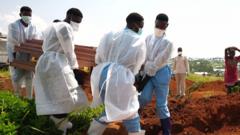
The technical execution requires a multi-layered barrier strategy. SDB teams utilize double-impermeable body bags, surface decontamination with 0.5% chlorine solution, and full-body personal protective equipment. The body is never exposed after encapsulation. This eliminates the transmission vector completely, reducing the post-mortem reproduction number ($R_0$) of that specific case to zero.
Ritual Customization Mechanics
To secure community authorization for this containment, the protocol permits adaptations that mimic traditional steps without breaking the biological barrier.
- Visual Verification: Before the final sealing of the body bag, family members view the face of the deceased from a calculated physical distance (greater than two meters) to confirm identity and prevent rumors of body theft or organ harvesting.
- Proximity Rituals: Family members are permitted to place dry religious artifacts, earth, or symbolic garments on top of the sealed coffin or body bag, substituting direct skin-to-body contact with mediated contact.
- Clerical Integration: Local religious leaders (Imams or Pastors) perform the standard prayers and final rites at the gravesite, operating within the cold zone of the deployment area while wearing standard civilian clothing to de-escalate the militarized appearance of the intervention.
Quantifying the Logistics Capacity Bottleneck
Implementing SDB frameworks introduces severe logistical dependencies. An outbreak in a dense urban center or a highly fragmented rural area requires a decentralized supply chain capable of sustaining specialized teams. The system fails if any single component of the operational matrix faces a stockout.
| Resource Requirement | Operational Function | Failure Point Outcome |
|---|---|---|
| Class 4 PPE Kits | Protects decontamination and retrieval personnel during high-load handling. | Team infection, immediate cessation of recovery operations. |
| 0.5% & 0.05% Chlorine | Neutralizes viral particles on non-porous surfaces and skin interfaces. | Environmental contamination of transport vehicles and public pathways. |
| Cadaveric Encapsulation Units | Provides the primary physical barrier preventing fluid leakage. | Rupture during transport, generating secondary infection vectors. |
| Community Liaisons | Negotiates entry into hostile or skeptical neighborhoods prior to team arrival. | Hostile expulsion of medical teams, resulting in unmanaged corpses. |
The primary limiting factor is often the psychological exhaustion and social stigmatization of the SDB team members themselves. Frequently recruited from the local population to ensure linguistic and cultural alignment, these individuals face ostracization from their own communities due to the fear of contagion. Without structured psychological support, financial incentives, and community-wide education campaigns to destigmatize their role, attrition rates within burial teams spike, causing uncollected bodies to accumulate and transmission dynamics to accelerate.
Systemic Limitations of Modern Epidemic Response
While the SDB framework offers a structured pathway to reduce transmission, it operates within structural limits. The strategy assumes a functional logistical baseline that often does not exist in conflict zones or regions with severely degraded infrastructure.
If rain patterns destroy primary transit routes, or if civil unrest restricts the movement of public health teams, the time from death to encapsulation extends beyond the optimal 24-hour window. As the time-to-retrieval metric increases, the likelihood of a family reverting to an unsafe, clandestine burial approaches certainty.
Furthermore, the introduction of experimental vaccines and therapeutics can create a false sense of security, leading communities to deprioritize safe burial practices under the assumption that the disease is now curable. Behavioral tracking data indicates that containment success requires absolute consistency in messaging; variations in public communication regarding the survivability of the virus often correlate with a temporary drop in compliance with burial protocols.
The deployment of safe burial teams must be treated as a precision engineering problem rather than a generic humanitarian intervention. The target metric is the absolute minimization of the interval between host expiration and bio-secure encapsulation, achieved through the systematic reduction of community resistance. Survival of the population relies on converting the funeral from a engine of viral replication into a terminal barrier against transmission. Daily operational adjustments must prioritize real-time sentiment analysis within the affected communities to adjust ritual parameters before resistance materializes into non-compliance.