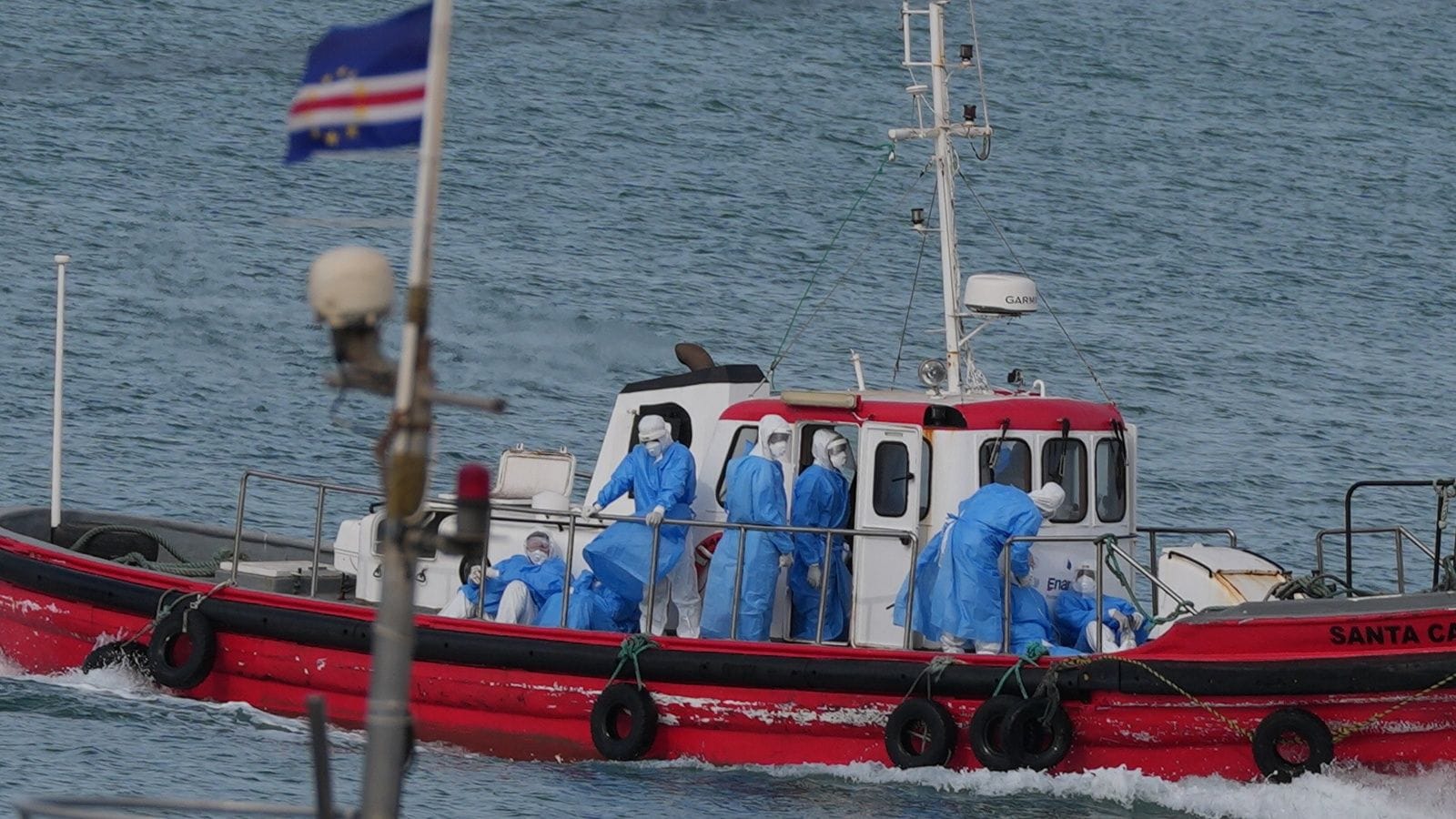
The containment of zoonotic outbreaks within the global cruise industry is failing due to a fundamental misunderstanding of viral transmission vectors and the logistical lag in maritime health surveillance. When 23 passengers—including British nationals—disembark from a vessel potentially exposed to Hantavirus, the primary risk is not the localized infection, but the uncontrolled dispersal of vectors into diverse ecological niches. Current maritime health protocols rely on reactive isolation, yet the Hantavirus Pulmonary Syndrome (HPS) pathology dictates a proactive, environmental-first containment strategy. The following analysis deconstructs the recent Hantavirus scare, quantifying the systemic vulnerabilities in international transit and the biological realities of the Orthohantavirus genus.
The Transmission Mechanics of Orthohantavirus
Hantavirus is unique among high-consequence pathogens because it does not require a human-to-human chain to achieve a mass casualty event. It operates through a Spillover Interface where the environment acts as the primary reservoir. Unlike respiratory viruses like influenza, Hantaviruses are primarily transmitted through the aerosolization of dried excreta (urine, feces, and saliva) from infected rodents, specifically those in the Muridae and Cricetidae families. If you enjoyed this piece, you might want to look at: this related article.
The risk profile on a cruise ship is dictated by three environmental variables:
- Aerosolization Points: HVAC systems and confined storage areas serve as force multipliers. If a rodent infestation exists within the ship’s sub-structures, the forced air systems can distribute viral particles into passenger cabins.
- Viral Persistence: Hantavirus remains infectious in the environment for several days depending on temperature and UV exposure. In the climate-controlled, low-UV environment of a ship’s interior, the window of viability remains at its maximum.
- The Incubation Gap: The incubation period for HPS ranges from 1 to 8 weeks. This creates a "Detection Void" where passengers pass through customs and board secondary transit (planes, trains) while asymptomatic, rendering port-of-entry thermal screening useless.
The Logistical Friction of Maritime Quarantine
The "wandering" of 23 passengers across international borders highlights a breakdown in the Chain of Custody for Public Health. Maritime law and international health regulations (IHR) often clash at the point of disembarkation. When a ship identifies a potential exposure, the responsibility shifts from the vessel's medical officer to the national health agencies of the port of call. For another perspective on this development, refer to the recent update from World Health Organization.
The friction occurs in the Data Handover Phase. Passenger manifests provide contact information, but they do not track real-time movement post-disembarkation. The "23 passengers" identified in recent reports represent a breakdown in the Contact Tracing Velocity. By the time a laboratory confirms Hantavirus—a process that requires specialized serologic testing or PCR—the exposed cohort has already integrated into high-density urban populations.
The economic cost of a "False Negative" in maritime screening is significantly higher than the cost of a "False Positive" quarantine. However, cruise lines operate on tight turnaround schedules. Holding a vessel for 48 hours to conduct deep environmental swabbing for rodent DNA costs millions in lost revenue and logistical penalties. This creates an inherent bias toward "observation" rather than "containment."
The Biological Reality vs. Public Perception
Public discourse frequently confuses Hantavirus with contagious viral hemorrhagic fevers like Ebola. To clarify: human-to-human transmission is exceedingly rare, documented almost exclusively in the Andes virus strain in South America. For the British passengers and their cohorts, the threat is not "infecting others," but the Delayed Onset of HPS.
The pathology of Hantavirus follows a rigid bipartite structure:
- Phase 1: The Febrile Prodrome: Characterized by fever, myalgia, and fatigue. These symptoms are indistinguishable from common influenza or seasickness, leading to massive underreporting.
- Phase 2: The Cardiopulmonary Stage: This occurs rapidly, usually 4 to 10 days after the initial symptoms. It involves the leakage of plasma into the lungs (pulmonary edema), leading to a mortality rate of approximately 38%.
The danger for the 23 passengers is the Geographic Displacement of Care. A physician in London or Manchester may not immediately associate a patient's respiratory distress with a cruise-based rodent exposure in a different hemisphere. This diagnostic lag is the primary driver of Hantavirus lethality.
Structural Vulnerabilities in Global Tourism Supply Chains
The presence of Hantavirus-related risks on luxury vessels points to a failure in the Sanitation Supply Chain. Ships take on provisions in various international ports, many of which have differing standards for rodent control in warehouses and piers.
- Pallet-Borne Vectors: Rodents frequently enter ships via food crates and equipment pallets.
- Structural Porosity: Modern cruise ships are massive, complex honeycombs of wiring, plumbing, and insulation. These voids provide ideal nesting grounds for rodents, shielded from standard janitorial oversight.
- Asymptomatic Reservoirs: The rodent hosts (such as the deer mouse or the rice rat) do not get sick from the virus. They shed it chronically, meaning a single nesting pair can contaminate an entire deck's ventilation intake over the course of a 14-day voyage.
Quantifying the Risk of Urban Seeding
The primary strategic concern for health agencies is not the 23 individuals, but the Zoonotic Seeding of new territories. If passengers carry contaminated materials (souvenirs, clothing, or even stowaway rodents in luggage) to a new region, they risk introducing the virus to local rodent populations.
The "Cost Function" of an outbreak is calculated by the following variables:
$$C = (P \times L) + (E \times T)$$
Where:
- $P$ = Number of exposed passengers.
- $L$ = Probability of the virus reaching the cardiopulmonary stage.
- $E$ = Economic impact of port closures and travel bans.
- $T$ = Time to local eradication of the rodent vector.
The current strategy focuses almost entirely on $P$ and $L$, ignoring the long-term impact of $E$ and $T$.
Strategic Imperatives for Maritime Bio-Security
To move beyond the "wandering passenger" crisis, the industry must move toward Automated Bio-Surveillance.
Deployment of PCR-Based Environmental Monitoring
Instead of waiting for human symptoms, ships should implement routine air-duct swabbing and DNA sequencing. If Orthohantavirus RNA is detected in the HVAC system, the ship must be classified as "Infected" before a single passenger develops a fever. This shifts the trigger from human illness to environmental presence.
Standardization of Digital Health Passports
The 23 passengers were able to "wander" because their health status was not digitally tethered to their passports. A "Bio-Risk Flag" should be applied to the travel credentials of anyone disembarking from a vessel under investigation. This does not require a total travel ban but ensures that any medical facility they enter is immediately alerted to the specific risk profile (HPS).
The Rodent-Proofing of the Global Pier
The interface between the ship and the shore is the weakest link. Port authorities must implement "Sonic Fencing" and advanced baiting systems to create a sterile buffer zone around mooring vessels.
The situation involving the British cruise passengers is a symptom of a deeper systemic fragility. We are attempting to manage 21st-century viral mobility with 20th-century tracking methods. The "wandering" individuals are not the problem; the problem is the 14-day data lag between exposure and action. Future maritime strategy must treat a ship not as a hotel, but as a closed ecological system where the air and the animals are the primary data points.
Effective containment requires the immediate integration of environmental DNA (eDNA) monitoring into all international transit hubs. Until the presence of the pathogen is tracked with the same rigor as the movement of the passengers, we will remain in a reactive cycle of "lost" cohorts and avoidable fatalities. The next tactical move for port authorities is the mandatory implementation of real-time environmental bio-sensors at the point of disembarkation to close the detection void.