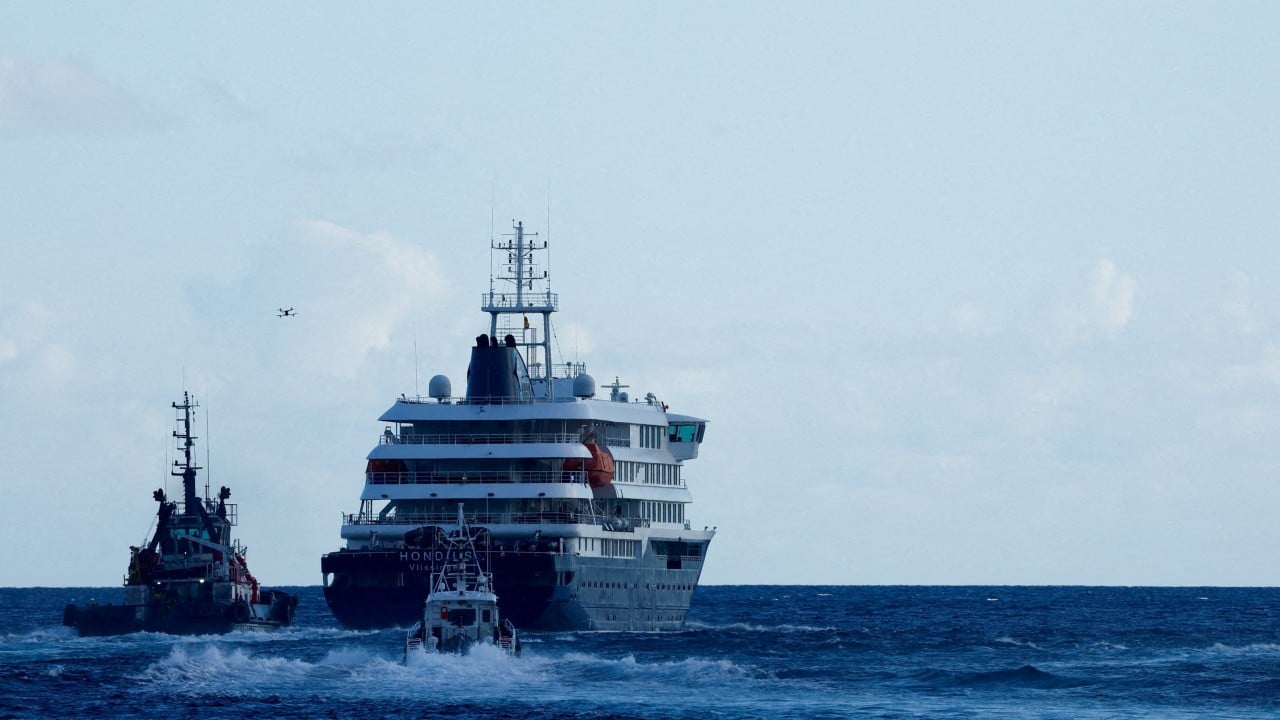
The detection of a presumptive positive hantavirus case in a Canadian citizen repatriated from the MV Hondius cruise ship exposes a critical vulnerability in maritime biosecurity: the intersection of closed-environment vector dynamics with high-consequence zoonotic pathogens. While common cruise ship outbreaks are dominated by highly contagious, direct-transmission agents like norovirus, a hantavirus outbreak demands a fundamentally different analytical framework. The epidemiological risk profile of this event is defined by the specific viral strain, the localized vector dynamics within the vessel, and the mathematical challenges of long incubation periods on active containment.
Evaluating this outbreak requires breaking down the event into three operational dimensions: the localized transmission mechanics of the Andes strain, the protocol limitations of "presumptive" versus "confirmed" diagnostic testing, and the systemic containment strategies deployed by public health agencies. You might also find this connected coverage useful: The Soil That Never Dries.
The Vector and Pathogen Matrix Underlying the MV Hondius Outbreak
To quantify the actual threat level of this event, it is necessary to identify the specific pathogen subtype. Initial clinical sequencing points toward the Andes virus strain of hantavirus. This distinction is critical because it fundamentally alters the transmission equation.
- The Standard Hantavirus Model: Most hantavirus variants, such as the Sin Nombre virus prevalent in North America, are transmitted exclusively via the inhalation of aerosolized rodent excreta (urine, feces, and saliva). In these models, the reproduction number ($R_0$) among humans is effectively zero.
- The Andes Virus Exception: The Andes strain, native to South America, possesses a documented capacity for limited human-to-human transmission. This capability introduces a nonzero $R_0$ within dense, enclosed microclimates, turning a standard environmental exposure event into a transmissible cluster.
The outbreak trajectory on the MV Hondius indicates a dual-source transmission timeline. The index cases—a Dutch couple who subsequently succumbed to the infection—are hypothesized to have sustained primary environmental exposure during an onshore excursion in South America, the endemic zone of the vector. The subsequent propagation of the virus to 12 total cases (nine confirmed, three fatalities, and multiple presumptive cases including American, French, and Canadian nationals) suggests secondary transmission occurred within the ship’s infrastructure. As highlighted in latest coverage by CDC, the implications are worth noting.
The physical architecture of a cruise ship creates a highly efficient amplification loop for aerosolized or low-level contact pathogens. Forced-air ventilation systems, shared dining facilities, and tight cabin corridors compress human density while standardizing environmental variables like humidity and temperature, which can prolong viral viability outside a host.
Diagnostic Bottlenecks: Presumptive Positive vs. National Lab Confirmation
The current clinical status of the Canadian patient—a individual in their 70s currently isolated in a Victoria, British Columbia hospital—is classified as "presumptive positive." This term reflects a specific tiering within public health diagnostic frameworks rather than a definitive clinical conclusion. The delay between initial detection and final confirmation represents a critical operational bottleneck in outbreak response.
The Two-Tiered Diagnostic Framework
[Local/Provincial Laboratory]
     │
     └──► Enzyme-Linked Immunosorbent Assay (ELISA) ──► IgM/IgG Positive
              │
              └──► Classified as "Presumptive Positive"
                       │
                       ▼
[National Microbiology Lab (Winnipeg)]
     │
     └──► Polymerase Chain Reaction (PCR) / Plaque Reduction Neutralization Test (PRNT)
              │
              └──► Final Confirmation / Strain Genotyping
The primary screening completed by provincial authorities (the B.C. Centre for Disease Control) typically utilizes an Enzyme-Linked Immunosorbent Assay (ELISA) to detect hantavirus-specific IgM and IgG antibodies. A positive result at this stage warrants the "presumptive" label. However, cross-reactivity with other viral antigens or low-level background interference can generate false positives, particularly in demographic groups with complex medical histories.
Definitive confirmation requires secondary validation by a reference laboratory—in this instance, the National Microbiology Laboratory in Winnipeg. The reference laboratory employs two distinct validation methodologies:
- Reverse Transcription Polymerase Chain Reaction (RT-PCR): To directly detect and amplify the viral RNA genome, providing definitive proof of active viral replication.
- Plaque Reduction Neutralization Tests (PRNT): The gold standard for serological specificity, measuring the precise concentration of neutralizing antibodies against the specific Andes virus antigen.
The structural lag time of 48 to 72 hours between a provincial presumptive result and a federal confirmation introduces a period of strategic uncertainty. Public health infrastructure must treat a presumptive positive as a true positive, deploying full biocontainment protocols immediately rather than waiting for genomic verification.
The Incubation Timeline and Containment Math
The management of the four repatriated Canadian passengers highlights the mathematical relationship between a pathogen's incubation period and quarantine duration. The individuals landed in British Columbia on May 10, remaining asymptomatic during transit. The emergence of mild symptoms (fever and headache) in the positive patient occurred several days into their managed isolation.
This timeline aligns precisely with the known kinetic profile of hantavirus cardiopulmonary syndrome (HCPS). The incubation period for the Andes strain typically ranges from 7 to 39 days, with outliers extending up to 42 days. This extended window invalidates standard 14-day quarantine protocols used for respiratory viruses like influenza or SARS-CoV-2.
The Public Health Agency of Canada (PHAC) and regional health authorities structured their containment strategy around this extended variable:
- Initial Quarantine Mandate: A minimum 21-day strict isolation period, commencing from the point of last possible exposure on the MV Hondius.
- Conditional Extension Protocol: An operational provision to extend isolation up to 42 days for any high-risk contacts or individuals showing equivocal clinical signs.
Because the virus was anticipated well before the passengers arrived on Canadian soil, the risk of secondary community transmission within British Columbia is near zero. The operational chain of custody—moving passengers directly from international charter transport into controlled isolation facilities—prevented the establishment of new transmission vectors.
Strategic Epilogue: Structural Imperatives for Maritime Biosecurity
The MV Hondius hantavirus outbreak demonstrates that current maritime health frameworks are poorly calibrated for zoonotic pathogens with human-to-human transmission potential. To mitigate future risks, the cruise industry and international public health authorities must shift from reactive quarantine models to proactive architectural and operational controls.
The first step requires a mandatory redesign of HVAC filtration systems on vessels operating in ecologically sensitive regions, shifting from standard recirculation loops to zone-isolated HEPA filtration capable of trapping micro-aerosols. Second, cruise lines must integrate rapid PCR testing capabilities directly into shipboard medical centers, bypassing the logistical delays of land-based reference laboratories.
Finally, port-of-call risk assessments must be updated dynamically; passengers disembarking in areas endemic to high-consequence pathogens must undergo standardized vector-exposure screenings before reboarding. Until these systemic upgrades are institutionalized, international public health systems will remain burdened by the costly, high-stakes logistics of biocontainment and long-range medical evacuations.