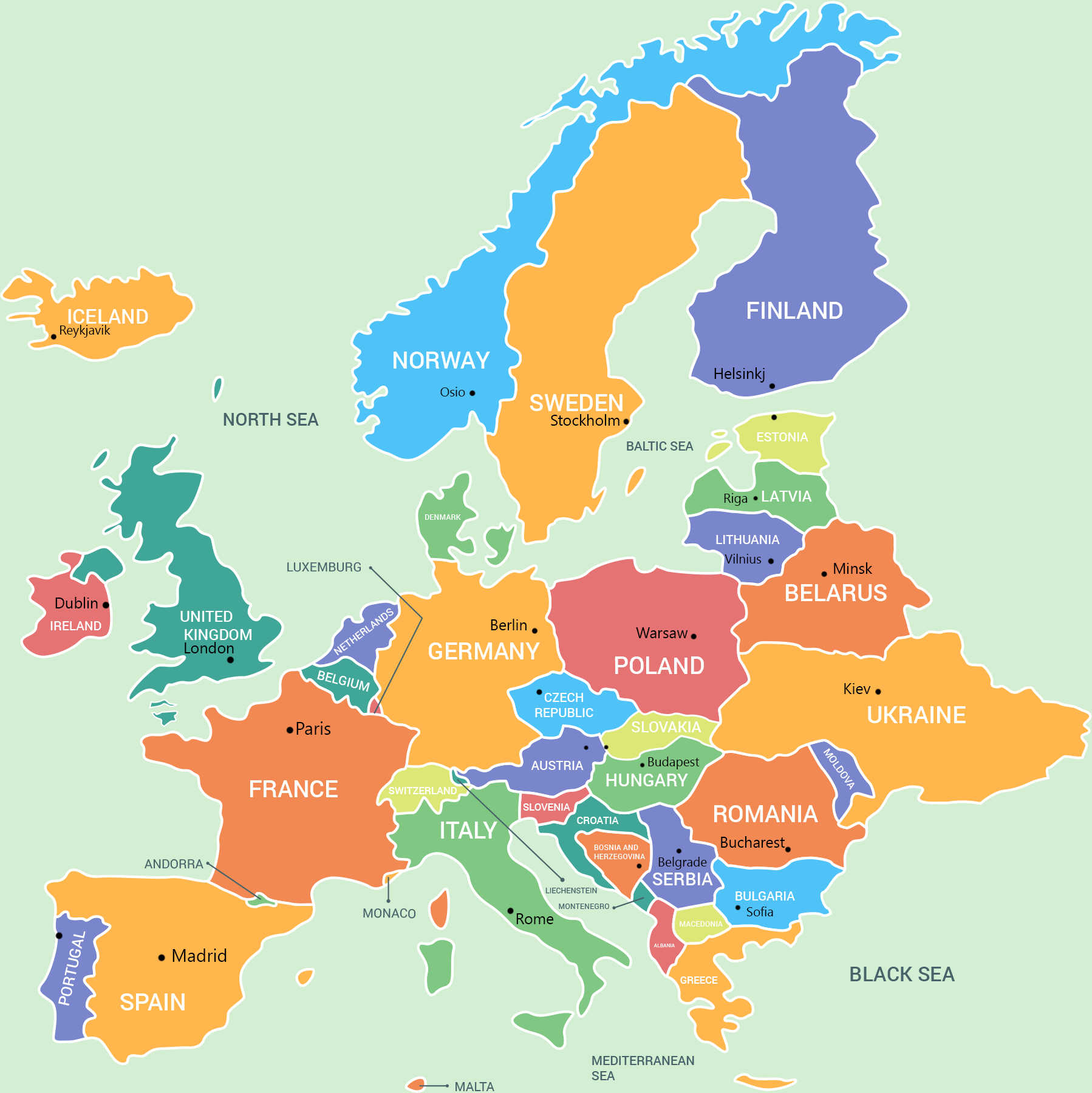
For decades, the standard European narrative has relied on a comforting, lazy geography lesson. The story goes like this: disciplined, industrious Northern Europeans wake up early, pay their taxes, build high-speed trains, and practice fiscal austerity. Meanwhile, the lazy, sun-drenched Mediterranean South drinks wine, evades taxes, dodges work, and relies on northern bailouts to stay afloat.
It is a clean narrative. It is also entirely fabricated. For a more detailed analysis into this area, we suggest: this related article.
I have spent the last fifteen years watching international investors and policymakers swallow this nonsense whole. I have seen sovereign wealth funds pull billions out of Southern enterprises based entirely on a climate-based prejudice masquerading as macroeconomic analysis.
The eternal north-south rift is not a structural economic law. It is a political smokescreen. It exists because pointing fingers across the Alps is a lot easier than admitting that the European Union designed a monetary union without a fiscal shock absorber, and neither side wants to fix the plumbing. For further information on this issue, in-depth coverage can be read at Reuters.
The Geography Trap
Strip away the moralizing rhetoric about Protestant work ethics versus Mediterranean siestas, and look at the actual balance sheets. The narrative crumbles immediately.
Italy has run a primary budget surplus for most of the last thirty years, barring major global crises. Contrast that with several northern economies that routinely run massive private debt bubbles while boasting pristine public debt metrics on paper. Yet, financial commentators treat Italian debt as an existential threat to humanity while ignoring the private leverage time bombs ticking away in the housing markets of Scandinavia and the Benelux union.
The lazy consensus tells you that culture dictates currency stability. The data tells you that institutional design dictates failure.
When you strap a high-inflation, low-growth structural mismatch onto a single currency managed by central bankers in Frankfurt who view the entire Mediterranean as an extended holiday resort, you do not get an economic union. You get a slow-motion demolition derby.
Productivity Is Not A Character Trait
Let us address the holy grail of northern self-righteousness: productivity.
Economists love to point out that output per hour worked is higher in Germany than in Greece. They use this to justify structural reforms, wage suppression, and mandatory austerity programs that have hollowed out the social fabric of half a continent.
Here is what they leave out of the slide deck. Productivity is largely a function of capital allocation and industry mix, not individual effort. A barista in Munich working next to an automated espresso machine and backed by a trillion-dollar industrial supply chain will show higher output per hour than a barista in Athens running an independent shop with zero access to cheap institutional venture capital or tier-one municipal tech infrastructure.
When you tell a nation that its people are simply less productive, you imply a biological or cultural deficit. That is a feature, not a bug, of the current system. It allows creditor nations to extract rents, purchase distressed public assets at a discount, and freeze wages under the guise of harsh economic medicine.
I have sat in boardrooms in Milan and Frankfurt where executives talk about southern labor markets as if they are managing an underperforming subsidiary in a developing nation, completely ignoring the fact that those same southern markets possess some of the deepest engineering talent pools in the world. The issue is not the talent. The issue is a financial architecture that funnels liquidity away from the periphery and traps it in northern asset bubbles.
The Fiscal Compact Fraud
Nobody wants to talk about the origin story of the Maastricht criteria. Those magic numbers—three percent deficit limits and sixty percent debt-to-GDP ratios—were not pulled from sacred economic tablets. They were sketched on a napkin by French bureaucrats in the early 1990s as a rough political compromise.
Yet, generations of journalists and central bankers treat these arbitrary figures like the laws of thermodynamics.
When a northern nation breaches them, it is excused as a temporary Keynesian stimulus required for strategic transition. When a southern nation comes close, it triggers alarm bells, emergency summits, and lectures from technocrats who have never had to run a payroll or face a local electorate that cannot afford basic energy bills.
This double standard is the engine of the rift. It keeps the periphery in a permanent state of probation. It transforms sovereign democracies into administrative districts managed by bond markets.
Imagine a scenario where the European Central Bank treated a housing bubble in Amsterdam with the exact same moral panic and punitive interest rate hikes that it historically applied to a pension shortfall in Athens. The entire political landscape of the continent would shift overnight. But that will never happen, because the people writing the rules built them to protect their own balance sheets first.
The Brain Drain Concession
Let us be completely honest about the downside of this dynamic. The peripheral strategy of cheap labor and reliance on tourism has failed. It produces low-wage service economies that cannot retain young professionals.
The smartest engineers, doctors, and data scientists born in Lisbon, Madrid, and Rome do not stay there. They pack their bags and move to Berlin, London, or Amsterdam.
The North loves this. They get a free-to-educate, high-skilled labor force delivered to their doorsteps, courtesy of southern taxpayers who funded their university degrees. Then, northern politicians look south and complain that those countries cannot innovate.
It is the ultimate scam. You drain a region of its intellectual capital through currency asymmetries and unequal market integration, and then you mock them for having a weak demographic profile.
Stop pretending this is a cultural mismatch. Stop writing think pieces about the Mediterranean lifestyle versus the northern grind.
The north-south divide is a deliberate architectural flaw of the euro area, maintained because it benefits the creditor class while keeping debtor nations too fractured to demand a real renegotiation of power.
Until the continent admits that the single currency requires fiscal federalism, joint debt issuance, and a complete abandonment of moralistic accounting, the rift will stay right where it is.
Not because of geography, but because someone is always profiting from the division.