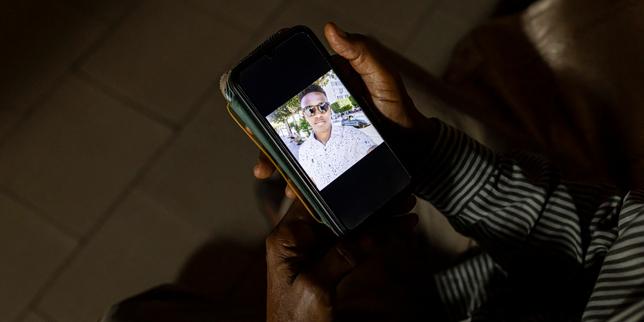
Thousands of people vanish into the Mediterranean and Atlantic every single year. They leave behind terrified families who are trapped in a brutal limbo. Imagine not knowing if your child is dead at the bottom of the sea or locked in a detention center somewhere in Europe.
It is a psychological torture that affects hundreds of thousands of relatives across Africa, the Middle East, and Asia. Yet, the official response from European governments is mostly silence.
The search for migrants missing at sea has been systematically ignored by state institutions. If a cruise ship sinks, every resource is deployed to identify the victims. When a dinghy capsizes, bodies wash ashore and get buried in numbered graves without DNA testing. We need to talk about why this bureaucratic indifference happens and how grassroots organizations are trying to fix a broken system.
The Human Cost of the Void
The International Organization for Migration runs the Missing Migrants Project. Their data shows that since 2014, more than thirty thousand people have died or gone missing trying to reach Europe. That is a conservative estimate. The real number is much higher because of invisible shipwrecks. These are boats that disappear completely without a single survivor or witness.
When a person goes missing on these routes, the trauma back home is unique. Psychologists call it ambiguous loss. It prevents grieving. You cannot move on because there is no proof of death. Families sell their homes, spend their life savings, and fall victim to scammers just to get a shred of information.
I have seen how this destroys communities. A mother in Dakar spends her days waiting for a WhatsApp message that will never come. A father in Nador walks between morgues with a faded photograph. They are not asking for political statements. They just want a definitive answer.
The Bureaucratic Wall and Why It Exists
European authorities could make this process easier. They choose not to. Right now, there is no centralized European database to match the DNA of unidentified bodies with the families of the missing.
When a body is recovered in Spain, Italy, or Greece, the local municipality handles it. Sometimes a forensic doctor takes a DNA sample. Often, they do not. The body is quickly buried under a concrete slab marked with a date and a case number.
If a family in Tunisia wants to check if that body belongs to their son, they face an impossible wall. They cannot get visas to travel and look for him. They cannot easily contact local police departments in Italy or Greece. Language barriers block them. Red tape strangles every attempt.
This is not an accident of administrative incompetence. It is a political choice. Creating a functional, cross-border system to identify dead migrants would require European states to acknowledge the true scale of the humanitarian catastrophe at their borders. It would humanize the statistics.
The Groups Doing the Real Work
Because governments refuse to step up, the burden falls on NGOs, activists, and underfunded teams.
The International Committee of the Red Cross runs the Restoring Family Links program. They try to trace missing relatives, but they are overwhelmed by the sheer volume of requests.
Then you have organizations like Caminando Fronteras in Spain or Alarm Phone. These groups operate on the front lines. They receive distress calls from boats in real time. When a boat goes silent, they document the names of everyone on board. They act as a bridge between distraught families and indifferent maritime authorities.
Activists basically do the forensic work that states refuse to fund. They visit cemeteries, photograph graves, catalog clothing descriptions, and help families navigate foreign legal systems. It is exhausting, voluntary work that shouldn't be necessary in wealthiest regions of the world.
How to Navigate the Search If You are Looking for Someone
If you are trying to find a relative who disappeared on a maritime route to Europe, you cannot rely on official consular channels alone. You have to be proactive and strategic.
Start by contacting the Red Cross or Red Crescent in your home country. They can open an official tracing request. This puts the name into a international network, even if the process moves incredibly slowly.
Document everything. Keep track of the exact date your relative left, the port of departure, the type of boat, and who they were traveling with. Collect photos showing distinct marks like tattoos, scars, or specific jewelry. This information is often more useful than a name, as names get misspelled or lost in translation by European coast guards.
Reach out to grassroots networks on social media. Many families form self-organized groups on Facebook and WhatsApp based on specific departure dates or regions. These communities share photos of recovered personal belongings and updates from European morgues. It is a grueling process, but right now, it is the most reliable way to find cracks in the wall.