Europe is quietly entering a new arms race, and most people are looking the wrong way. They focus on drones and cyber warfare. Meanwhile, European capitals are scrambling to buy and build weapons they haven't touched since the Cold War. We're talking about land-based intermediate-range missiles. These weapons can travel between 500 and 5,500 kilometers. They sit in a dangerous sweet spot. They fly fast, strike deep, and leave almost no time for a target to react.
For three decades, a single treaty kept these missiles out of Europe. The 1987 Intermediate-Range Nuclear Forces (INF) Treaty banned them completely. The US and Russia ripped up that agreement in 2019. Now, the guardrails are gone. European nations realize they have a massive gap in their defenses. If a conflict breaks out, they can't strike back effectively at long distances without relying entirely on Washington. That scares them. For a deeper dive into similar topics, we suggest: this related article.
This isn't a hypothetical problem for the 2030s. The shift is happening today. Governments are writing huge checks, factories are expanding, and long-standing military doctrines are hitting the scrap heap. Europe wants its own long-range teeth, and it's rushing to get them.
The Gap Europe Can No Longer Ignore
Let's look at the cold reality of European defense. If you look at the map, European NATO members have plenty of short-range artillery. They have solid fighter jets like the F-35. But if they need to hit a command center or an ammunition depot 1,000 kilometers away, their options wear thin. For additional details on this development, in-depth coverage is available at Associated Press.
Airpower is the traditional answer. You fly a jet close enough to launch a cruise missile. But modern air defense systems are incredibly lethal. Relying solely on jets to deliver long-range strikes is a massive gamble. You risk losing expensive aircraft and highly trained pilots on day one of a war.
Ground-launched intermediate-range missiles change the math. You hide them in a forest on a mobile launcher. They fire and move before the enemy can blink. Russia knows this well. They deployed the 9M729 cruise missile, which Western intelligence says violated the INF Treaty and ultimately killed it. Russia also uses Iskander missiles and hypersonic Kinzhal systems. Europe has lacked a land-based counterweight for decades.
The turning point came at the NATO summit in Washington, where a major announcement caught many off guard. The US revealed it will start deploying long-range conventional weapons in Germany. This includes SM-6 missiles, Tomahawk cruise missiles, and developmental hypersonic weapons. It's a temporary patch. Berlin, Paris, Warsaw, and Rome know they can't depend on American deployments forever. Political winds change in Washington. Europe needs its own homegrown solution.
The Four Nation Alliance Trying to Catch Up
Four European heavyweights decided to stop waiting around. France, Germany, Italy, and Poland signed a letter of intent to develop their own long-range strike capabilities. They call it the European Long-Range Strike Approach. It sounds like typical bureaucratic jargon, but the intent is dead serious.
They want to build a ground-launched cruise missile with a range well beyond 500 kilometers. France already has experience here with the naval scalp cruise missile, but adapting these systems for mobile ground launchers is a different beast. It requires serious cash and years of engineering.
Developing new military hardware in Europe is historically a mess. Projects get bogged down in political infighting over which country gets the factory jobs. Just look at the delays plaguing the next-generation fighter jet programs. If these four nations repeat those mistakes, they'll show up to the party a decade too late. Poland isn't waiting. While participating in the European initiative, Warsaw is also buying hundreds of American Homar-K launchers and South Korean Chunmoo systems. They want capabilities on the ground immediately.
Why Hypersonic Speed Changes the Strategic Calculus
The race isn't just about packing more fuel into a rocket to make it go further. It's about speed and survivability. Traditional cruise missiles are precise, but they fly relatively slow. Modern air defenses can shoot them down if they spot them early enough.
That's why everyone is obsessed with hypersonics. A hypersonic weapon flies faster than Mach 5 and maneuvers during flight. It doesn't follow a predictable arc like an old ballistic missile. This makes it a nightmare to track and intercept.
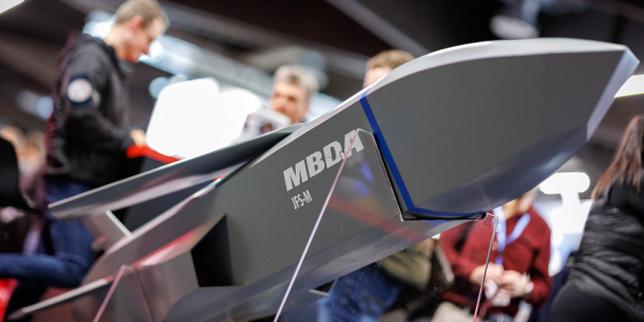
The UK Ministry of Defence has its own separate program running to develop a sovereign hypersonic missile. They want it in service by 2030. They're spending millions on testing materials that can withstand the intense heat generated at those speeds. When you fly at Mach 5, the air around the missile turns into plasma. It requires advanced material science that few countries possess.
The Escalation Risk Nobody Wants to Talk About
Building these weapons creates a classic security dilemma. You buy missiles to defend yourself and make an adversary think twice. But your adversary sees those missiles as a first-strike threat. They build more of their own in response. The cycle repeats.
During the Cold War, the deployment of Pershing II missiles in West Germany sparked massive public protests. Millions of citizens took to the streets. People understood that having intermediate-range missiles on your soil makes you a primary target in a crisis. These missiles fly so fast that leaders have mere minutes to decide if an incoming strike is a false alarm or the real thing. It compresses decision-making time to a dangerous degree.
Today, public protest is muted compared to the 1980s, but the strategic danger is identical. If Europe fills its eastern flank with long-range strike options, the border becomes a powder keg. A simple misunderstanding or a hacked radar system could trigger a catastrophic response. Yet, European planners feel they have no choice. Weakness, in their view, invites aggression far quicker than deterrence does.
What Needs to Happen Next
If you're tracking the defense sector or international relations, watching the signing ceremonies isn't enough. The real test is the supply chain. You can't fight a modern conflict with a handful of boutique, hand-crafted missiles. You need mass production.
European defense contractors face a harsh reality. They suffer from a shortage of solid rocket motors, specialized explosives, and advanced semiconductors. Producing a few dozen missiles a year won't cut it. To make this new strategy real, European governments must commit to long-term multi-year contracts so industry can safely invest in expanding factories. Watch the upcoming national defense budget debates in Paris and Berlin. If the money for manufacturing infrastructure isn't there, the grand announcements about intermediate-range missiles are just empty talk.