European leaders have spent months fighting for a formal voice in Ukraine peace negotiations, only to discover that getting a chair in the room does not guarantee real power over the outcome.
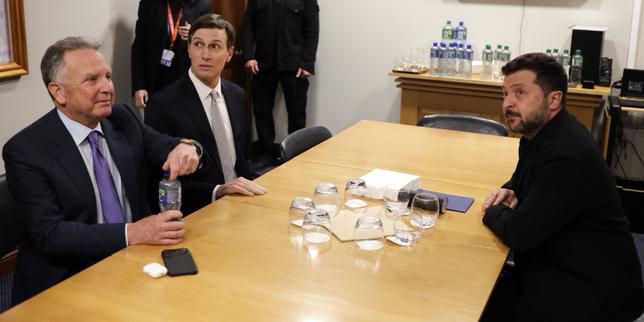
Following trilateral talks in Abu Dhabi and diplomatic exchanges involving Ukrainian President Volodymyr Zelenskyy and American envoys Steve Witkoff and Jared Kushner, Kyiv has pushed to expand the format into four-party talks with Europe. Yet Moscow has questioned what added value European representatives bring and floated sending them to Moscow first to clarify their position, leaving the format and date unresolved. If you liked this piece, you might want to read: this related article.
Anyone who has watched peace talks across Eastern Europe and the Middle East over the past thirty years recognizes this moment. When great powers negotiate over borders, security architecture, and frozen assets, late arrivals often get handed a pen to sign agreements already drafted elsewhere.
Why Europe Was Sidelined in the First Place
For much of the war, European capitals assumed their financial aid, weapons deliveries, and sanctions packages made their presence at the negotiating table automatic. That assumption collided with hard diplomatic reality. Washington and Moscow repeatedly tested trilateral channels—from Geneva to Abu Dhabi—while European officials often worked on the sidelines or coordinated around parallel tracks. For another look on this event, refer to the recent coverage from Reuters.
Moscow prefers bilateral or trilateral bargaining because smaller rooms narrow the focus to territorial demands, ceasefire lines, and immediate concessions. Adding European governments introduces uncomfortable questions about long-term continental security, sanctions relief, and the legal status of borders.
A seat at the table only matters if the delegation brings leverage that the other sides cannot ignore. Without it, a four-party format risks turning into a polite audience for a deal struck in private.
Washington's own approach has complicated matters for Brussels, London, and Paris. American envoys have spoken about building a broader security framework while simultaneously signaling limits on direct U.S. troop deployments or military bases in Ukraine after a settlement. That leaves European governments scrambling to define what they are willing to back with real military and financial weight rather than diplomatic speeches.
The E5 Format and the Illusion of Unity
In mid-November, EU leaders meeting in Dublin backed an E5 negotiating team—bringing together France, Germany, Italy, Poland, and the United Kingdom alongside EU institutions—to push for coherent European participation in Ukraine peace negotiations. On paper, uniting the continent's heaviest hitters makes sense. In practice, every capital inside that group pulls on a slightly different rope.
Consider a hypothetical scenario during a tense drafting session in Geneva or Brussels. A proposal emerges to ease certain economic restrictions in exchange for a temporary energy truce along the front. Warsaw worries about long-term Russian rearmament on NATO's eastern flank, Rome pushes for commercial and regional stability, Berlin weighs industrial and fiscal exposure, Paris presses for strategic autonomy, and London operates outside EU institutional rules on sanctions and bloc enlargement.
Even the division of labor inside Europe remains contested. National capitals, the European Council, the European Commission, and the EU's foreign policy chief do not always speak with a single voice on who holds the mandate. Moscow knows how to exploit that friction. When the Kremlin asks what European participation actually contributes or suggests holding preliminary talks in Russia, it is testing whether Europe will splinter over process before substance even begins.
| Diplomatic Factor | Europe's Position | Key Friction Point |
|---|---|---|
| Negotiating Format | Pushes for a four-party table including E5, EU, and NATO | Moscow questions Europe's role and has not set a date |
| Security Guarantees | Debates coalition forces and Article 5-style backing | U.S. rules out troops and bases; Russia rejects foreign forces |
| Sanctions and Recovery | Links long-term reconstruction and EU path to enforcement | Divergence between EU rules, non-EU states like the U.K., and U.S. moves |
Security Guarantees Are Where the Real Fight Starts
Arguments over seating charts are a distraction from the core battleground: post-war security guarantees. Kyiv has made clear that a short-lived pause without enforceable backing will only invite another invasion once Russian forces regroup. Zelenskyy has pressed for durable, written commitments rather than vague political promises.
American negotiators have floated concepts modeled on NATO's Article 5 collective defense principle, yet Washington has ruled out putting U.S. troops or military bases in Ukraine under those arrangements. An "Article 5-like" formula sounds reassuring in a press release. In diplomatic reality, anything short of formal treaty obligations leaves open the hardest question of all: who actually shows up if a ceasefire is broken?
European governments face the same mirror. Proposals for a European-led coalition or multinational force depend on a ceasefire and clear rules of engagement that capitals have not yet locked down legally or militarily. Meanwhile, Russia insists any foreign troops in Ukraine would be unacceptable.
- Air defense and winter resilience remain immediate lifelines as strikes target Ukraine's power grid ahead of winter.
- Reconstruction planning, such as the upcoming Ukraine Recovery Conference in Tallinn, ties long-term economic survival to European institutions and rule-of-law reforms.
- Territorial disputes over Donbas and occupied areas remain the sharpest deadlock between Kyiv and Moscow, complicated by constitutional and public red lines in Ukraine.
What Leverage Europe Still Holds
Europe is not powerless in Ukraine peace negotiations, despite how often it looks reactive. Its real leverage sits in three areas that neither Washington nor Moscow can easily bypass: long-term financing, sanctions enforcement, and integration into European markets and defense industrial chains.
Rebuilding Ukraine's grid, cities, and economy will require sustained European backing over years, not months. Likewise, decisions on frozen assets, trade access, and sanctions relief cannot be finalized simply by waving a wand in a bilateral meeting without European buy-in.
Yet leverage only works if leaders tie their diplomatic seat to concrete conditions rather than begging for an invitation. If European capitals agree to enter talks merely to rubber-stamp concessions on territory or security that leave their own eastern flank exposed, they will pay the bill for instability later.
Before the next round of talks is scheduled, Europe's E5 team and EU institutions need a single, non-negotiable bottom line on sanctions, troop mandates, and written security commitments—and the discipline to walk away from any deal that trades long-term European security for a quick headline.