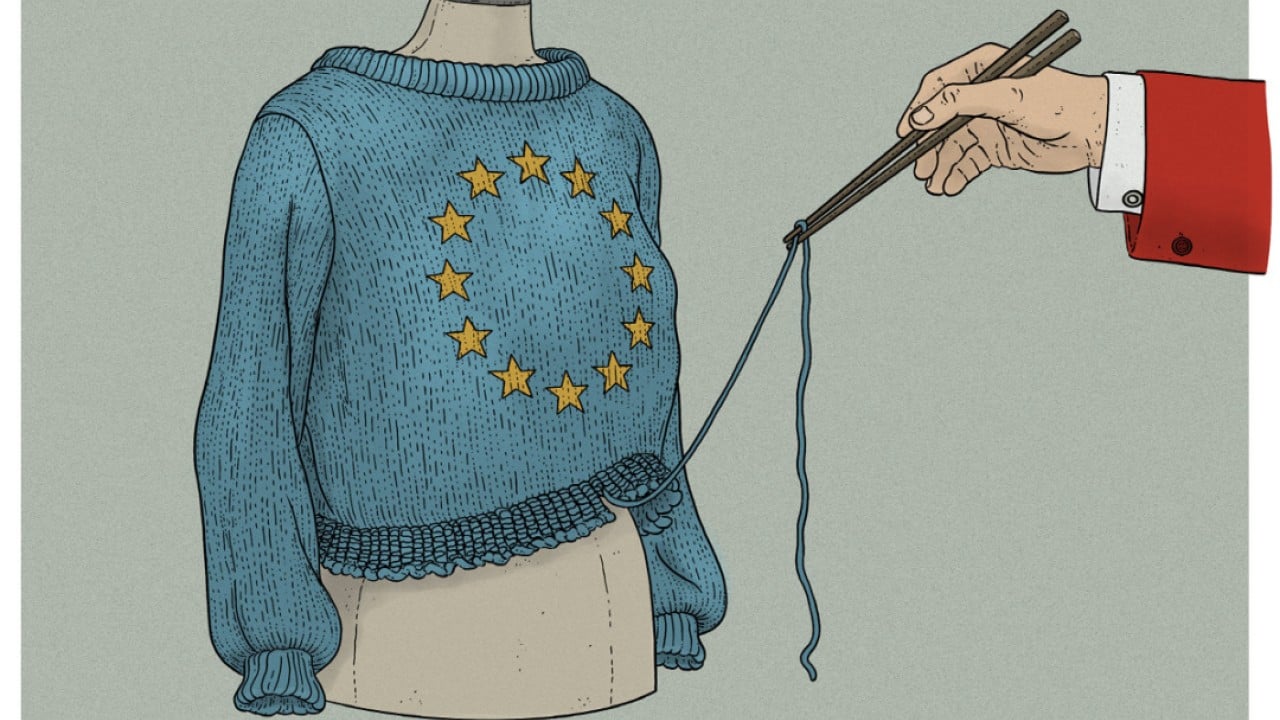
Brussels loves talking about unity. Every summit ends with a fresh communique promising a "coordinated European approach" to Beijing, complete with stern warnings about industrial overcapacity and critical supply chains. Then the plane lands back in Berlin, Madrid, or Budapest, and everyone quietly cuts their own side deal.
That gap between summit rhetoric and national self-interest is the single biggest vulnerability in Europe's trade defense. If you look closely at how the bloc actually operates in late 2026, European solidarity on China isn't failing because leaders don't see the threat. It's failing because Beijing knows exactly how to price each member state's loyalty—and Brussels still hasn't built a credible way to share the financial pain when retaliation hits.
The Divide-and-Conquer Playbook Works Because It Pays
Beijing doesn't treat the European Union as a single trading bloc when pressure mounts. It treats it like 27 separate negotiators with wildly different balance sheets.
Watch what happens whenever the European Commission rolls out a defensive measure. Back in 2024, when Brussels slapped countervailing duties on Chinese battery-electric vehicles, Beijing didn't hit back at the whole bloc equally. It aimed surgical anti-dumping investigations at French cognac, Spanish pork, and European dairy. The message to national capitals was obvious: vote with Brussels, and your local farmers or distillers pay the bill.
It worked, at least partially. Spain shifted its posture to protect pork exports. Hungary actively courted Chinese battery and EV plants—like BYD's facility in Szeged—positioning itself as Beijing's favorite entry point into the single market. Meanwhile, German automakers lobbied fiercely behind closed doors against tariffs because Volkswagen, BMW, and Mercedes-Benz still rely heavily on Chinese factories and consumers for global profits.
Fast forward to November 2026, and the exact same dynamic is playing out over hybrid vehicles. Just days ago, on November 23, the European Commission imposed provisional safeguard quotas on hybrid passenger vehicle imports for 200 days starting December 1. Why? Because after battery-EV tariffs went up, Chinese manufacturers pivoted aggressively to plug-in and mild hybrids, capturing roughly 30% of the EU's plug-in hybrid imports by value in 2025. Yet even as Brussels tries to plug that loophole, European chemical giants like BASF are doubling down inside China—inaugurating an €8.7 billion integrated chemical complex in Zhanjiang in March 2026 to serve Chinese domestic demand directly.
You can't build a united front when half the room is trying to shield domestic factories from Chinese imports while the other half is pouring billions into Chinese industrial parks.
The Numbers Behind Europe's Industrial Squeeze
Strip away the diplomatic niceties, and the math explains why panic is spreading across European boardrooms.
According to Eurostat data covering 2025, the EU ran a bilateral goods trade deficit with China of roughly €360 billion. That's nearly one billion euros flowing out every single day. Even though the bloc managed an overall global goods surplus of €128 billion thanks to exports elsewhere, the bilateral imbalance with China has shifted from low-cost consumer goods to high-value manufacturing.
Economists call this the second China shock. The first shock in the 2000s wiped out European textiles, furniture, and basic electronics. This current wave targets the exact industries Europe needs to survive the next three decades:
- Automotive and batteries: Chinese brands aren't just competing on price anymore. International Energy Agency data shows falling battery costs and fierce domestic competition pushed average battery-electric car prices in China down by over 10% in 2025, leaving nearly 70% of EVs sold there cheaper than equivalent combustion cars before subsidies. European legacy automakers simply can't match that cost structure at home.
- Clean tech hardware: Solar panel manufacturing in Europe is practically extinct. Wind turbine makers and electrolyzer producers are watching Chinese rivals undercut bids by 30% to 50% with generous state-backed financing.
- Chemicals and steel: High European energy costs following the loss of cheap Russian gas collided head-on with subsidized Chinese overcapacity, forcing plant closures across Germany and Central Europe.
When German industrial icons cut thousands of jobs every month, "de-risking" stops being an abstract Brussels buzzword. It becomes an existential fight over whether Europe stays an industrial powerhouse or turns into a museum for tourists and luxury handbags.
Why Washington Won't Save Europe Either
A common mistake in European foreign policy debates is assuming Brussels can just tuck itself under Washington's wing—or conversely, play Washington and Beijing off each other indefinitely. Both ideas are dangerous.
American policy toward China isn't designed to protect European factories. It's designed to preserve American technological and military primacy. When the US slaps 100% tariffs on Chinese EVs and tightens export controls on advanced semiconductors, all that excess Chinese manufacturing capacity doesn't vanish into thin air. It gets rerouted straight toward the next biggest wealthy market with open borders: Europe.
At the same time, Europe faces tariff threats from Washington itself. Several EU firms are actually looking to maintain selective ties with Chinese partners precisely to hedge against unpredictable US trade barriers. And nobody in Brussels wants to wake up to a sudden bilateral grand bargain between Washington and Beijing that sells out European economic interests overnight.
Europe has to stand on its own feet. It controls a single market of 450 million wealthy consumers, world-class research institutions, and crucial chokepoints in semiconductor equipment and precision machinery. That's enormous clout. You only lose that clout when 27 governments let Beijing negotiate with them one by one.
The Missing Piece Is a Real Solidarity Fund
Here is what almost every policy paper on EU-China relations gets wrong: calling for "political willpower" is useless if you ignore domestic politics.
Imagine you're the prime minister of a medium-sized EU country. Brussels asks you to vote for tough import caps on Chinese green tech or steel. You know that two weeks later, Beijing will slap retaliatory tariffs on your country's biggest agricultural export or cancel a major manufacturing investment in your swing districts. Meanwhile, your neighboring EU countries—whose industries benefit from the protection—offer you nothing beyond a polite thank-you at the next European Council meeting.
Would you take that bullet? Honestly, almost no elected leader would.
In mid-2026, reports surfaced that the European Commission was exploring a dedicated "solidarity instrument" to cushion member states targeted by Chinese trade retaliation. That idea goes straight to the heart of the problem, yet progress has been painfully slow. Without automatic financial compensation—funded at the EU level—solidarity remains a charity request rather than a binding defense pact.
Look at how NATO Article 5 works in military defense: an attack on one is an attack on all. Europe needs an economic equivalent for trade coercion. The EU already passed its Anti-Coercion Instrument in 2023, giving Brussels legal authority to hit back with tariffs, investment restrictions, or public procurement bans when a foreign power bullies a member state. Legal authority isn't enough, though. Until the EU pairs that stick with a financial shield that reimburses targeted industries in Spain, France, Lithuania, or wherever Beijing strikes next, member states will keep flinching.
Where Europe Actually Has Clout—and Where It's Blind
To be fair, Brussels isn't completely asleep at the wheel. Over the past two years, the Commission has quietly built a toolkit that makes Beijing nervous:
- Foreign Subsidies Regulation: Brussels can now investigate and block state-subsidized foreign bidders from buying European companies or winning public infrastructure contracts. It has already forced Chinese rail and solar bidders to withdraw from European tenders.
- Import quotas and safeguard measures: Moving from slow anti-dumping probes—which take 12 to 18 months while imports flood the market—to faster safeguard quotas like the November 2026 hybrid car cap shows Brussels is learning to act before domestic factories close.
- Forced localization pressure: Instead of letting Chinese firms export finished cars tariff-free, European policymakers are increasingly pushing for joint ventures and local assembly rules that transfer battery technology and keep assembly jobs inside the EU.
Still, there's a massive blind spot in how Europe approaches supply chain resilience: midstream refining.
Everyone talks about mining rare earths or lithium. Almost nobody talks about who processes them. China controls the vast majority of global midstream refining for lithium, cobalt, gallium, germanium, and permanent magnets. Even if Europe signs mining deals with Chile, Australia, or Canada, those raw ores often still get shipped to China for chemical processing before returning to Europe inside battery cells or wind turbine generators.
As analysts at the International Institute for Strategic Studies pointed out in November 2026, true diversification isn't about swapping one supplier for another on paper. It requires building refining capacity, stockpiling critical inputs, and accepting that "made in Europe" will cost more in the short run than buying subsidized Chinese components. Right now, European businesses are pushing back against Brussels' latest supply-chain reporting and diversification mandates, warning that ditching Chinese suppliers too fast will wreck their profit margins.
What Needs to Happen Before the Next Trade Shock
Waiting for unanimous consensus among 27 capitals is a recipe for paralysis. If European leaders want their China strategy to mean anything beyond press releases, four concrete shifts have to happen right now:
- Operationalize the trade solidarity fund immediately. Stop debating it in working groups. Tie EU tariff revenues collected from Chinese imports directly into a compensation pool that automatically pays out to European sectors hit by retaliatory duties. When Beijing sees that targeting French brandy or Spanish pork costs China tariff revenue without breaking EU votes, the divide-and-conquer tactic dies overnight.
- Enforce strict local-content and tech-transfer rules on Chinese FDI. If Chinese EV and battery giants want to build plants in Hungary, Spain, or Germany to bypass tariffs, mandate genuine European value-add—meaning local R&D, European Tier-1 suppliers, and IP licensing, not just bolting together knock-down kits imported from Shenzhen.
- Use Qualified Majority Voting more aggressively on trade defense. Trade policy is already an exclusive EU competence, yet political cowardice often makes the Commission seek informal unanimity before acting. Brussels should use its existing legal mandate to deploy anti-subsidy and safeguard tools rapidly without letting a single member state hold the bloc hostage.
- Coordinate currency and macro-imbalance talks with a hard deadline. With the EU, ECB, and Eurogroup preparing high-level currency talks in Beijing over the undervalued yuan—which supercharges Chinese export competitiveness—European negotiators need clear red lines. Polite dialogue without automatic safeguard triggers only buys Beijing more time to hollow out European manufacturing.
Europe still holds one of the strongest economic hands in the world. Nobody can replace the purchasing power of the European single market overnight—least of all a Chinese economy struggling with weak domestic consumption and a prolonged property slump. Either European capitals pool their market power and share the short-term cost of defending their industrial base, or they will keep getting picked off one sector and one country at a time.