You pack your bags in five minutes. Police knock on your door at two in the morning. Smoke fills the air, thick enough to burn your lungs before you even step outside.
That was the sudden reality for roughly 20,000 tourists and local residents along France’s southwestern Atlantic coast near Lège-Cap-Ferret and Arcachon Bay. What started as a quiet summer getaway in the pine forests west of Bordeaux rapidly turned into a massive evacuation scramble. Dry pine needles, zero rainfall, and relentless summer heat turned one of France’s most sought-after holiday destinations into a roaring fire pit within hours.
It isn't just an isolated incident in France either. Across southern and western Europe, scorching temperatures hitting above 40 degrees Celsius have ignited dangerous blazes from the Spanish province of Guadalajara to the drought-ridden hills of Sicily. If you're planning travel through southern Europe this season, the reality on the ground has changed completely.
Gironde Under Siege Again
The Gironde region in southwestern France knows this nightmare all too well. Four years after catastrophic fires destroyed tens of thousands of hectares in 2022, the region is battling familiar flames once more.
The latest inferno took root in dense pine forests around Saumos and Le Porge, just west of Bordeaux. Driven by strong coastal winds and bone-dry vegetation, the fire devoured over 3,100 hectares in barely a day. The speed caught almost everyone off guard. Flames soared ten meters high, cutting off key access roads to the Cap Ferret peninsula—an exclusive stretch of coastline famous for its oyster farms and high-end holiday villas.
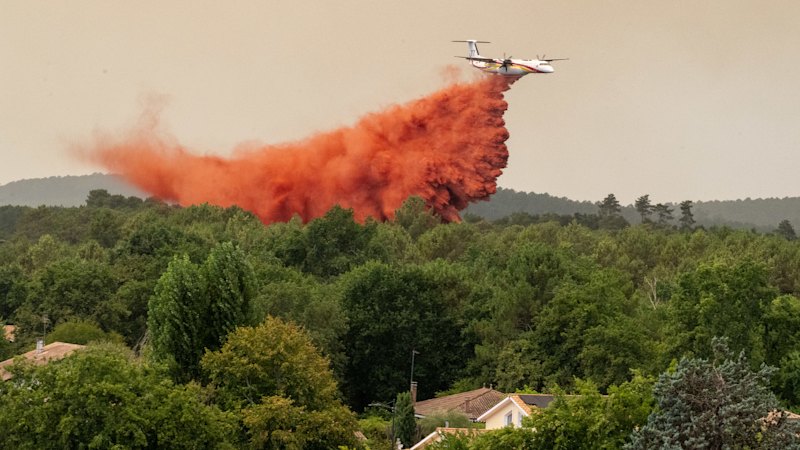
Around 700 firefighters scrambled to the scene, backed by water-bombing aircraft pulling water directly from nearby bays. Yet, despite dropping dozens of tons of water on the front lines, firefighters faced erratic winds that kept pushing flames toward residential borders.
When a fire gets within 300 meters of suburban homes, emergency crews stop trying to tame the broader forest line and pivot to house-by-house defense. That's exactly what played out in Lège and nearby villages like Claouey. Municipalities scrambled to transform local sports halls and community hubs into emergency shelters, supplying cots, water, and basic meals to thousands of displaced families who left campsites with little more than their passports and the clothes on their backs.
Reports from local authorities indicate that the spark might have come from forest clearing machinery operating in tinder-dry underbrush. Whether sparked by equipment or human negligence, the result was immediate chaos. The regional fire service noted that prolonged summer heatwaves have left the soil completely depleted of moisture. Plants aren't just dry; they're essentially fuel waiting for a match.
Beyond France - Spain and Italy Hit Hard
If you look at the map of Europe right now, the French Atlantic coast is just one piece of a much larger disaster. The Mediterranean basin is taking an absolute beating this summer.
In Spain, extreme heat warnings pushed temperatures past 44 degrees Celsius in the southeast. A massive blaze in the province of Guadalajara burned over 32,000 hectares, making it one of the largest single fires in modern Spanish record keeping. Over 34 villages were evacuated as emergency military units moved in to establish firebreaks. Near Madrid, a wildfire close to Alcalá de Henares generated enough smoke and flame proximity to force a temporary suspension of high-speed rail lines connecting Madrid to Barcelona.
In Italy, the situation in Sicily remains critical. Fire crews have carried out over a thousand operations in a matter of days as temperatures in Palermo hovered near 49 degrees Celsius. High winds on the island turned dry brush into fast-moving flame corridors, destroying agricultural land, burning through small businesses, and claiming the life of a veteran firefighter in Caltanissetta.
Over in Greece, satellite tracking systems introduced to catch early smoke plumes couldn't prevent fast-moving blazes near Athens and Thessaloniki from forcing factory evacuations and pushing toxic smoke clouds over urban neighborhoods.
The pattern is identical wherever you look: early heat spikes in May and June dry out topsoil, kill off surface vegetation, and turn vast forest tracks into gunpowder. When July heat waves arrive, even minor sparks escalate into massive regional emergencies.
Why Mediterranean and Atlantic Pine Forests Are Burning Faster Than Ever
To understand why these fires spread with such terrifying speed, you have to look at what's actually growing on the ground.
Much of the coastal forest along southwestern France was planted artificially over a century ago. Maritime pine (Pinus pinaster) was chosen because it grows quickly in sandy soil and stabilizes coastal dunes. But maritime pine resin is extremely flammable. The trees grow packed close together, creating a continuous canopy of pine needles and sap.
When a ground fire starts, it quickly climbs the lower branches of these resin-heavy trees—a process firefighters call laddering. Once the fire reaches the canopy, embers fly ahead on coastal winds, landing hundreds of meters behind established fire lines. Firefighters call these spot fires, and they make containment nearly impossible with ground crews alone.
Combine that tree structure with recent weather patterns:
- Soil moisture levels across southern Europe have dropped to historic lows.
- Multiple back-to-back summer heatwaves leave zero time for night recovery, keeping night temperatures above 25 degrees Celsius.
- Wind shifts near coastal bays rapidly change fire directions without warning.
- Water sources used for aerial dropping suffer from high evaporation rates during extreme heat.
Scientists and forestry experts have pointed out for years that managing these forests requires far more aggressive clear-cutting, controlled winter burns, and mixed-species planting. Oak and broadleaf trees don't burn with the explosive intensity of resinous pines. However, transitioning millions of hectares of established forest takes decades, and the climate is warming much faster than forest managers can restructure the woods.
What You Must Do If Fire Threatens Your Vacation
If you're traveling in southern France, Spain, Portugal, Italy, or Greece during peak summer months, relying on luck isn't a strategy. Wildfires move fast, and language barriers can make official announcements difficult to interpret quickly.
Here is what you actually need to do to protect yourself and your family when staying near forest areas in Europe:
Download Local Emergency Apps
National authorities broadcast immediate evacuation orders through specific emergency apps and broadcast networks. In France, pay attention to alerts from the local Prefecture on social media or official local radio channels. In Spain, keep track of AEMET heat and fire alert notices.
Keep a Go Bag Ready
If you're staying at a campsite, holiday rental, or cabin near a pine forest during a heat alert, don't leave your essential documents scattered around. Keep passports, medicine, phone chargers, and basic valuables packed together near the front door or in your vehicle's trunk.
Know Your Escape Routes
Holiday resorts often sit at the end of long, scenic dead-end roads surrounded by trees. When you check in, map out at least two separate driving routes back to major highways. If smoke blocks the primary road, you won't have time to study a map.
Never Ignore Early Precautionary Evacuations
When local mayor offices or police knock on doors telling people to leave as a precaution, leave immediately. Traffic bottlenecks on narrow coastal roads get severe very quickly. Waiting until you see flames or heavy black smoke means you'll be stuck in a bumper-to-bumper gridlock while emergency vehicles try to squeeze past you.
Pay Attention to Outdoor Restrictions
Most wildfires start through human activity—whether it's clearing land, discarding lit cigarettes, or using outdoor charcoal grills during dry advisories. Adhere strictly to local bans on outdoor burning, campfire bans, and restricted forest access zones. Many European regions now issue heavy fines or criminal charges for entering high-risk forests during extreme alert days.
Check regional fire risk maps on official government portals every morning before driving into forested parks or coastal dune zones. If a region hits red or black danger status, alter your itinerary and head toward urban coastal areas away from heavy pine cover.