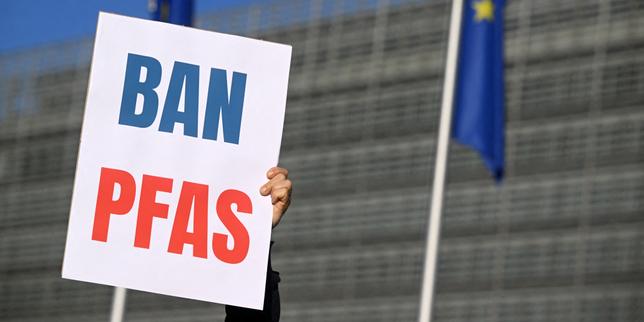
European regulators have officially pushed the universal restriction of per- and polyfluoroalkyl substances (PFAS) into its decisive evaluation phase, signaling the beginning of the end for roughly 10,000 synthetic "forever chemicals" across the European Union. Spearheaded by national authorities from Denmark, Germany, the Netherlands, Norway, and Sweden, the European Chemicals Agency (ECHA) scientific committees are systematically dismantling sector-by-sector exemptions, forcing manufacturers from semiconductor fabricators to medical device makers to prove why they cannot survive without carbon-fluorine chemistry.
For decades, chemical conglomerates played a predictable game of regulatory whack-a-mole. Whenever Brussels banned one toxic compound, companies tweaked a single molecular chain and kept selling its cousin. That era is dead. By targeting the entire class of PFAS under a single, sweeping REACH restriction, Europe is executing the largest chemical phase-out in industrial history—a move that will trigger supply chain shocks well beyond the bloc's borders.
The End of Molecular Whack-a-Mole
To understand why this regulatory milestone has sent shockwaves through boardrooms from Frankfurt to Tokyo, you have to look at the chemistry. PFAS are defined by the carbon-fluorine bond, one of the strongest in organic chemistry. That bond gives these substances their near-magical properties. They repel water, oil, and grease; they withstand extreme heat; they resist corrosion and friction.
Those exact properties also make them virtually indestructible in nature. They do not biodegrade. They accumulate in groundwater, soil, wildlife, and human bloodstreams, where epidemiological studies have linked chronic exposure to thyroid disease, liver damage, immune suppression, and certain cancers.
Historically, European regulators evaluated chemicals one substance at a time. When perfluorooctanoic acid (PFOA) and perfluorooctanesulfonic acid (PFOS) faced global bans under the Stockholm Convention, chemical producers simply pivoted to shorter-chain alternatives like GenX. Regulators spent years gathering toxicological data on the replacements, only to discover they were often just as persistent and even harder to filter out of drinking water.
The five initiating countries—backed by ECHA’s Committee for Risk Assessment (RAC) and Committee for Socio-Economic Analysis (SEAC)—decided to break the cycle. Instead of chasing individual molecules, they defined the restriction by chemical structure. Any substance containing at least one fully fluorinated methyl or methylene carbon atom falls into the net. Over 10,000 compounds are suddenly on the chopping block at once.
Inside the ECHA Evaluation Machine
A milestone in Brussels rarely looks dramatic from the outside. It looks like thousands of pages of technical dossiers, public consultation spreadsheets, and marathon committee sessions in Helsinki. Yet the sheer scale of the ECHA review process reveals why this step matters so much.
When ECHA opened its six-month public consultation on the universal PFAS proposal, it received more than 5,600 comments—a record-shattering flood of data from trade associations, NGOs, academic researchers, and individual companies. Processing that volume of technical pushback forced RAC and SEAC to abandon a single-vote approach and instead evaluate the restriction sector by sector.
How the Sector-by-Sector Review Works
Rather than passing or rejecting the entire ban in one stroke, ECHA’s scientific committees are moving systematically through major industrial verticals. They have already worked through consumer mixtures, cosmetics, ski wax, and metal plating, moving steadily into textiles, food contact materials, construction products, and fluorinated gases. Ahead lie the heaviest industrial battlegrounds: electronics, semiconductors, energy storage, and transport.
For every sector, the committees ask two brutal questions. First, do the emissions pose an unacceptable risk to human health and the environment? Second, what are the socio-economic consequences of banning the substance, and do viable alternatives exist?
If an industry cannot prove that alternatives are technically and economically impossible right now, the default outcome is a total ban after an 18-month transition period. Even where companies win a temporary reprieve—known as a time-limited derogation—the clock is ticking. Most derogations are capped at either five or twelve years, designed strictly to give engineers enough runway to commercialize substitutes, not to preserve the status quo.
The Battle Over Essential Use
Walk into any Brussels lobbying office right now, and you will hear one phrase repeated like a mantra: essential use.
The European Commission has been developing criteria to define when a harmful chemical is genuinely essential for health, safety, or the functioning of society. Naturally, every industry argues its products are indispensable. Outdoor apparel brands initially claimed waterproofing required fluoropolymers. Cookware manufacturers insisted non-stick pans could not exist without PTFE.
Those arguments collapsed quickly under scrutiny. Major outdoor brands like Patagonia and Gore-Tex have already transitioned toward PFAS-free membranes, proving that consumer convenience does not justify permanent environmental contamination. Food packaging is facing a parallel reckoning; paperboard mills are rapidly replacing fluorinated grease barriers with mechanical treatments and plant-based coatings.
The real friction lies in heavy industry and green technology. Consider the European Union's own climate ambitions. Brussels wants to lead the world in green hydrogen, electric vehicles, and semiconductor manufacturing. Yet those exact industries rely heavily on specialized fluoropolymers:
- Green Hydrogen: Proton exchange membrane (PEM) electrolyzers depend on fluorinated ionomers like Nafion to conduct protons while separating hydrogen and oxygen gases under harsh acidic conditions.
- Semiconductors: Chip fabrication requires ultra-pure fluoropolymer tubing, seals, and photoresists capable of surviving aggressive etching acids without leaching contaminants onto silicon wafers.
- Lithium-Ion Batteries: Polyvinylidene fluoride (PVDF) serves as the standard binder holding cathode materials together inside electric vehicle batteries.
- Medical Devices: Catheters, surgical grafts, and inhalers rely on PTFE and fluorinated gases for biocompatibility, low friction, and precise dosing.
This creates an acute policy collision inside the European Commission. Regulators are forced to weigh the irreversible ecological damage of persistent chemicals against the strategic risk of crippling Europe's clean-tech autonomy and medical supply chains.
The Fluoropolymer Loophole Fight
Sensing vulnerability in the socio-economic debate, major chemical producers—including Chemours, Daikin, Solvay, and 3M—have poured millions into a targeted lobbying campaign. Their goal is simple: carve fluoropolymers out of the universal ban entirely.
Industry lobbyists argue that high-molecular-weight fluoropolymers like PTFE (commonly known as Teflon) are inert, non-toxic, and too large to cross cell membranes. Under OECD criteria, they classify them as "polymers of low concern."
Environmental scientists and independent toxicologists counter that this argument deliberately ignores the full lifecycle of the material. Even if a finished PTFE gasket sitting inside an industrial valve is stable, making it is anything but clean. The synthesis of fluoropolymers historically relies on hazardous fluorinated processing aids—the exact small-molecule surfactants that contaminate rivers and bloodstreams around chemical plants from Antwerp to Dordrecht. Furthermore, when fluoropolymer waste is incinerated at municipal facilities that lack ultra-high temperature controls, incomplete combustion can release a cocktail of toxic fluorinated byproducts and greenhouse gases into the atmosphere.
So far, the five initiating countries have refused to grant a blanket exemption for fluoropolymers. Instead, they are forcing manufacturers to justify each specific industrial application individually, demanding closed-loop manufacturing and strict end-of-life recovery plans as a precondition for any temporary derogation.
What Supply Chains Are Quietly Doing Behind Closed Doors
While trade associations fight public relations battles in Brussels, smart procurement officers are not waiting for the final vote in the European Parliament and Council. They treat the universal PFAS restriction as an inevitable commercial reality.
A quiet scramble is underway across global supply chains. Because PFAS are rarely listed clearly on standard safety data sheets when present below certain concentration thresholds, thousands of downstream manufacturers do not even know where forever chemicals hide in their own products. A hypothetical automotive supplier assembling dashboard modules might discover that a third-tier subcontractor uses a fluorinated lubricant on a tiny plastic gear, or that a flame-retardant additive in a wiring harness falls under the REACH definition.
Companies are now deploying forensic supply chain mapping, demanding full material declarations down to the parts-per-billion level. Testing laboratories across Germany and France report massive backlogs for total organic fluorine (TOF) screening—a chemical analysis method that detects the presence of any carbon-fluorine bond without needing to identify the specific compound.
If a component tests positive for total organic fluorine, tier-one buyers are increasingly issuing an ultimatum to suppliers: reformulate within eighteen months, or lose the contract. Even American and Asian manufacturers with no factories in Europe are rewriting their global product specifications. Maintaining two separate supply chains—one PFAS-free for Europe and one legacy line for North America and Asia—is simply too expensive for multinational corporations. Brussels is once again flexing the "Brussels Effect," exporting its regulatory standards worldwide through sheer market gravity.
The Uncomfortable Truth About Substitutes
Investigative journalism requires acknowledging gray areas, and the transition away from PFAS is full of them. Banning a dangerous chemical class does not automatically conjure safe, high-performing replacements out of thin air.
In several industrial applications, engineers face a sobering trade-off. Replacing a fluorinated coating with a silicone or hydrocarbon alternative often means sacrificing durability. A valve seal that lasted ten years with a fluoropolymer might fail in two years with a non-fluorinated elastomer, increasing maintenance downtime, material waste, and leak risks in chemical plants.
There is also the persistent threat of regrettable substitution. When companies rush to drop PFAS under regulatory pressure, they sometimes turn to unstudied siloxanes, brominated compounds, or novel synthetic polymers whose long-term environmental fate remains poorly understood. Without rigorous lifecycle testing, industry risks solving one persistent pollutant crisis by accidentally seeding the next.
Moreover, cleanup costs remain an open wound. Even if Europe halted every single gram of PFAS production tomorrow, the chemicals already sitting in soil, aquifers, and landfill leachate will remain there for centuries. Remediation technologies like supercritical water oxidation and plasma treatment can destroy carbon-fluorine bonds, but scaling them to treat municipal water supplies across an entire continent will cost tens of billions of euros. Who pays that bill—taxpayers or the chemical giants that profited for decades—remains fiercely contested in European courts.
The Timeline That Matters Now
The bureaucratic machinery in Helsinki and Brussels moves slowly, but its direction is locked in. ECHA's scientific committees are scheduled to finalize their comprehensive opinions across all remaining industrial sectors through 2025 and into 2026. Once RAC and SEAC deliver their final verdicts, the dossier passes to the European Commission.
The Commission then drafts the formal legal amendment to Annex XVII of the REACH regulation, which goes before the REACH Committee—representing all 27 EU member states—for a qualified majority vote, followed by a scrutiny period in the European Parliament and Council. Final adoption is projected around 2027, triggering the standard 18-month transition clock that will make broad consumer and general industrial bans enforceable by 2028 or 2029.
Companies waiting for the final legal text to begin R&D have already lost the race. Developing, testing, certifying, and scaling a new material formulation in regulated sectors like aerospace, automotive, or electronics routinely takes five to seven years. By the time the EU Official Journal publishes the final regulation, the winners will be the manufacturers that treated this regulatory milestone not as a political debate to delay, but as an engineering deadline already underway.


