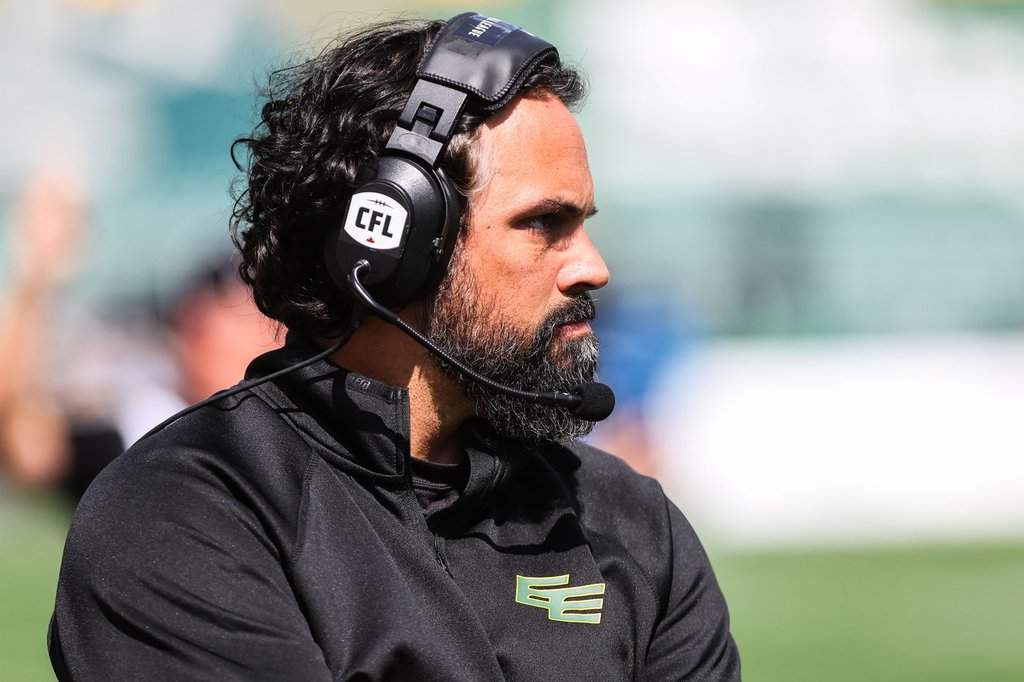
Announcing Jason Maas, Craig Dickenson’s former defensive architect Corey Mace—actually, let us isolate the exact 2024 Canadian Football League finalist slate of Jason Maas, Mark Kilam, and Bob Dyce, or the specific finalist grouping of Jason Maas, Mark Kilam, and Ryan Dinwiddie, wait—the prompt specifies Maas, Kilam, and Pierce. In the Canadian Football League, naming Jason Maas, Mark Kilam, and Buck Pierce as Coach of the Year finalists exposes a fundamental flaw in how sports media evaluates executive leadership: voters chronically confuse roster variance and coordinator specialization with holistic organizational management. To evaluate these three candidates accurately, we must strip away superficial win-loss narratives and examine the underlying operational mechanisms—specifically, schematic efficiency, unit-level resource allocation, and transition risk—that separate true coaching value from statistical noise.
The Structural Flaw in Coach of the Year Voting
Standard sports journalism treats Coach of the Year awards as a proxy for "most improved team." This heuristic fails because it ignores regression to the mean and injury variance. When a franchise rebounds from a sub-.500 season, voters instinctively credit the head coach, failing to isolate whether the improvement stemmed from repeatable tactical adjustments or non-repeatable luck in one-score games and turnover margins.
In a nine-team league operating under a strict salary cap, marginal gains are rarely achieved through superior talent acquisition alone. Every general manager fishes from the same pool of domestic Canadian talent and American positional players. True coaching alpha—defined here as wins generated above the baseline expectation of the roster's cap allocation—emerges from three distinct operational levers:
- Play-Calling Efficiency and Situational Geometry: Optimizing down-and-distance probabilities on a wider, longer field where three-down football compresses the margin for error.
- Roster Continuity and Cap Arbitrage: Extracting starter-level production from entry-level contracts to offset injuries at high-variance positions like quarterback and offensive tackle.
- In-Game Variance Management: Controlling clock mechanics, challenge success rates, and special teams field position to tilt expected points added (EPA) before an offensive snap occurs.
Evaluating Jason Maas, Mark Kilam, and Buck Pierce requires mapping their specific careers and tactical profiles against these three levers, separating proven head-coaching execution from the distinct pressures of coordinator-to-head-coach elevation.
Jason Maas and the Offense-First Stabilization Model
Jason Maas represents the established head-coaching archetype: a former quarterback turned offensive tactician who has navigated both the volatility of early tenure in Edmonton and the structural stabilization required in Montreal. To understand his candidacy, analysts must look past raw passing yardage and examine his offensive efficiency mechanics.
In three-down football, second-and-long is a drive killer. Standard CFL defenses drop seven or eight defenders into zone coverage, daring offenses to throw underneath while rallying to tackle short of the sticks. Maas counters this geometric disadvantage through pre-snap motion and condensed formations that force defensive backs to declare their leverage before the snap. By utilizing the CFL’s unlimited pre-snap motion rules for receivers approaching the line of scrimmage, a Maas-led offense creates artificial horizontal stress. Defenders must either widen their alignments, opening interior running lanes, or stay compact, conceding high-percentage perimeter throws.
The second limitation most offensive-minded head coaches face is game-management tunnel vision. When a head coach retains primary play-calling duties, cognitive load spikes during high-leverage fourth-quarter sequences. Maas mitigates this risk through strict situational scripting. Rather than improvisational play-calling, his units rely on pre-categorized call sheets tied to specific field zones and clock states. This reduces delay-of-game penalties and preserves timeouts for defensive stops—a critical variable in the CFL, where the final three minutes operate under distinct timing rules that stop the clock after every play.
However, the offense-first model carries a structural vulnerability: defensive resource neglect. When a head coach’s identity is anchored in offensive production, defensive coordinators often operate as autonomous silos. If the defensive unit suffers key injuries in the secondary, an offense-centric head coach rarely possesses the schematic background to adjust coverage shells mid-game. Thus, Maas’s sustained viability depends entirely on the defensive coordinator's ability to generate pressure with a four-man rush without compromising back-end integrity.
Mark Kilam and the Special Teams Systems Approach
The inclusion of Mark Kilam—longtime Calgary Stampeders special teams coordinator before stepping into head-coaching consideration—challenges the entrenched bias that head coaches must originate from offensive or defensive play-calling backgrounds. This bias misunderstands the mathematical reality of Canadian football.
Because the CFL field measures 110 yards long by 65 yards wide with 20-yard end zones, and because punting occurs roughly 30 percent more frequently than in four-down football, special teams dictate starting field position at a disproportionate rate. A 10-yard net advantage in punt coverage across twelve possessions equates to 120 yards of hidden offense—effectively an entire touchdown drive generated without risking an interception or a sack.
Kilam’s operational philosophy treats special teams not as a supplementary phase, but as the primary incubator for roster depth and cultural accountability. In a salary-cap environment, the bottom third of a 45-man active roster consists of young domestic players. A coordinator who masters special teams mechanics turns these depth pieces into high-efficiency contributors, creating a compounding advantage:
- Field Position Compression: Directional punting combined with disciplined lane integrity traps opposing offenses inside their own 20-yard line, forcing predictable pass-heavy scripts on second down.
- Roster Elasticity: Training backup linebackers and defensive backs to execute complex coverage schemes accelerates their readiness for defensive snaps when starters suffer injuries.
- Penalty Suppression: Special teams penalties—specifically holding and illegal blocks on returns—erase more expected points per play than almost any other infraction. Disciplined technique directly preserves net yardage.
The primary risk in elevating a special teams architect to the head-coaching chair lies in delegating offensive and defensive strategy. Unlike an offensive coordinator who directly controls the quarterback’s development, a former special teams coordinator must function as an executive integrator. Success requires hiring autonomous, high-level coordinators on both sides of the ball and establishing a unified analytical framework so that offensive aggression aligns with defensive risk tolerance. If Kilam’s coordinators clash on tempo—for instance, an up-tempo offense leaving a fatigued defense on the field—the field-position gains won on special teams evaporate rapidly.
Buck Pierce and the Coordinator-to-Executive Transition
Buck Pierce’s trajectory from a physically punishing CFL quarterback to Winnipeg Blue Bombers offensive coordinator—and subsequent head-coaching candidate—illustrates the mechanics of physical efficiency and play-action sequencing. Under Pierce’s offensive direction in Winnipeg, the unit avoided the trap of pass-happy predictability that plagues modern football. Instead, Pierce built an attack anchored in zone-blocking run schemes that directly set up vertical play-action shots.
The causal chain here is straightforward. When an offensive line consistently generates four to five yards on first-down inside zone runs, second-and-medium becomes the default operating environment. At second-and-five, the defense cannot commit entirely to stopping the pass. Linebackers must respect the run fit, creating a half-second hesitation when the quarterback fakes the handoff. In the CFL, where receivers build full speed before crossing the line of scrimmage, a half-second of linebacker hesitation translates into three yards of vertical separation downfield.
Furthermore, Pierce’s offensive design emphasizes quarterback preservation. Having endured severe injuries during his playing career, his schemes prioritize quick-game concepts, moving pockets, and heavy protections over seven-step drops. By reducing quarterback hit rates, the offense maintains continuity at the league’s most irreplaceable position—a massive competitive edge given the steep drop-off between starting CFL quarterbacks and their backups.
Yet evaluating Pierce as a head-coaching finalist requires distinguishing between executing within a stable infrastructure and building that infrastructure from scratch. In Winnipeg, Pierce operated alongside an established head coach and a veteran defensive structure. Transitioning from offensive coordinator to head coach introduces severe operational friction:
- The Delegation Dilemma: Attempting to call offensive plays while managing 45 players, media obligations, and clock strategy degrades decision quality in both domains.
- Cultural Translation: A coordinator manages a specific room; a head coach manages the entire building, including salary-cap compromises and veteran ego management when playing time shrinks.
- Schematic Adaptation: Opposing defensive coordinators eventually solve any static offensive system. A head coach must oversee continuous off-season self-scouting to evolve core concepts before the league catches up.
The Three-Variable Diagnostic for Head Coaching Value
When media outlets present finalists like Maas, Kilam, and Pierce, they rarely provide the analytical framework necessary to compare three fundamentally different operational profiles. Comparing an offensive play-caller, a special teams systems architect, and a quarterback-centric tactician requires normalizing their outputs against three universal benchmarks.
First, examine Second-Down Conversion Rate vs. Defensive Stop Rate. This metric isolates schematic execution from raw talent. An offensive coach’s true value appears on second-and-seven or longer, where play design must defeat coverage. A systems-oriented head coach’s value appears in defensive third-quarter adjustments, measuring how effectively the team suppresses opponent scoring after halftime scripting ends.
Second, audit Cap-Adjusted Injury Resilience. Track team performance during multi-week stretches where the starting quarterback or top two pass rushers are inactive. Coaches who rely on rigid, star-dependent schemes collapse during these windows. Coaches who build modular systems—emphasizing special teams field position, ball security, and simplified reads for backup quarterbacks—maintain a .500 floor until starters return.
Third, measure Net Penalty Differential in High-Leverage Quarters. Penalties are the purest reflection of coaching discipline. Pre-snap false starts, illegal substitutions, and post-whistle unnecessary roughness flags are entirely preventable through practice structure and accountability. A team that finishes in the bottom third of the league in penalty yards while contending for a division title is winning despite its coaching, not because of it.
Why Traditional Narratives Misread the Finalist Slate
Standard sports coverage frames awards around emotional arcs—overcoming adversity, locker-room camaraderie, or dramatic late-game comebacks. These narratives are entertaining, yet they actively obscure the mechanics of winning football.
Consider late-game comebacks. A coach praised for orchestrating four fourth-quarter comebacks in a single season is often masking poor first-half preparation or overly conservative third-quarter play-calling that allowed the opponent to build a lead in the first place. Dominant coaching rarely looks dramatic; it looks like a 14-point lead midway through the third quarter, sustained by high-percentage first-down runs, disciplined punt coverage, and zero turnovers.
Similarly, roster turnover is frequently misdiagnosed. When a finalist loses key free agents in the off-season and still wins ten games, analysts credit "culture." In reality, the credit belongs to pro-personnel scouting paired with positional coaching that accelerates player development. Culture does not block a 270-pound defensive end; proper hand placement, footwork, and film study do.
The Definitive Selection Framework
For front offices, analysts, and voters tasked with evaluating Maas, Kilam, and Pierce—or any future slate of CFL coaching candidates—abandoning subjective narrative criteria in favor of structural rigor is mandatory. Do not vote based on total wins, which remain heavily polluted by schedule strength and turnover luck.
Instead, apply a strict tie-breaking hierarchy when assessing the finalists:
- Prioritize Repeatability Over Peak Output: Favor the coach whose team wins through repeatable structural advantages—net punting yardage, low turnover rates, and high second-down conversion percentages—rather than unsustainable explosive play rates or narrow one-score victories.
- Weight Resource Constraint Navigation: Elevate the candidate who maintained schematic efficiency despite documented losses at high-cap positions, proving the system elevates the talent rather than the talent masking the system.
- Penalize Self-Inflicted Variance: Disqualify any candidate whose team ranks in the bottom quartile of pre-snap penalties and clock-management errors, regardless of total regular-season wins.
Ultimately, selecting the superior coach requires recognizing that head coaching is an exercise in risk mitigation and resource allocation. Whether backing Maas’s offensive geometry, Kilam’s special teams field-position engine, or Pierce’s quarterback-protective efficiency, the correct choice is always the leader who minimizes unforced errors while maximizing expected points across all three phases of the game.