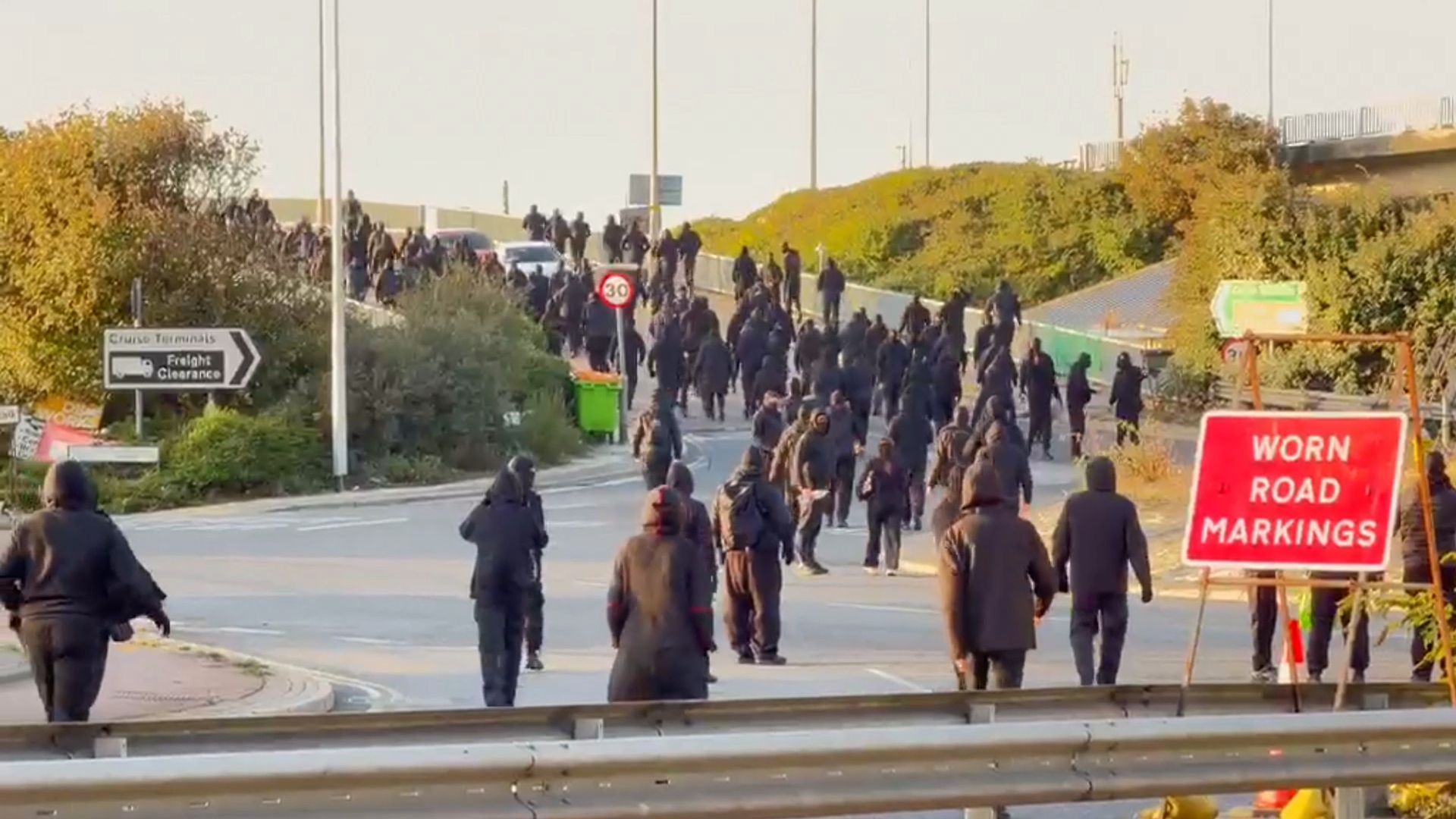
The operational capacity of modern transport choke points remains acutely vulnerable to decentralized, coordinated disruptions. When hundreds of masked individuals mobilized along the A20 corridor to block vehicular access to the Port of Dover, the incident exposed critical fractures in intelligence gathering, rapid-response deployment, and the tactical handling of spontaneous public order threats. Far-right figures quickly amplified the event online to claim strategic attribution, shifting public discourse from local traffic friction to a broader debate over state preparedness. Examining this event requires stripping away political rhetoric to focus purely on the operational failures of law enforcement and the mechanics of infrastructure blockades.
The Structural Vulnerability of Critical Transport Choke Points
Dover processes millions of passengers and commercial freight vehicles annually, functioning as a primary economic artery between the United Kingdom and continental Europe. Critical infrastructure of this magnitude operates on high-frequency scheduling where even minor interruptions trigger cascading logistical failures. The blockade exploited this tight operational tolerance. By deploying small, highly mobile cells communicating via encrypted channels and walkie-talkies, the participants bypassed traditional static security perimeters. For a more detailed analysis into this area, we recommend: this related article.
Traditional public order policing relies on observable indicators: advance intelligence, fixed assembly points, visible banner displays, and known organizational hierarchies. The Dover incident discarded these markers. Participants wore uniform dark clothing and balaclavas to eliminate individual identification while utilizing spotters on electric bicycles to monitor and relay police movements in real time. This decentralized cell structure transformed a localized traffic obstruction into a high-friction security event before field units could establish an effective containment perimeter.
Intelligence Deficits and The Reaction Time Lag
The primary critique facing Kent Police centers on the reaction time lag between initial assembly and operational containment. Law enforcement agencies operate under statutory obligations that balance the right to assembly against public safety. However, when an assembly adopts paramilitary concealment tactics and blocks a major national highway, the classification shifts immediately from peaceful protest to unlawful obstruction and intimidation. For further background on this topic, comprehensive reporting can be read at USA Today.
Intelligence units missed the pre-mobilization chatter circulating within digital networks linked to platforms like Patriot Platform. Digital mobilization strategies rely on rapid, last-minute coordination to prevent police pre-emption. The failure to intercept these communications left local commanders reacting to tactical developments on the ground rather than preempting them. By the time officers arrived to engage with the crowd, the blockade was already consolidated across multiple points, resulting in four miles of congestion and halting traffic for hours.
The Attribution Economy and Digital Amplification
Far-right activist Stephen Yaxley-Lennon, known publicly as Tommy Robinson, weaponized the event by broadcasting live streams and claiming that multiple locations across Dover had been successfully shut down. This dynamic illustrates a modern shift in civil unrest: physical actions are executed primarily to generate digital content for wider ideological distribution and fundraising.
The attribution claims serve a dual purpose. First, they inflate the perceived organizational strength of fringe networks by framing scattered, transient disruptions as part of a synchronized campaign. Second, they challenge state authority by baiting officials into a public relations defensive. When political figures and local Members of Parliament are forced to issue reactive statements condemning the behavior, the instigators achieve their primary objective: capturing disproportionate media oxygen relative to their actual physical footprint.
Resource Allocation and Tactical Deterrence
The absence of arrests during the immediate clearance phase highlights the operational constraints placed on field officers when handling fast-moving, masked groups. Without pre-designated containment zones or immediate identification of ringleaders, police prioritization shifts toward de-escalation and restoring traffic flow rather than mass arrests, which risk triggering secondary violent confrontations.
Restoring access to the port by midday prevented long-term systemic economic damage, yet the tactical outcome exposed an enforcement deficit. When groups can descend on a vital national asset, halt international trade lanes, and disperse via public rail networks without facing immediate detention, the deterrent threshold fails.
Future threat mitigation requires an immediate overhaul of regional intelligence sharing protocols around critical maritime hubs. Law enforcement must integrate real-time digital surveillance of extremist communication channels with rapid-deployment public order units capable of enclosing decentralized groups before road blockades solidify. Until predictive intelligence matches the agility of digital-age agitators, critical transport corridors will remain exposed to high-impact, low-warning disruptions.