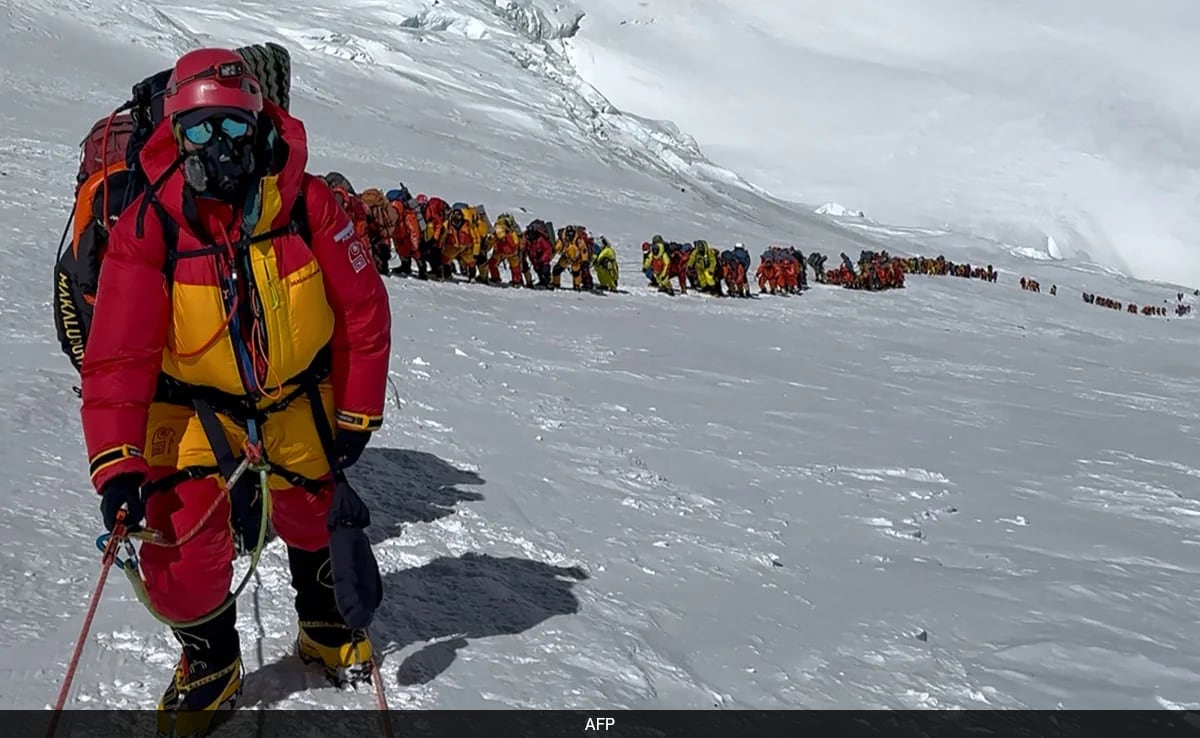
The mainstream media is running its annual, predictable play. Right on cue, the headlines scream about a record-breaking rush on Mount Everest, lamenting the "disaster" of over one thousand climbers reaching the summit in a single season. The narrative is always the same: the world’s highest peak has devolved into a chaotic, trash-strewn amusement park where wealthy tourists queue in death zones, destroying the soul of mountaineering.
It is a compelling story. It is also entirely wrong. If you enjoyed this piece, you should read: this related article.
The lazy consensus loves to treat high numbers as a symptom of failure. In reality, the staggering volume of successful summits in recent seasons is a triumph of modern logistics, predictive meteorology, and risk mitigation. What casual observers call a crisis is actually the monetization of safety.
The Logic of the Crowds
Critics look at photos of long lines on the Southeast Ridge and see a tragedy waiting to happen. They miss the mechanical reality of how modern high-altitude guiding operates. For another angle on this event, see the latest update from Travel + Leisure.
Crowds on Everest do not happen by accident; they happen because the weather window dictates exactly when it is safe to move. When a highly precise meteorological forecast identifies a narrow, perfect three-day window of low wind speeds, every team on the mountain moves simultaneously.
- The Old Way: Teams guessed. They isolated themselves, pushed for the summit in marginal weather to avoid other groups, and died in unexpected blizzards.
- The New Way: Commercial operators pool resources, synchronize their pushes, and establish massive infrastructure.
Having hundreds of people on the route simultaneously means a continuous, unbroken chain of fixed ropes from the Western Cwm to the summit. It means hundreds of high-altitude Sherpas are stationed across the mountain with spare oxygen, ready to execute rescues. If you collapse on Everest today, your chances of survival are exponentially higher precisely because there are hundreds of people around you, not despite it. The crowd is your safety net.
Dismantling the Wealthy Tourist Myth
The favorite target of the purist climber is the "unqualified millionaire" who buys their way to the top. This argument assumes that money can replace lungs, legs, and mental fortitude at 8,848 meters. It cannot.
No amount of money can force supplemental oxygen into your bloodstream if your body rejects the altitude. The idea that a complete novice can walk off a couch, cut a check for $100,000, and stroll up the Hillary Step is a fantasy invented by people who have never stood above base camp.
The industry has evolved. Operators like Seven Summit Treks and Madison Mountaineering do not take true rookies into the death zone; it is bad for business and disastrous for their brand. The modern Everest climber is often a highly conditioned endurance athlete who has cut their teeth on 6,000- and 7,000-meter peaks like Manaslu or Ama Dablam. They use advanced gear, optimized nutrition, and precise oxygen flow rates ($4\text{ L/min}$ or higher, compared to the meager $2\text{ L/min}$ used decades ago).
To call these people mere tourists is a cheap devaluation of human effort. They are participating in a highly engineered, high-performance sport.
The Real Environmental Math
Then comes the environmental outrage. We are bombarded with images of abandoned tents and oxygen bottles at Camp IV.
Let's look at the numbers objectively. The government of Nepal enforces a $4,000 garbage deposit per climber, which is only returned if the climber brings back 8 kilograms of waste. Expedition companies now face massive reputational damage if they leave a messy footprint. Specialized initiatives, like the Bally Peak Outlook foundation and dedicated Sherpa clean-up teams, have removed tens of tons of legacy waste from the mountain over the last five years.
Is there garbage? Yes. Is it an existential crisis that threatens the ecosystem of the Himalayas? No. Base camp runs on stricter waste management protocols than most municipal music festivals in Europe or North America. Human waste is bagged and carried down to lower valleys for proper disposal. The mountain is cleaner today than it was in the unregulated free-for-all of the 1990s.
The Exploitation Lie
The most insidious argument claims that commercial mountaineering exploits the local Sherpa community. This perspective stems from a patronizing Western worldview that prefers indigenous populations to remain frozen in historical poverty for the sake of "authenticity."
High-altitude guiding is one of the most lucrative economic engines in Nepal. A senior Sherpa guide can earn between $6,000 and $10,000 in a single three-month season. In a country where the average annual per capita income hovers around $1,400, this income is transformative. It funds schools, builds hospitals in the Khumbu region, and secures generational wealth.
Furthermore, Sherpa-led companies have completely disrupted the business model. Western guiding companies used to dominate the market, pocketing the massive margins while hiring locals as low-wage labor. Today, the biggest, most successful operators on Everest are entirely owned and managed by Nepalis. They dictate the prices, run the logistics, and claim the profits. The commercialization of Everest has not exploited the locals; it has empowered them to take control of their own natural resource.
Changing the Question
The public constantly asks: How do we stop the overcrowding on Everest?
This is the wrong question. It assumes that stopping people from climbing is an inherent good. The correct question is: How do we optimize the infrastructure to handle the demand safely?
If you want to experience pristine, isolated wilderness, do not go to the tallest mountain on earth during the peak week of the year. Go to one of the thousands of unclimbed, technical peaks across the Karakoram or the Andes. Everest is no longer a wilderness exploration; it is a grand arena for human achievement and logistical engineering. Treat it as such.
Stop mourning a version of the mountain that only ever existed in romanticized literature. The record number of summits is not a sign of decay. It is proof that we have mastered the physics of high-altitude survival.
Go climb something else if you want solitude. The highway to the top of the world is open, efficient, and working exactly as designed.