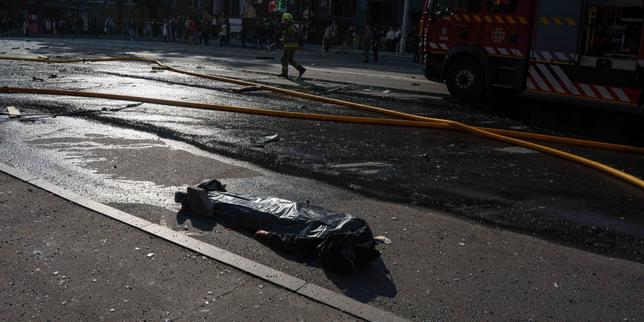
The headlines following the latest drone and missile barrages striking Kyiv follow a predictable, lazy cadence. Seven dead. Residential blocks scorched. The mayoral bulletins flash across European screens, eliciting the standard cycle of collective grief, diplomatic condemnation, and predictable calls for more air defense batteries.
Everyone focuses on the grim body count. Everyone demands a harsher sanctions package or a speedier delivery of interceptors. And everyone misses the entire strategic architecture of what is actually happening in the skies over Ukraine's capital.
Counting bodies and reporting localized structural damage is how you report a tragedy, but it is a terrible way to understand modern war.
For three years, mainstream coverage has framed Russian strikes on urban centers primarily through a humanitarian and tactical lens: an erratic campaign of terror designed to break civilian morale, or a series of punitive actions meant to retaliate against front-line losses. Both assumptions are dangerously shallow. Moscow does not launch multi-million-dollar saturation strikes simply to rack up arbitrary civilian casualties or blow up apartment complexes. That framework treats a high-tech attrition campaign like an indiscriminate street brawl.
Instead, look at the economic and operational mathematics governing these metropolitan engagements.
Air defense is a game of radical asymmetry. When a barrage of inexpensive loitering munitions and cruise missiles forces a defender to expend high-tier interceptors costing millions of dollars per unit, the strategic objective has already been achieved long before any warhead impacts asphalt. The targets are not just the physical structures underneath the flight path; the targets are the industrial capacity, fiscal sustainability, and logistical stamina of the defending state's supply chains. Every time a Patriot or equivalent system fires at a decoy or a saturated swarm, an economic depletion ledger shifts.
The mainstream press prefers the emotional resonance of the human toll because spreadsheets and logistical burn rates do not generate viral outrage. But ignoring the mechanics of resource exhaustion guarantees that the public remains permanently surprised by shifts in battlefield momentum.
When analysts treat these strikes as isolated acts of urban cruelty rather than systematic attempts to bankrupt an adversary's air defense architecture, they misdiagnose the entire conflict. If you believe the primary goal is terror, your countermeasure is moral resolve and more shelters. If you understand the goal is systemic resource depletion, your countermeasure is localized electronic warfare decentralization, distributed power generation, and a ruthless triage of interceptor allocation.
We are watching a brutal lesson in industrial-scale friction play out in real time. Focusing exclusively on the immediate wreckage allows commentators to ignore the cold calculus driving the escalation ladder.
Stop looking at the smoke and start looking at the logistics. The real war is not being won or lost in the rubble of a residential courtyard; it is being decided in the ledger of what remains when the manufacturing lines can no longer keep pace with the burn rate.