Every newsroom on the planet treats the conflict in Yemen as a localized border dispute with an oil problem. That frame is not just lazy. It is a fundamental misread of modern asymmetric warfare.
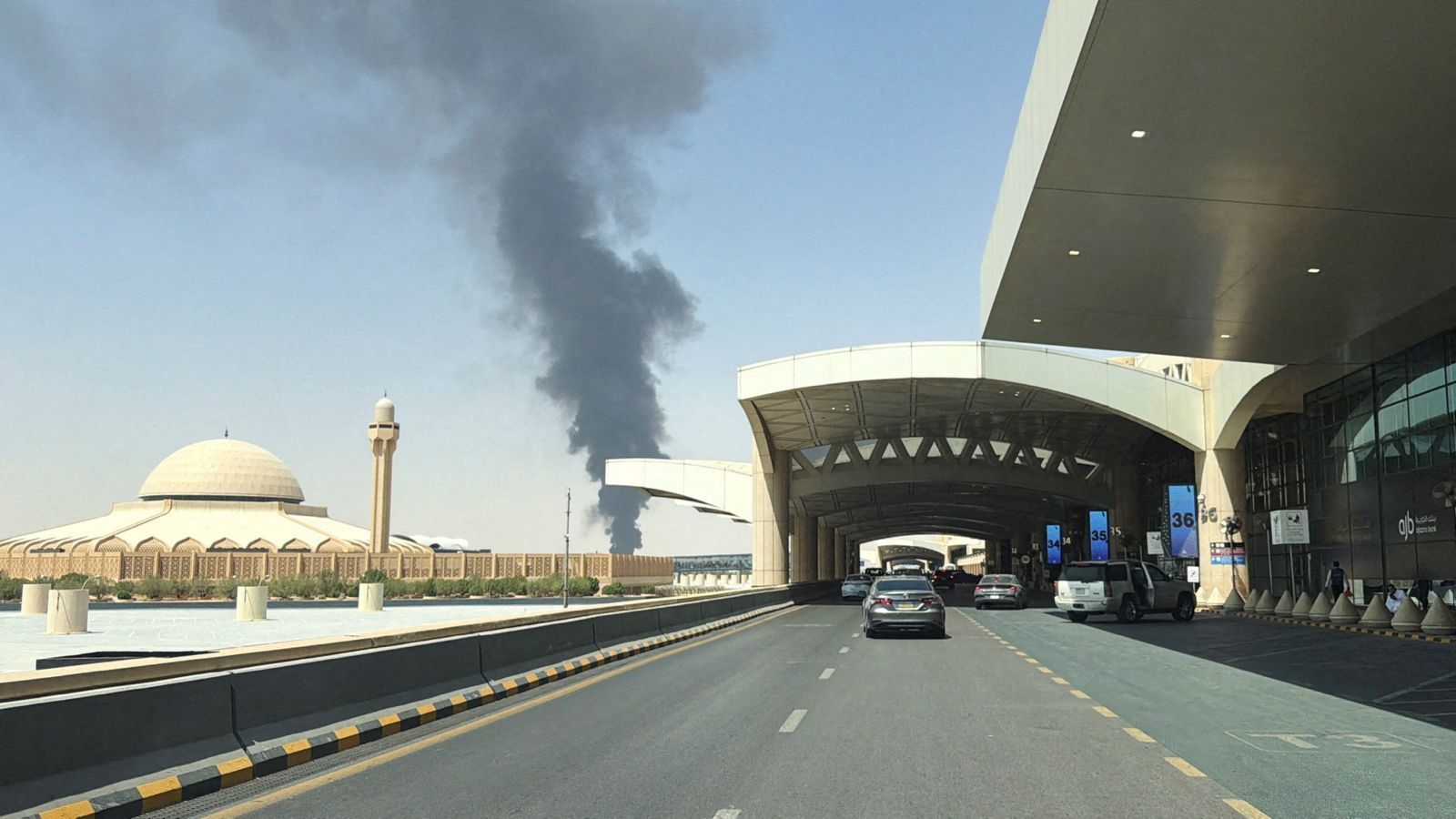
When a headline screams about a ballistic missile intercepted over Riyadh, the automated response from mainstream analysts is predictable. They parse trajectory data, count Patriot battery deployments, and whisper about Iranian proxy networks as if we are still playing by Cold War rules. They treat the missile as the product. It is not. It is a rounding error in a much larger ledger of economic attrition.
Look at the cost equations. A solid-propellant ballistic projectile built in a makeshift workshop costs a fraction of the interceptor fired to turn it into confetti over the Saudi capital. If you define victory by the balance sheet, the party launching the cheap metal into the upper atmosphere is winning every single exchange, regardless of whether the warhead hits pavement.
The Logistics Myth
We are told that naval blockades and air campaigns starve insurgent groups of operational capacity. History suggests the exact opposite. Hard borders and economic embargoes do not crush decentralized actors; they institutionalize them.
When an economy is flattened and formal trade collapses, survival shifts to black markets, smuggling tunnels, and local resource extraction. The state collapses, but the insurgency professionalizes. They build indigenous supply chains for drone components, steering algorithms, and guidance systems sourced from commercial off-the-shelf electronics. By the time a coalition establishes total air supremacy, the target has already decentralized into a thousand garage-level workshops that cannot be bombed out of existence.
Analysts love to talk about command and control. They draw neat organizational charts connecting Sanaa to Tehran, complete with dotted lines and intelligence agency logos. It looks great on a briefing slide in Washington or London. It completely ignores how power actually functions in a failed state.
Decentralized command structures do not operate like traditional military hierarchies. When a regional commander can source dual-use tech through maritime smuggling routes via Oman or the Horn of Africa, ideological loyalty matters less than operational autonomy. The central command does not need to issue orders; it simply needs to maintain a narrative of resistance while local cells figure out logistics on their own dime.
The Chokepoint Illusion
Maritime security discussions in the Red Sea suffer from a severe lack of geographic imagination. Commentators hyperventilate over shipping lanes around Bab el-Mandeb as if container ships are the only arteries of global trade that matter.
Every time traffic reroutes around the Cape of Good Hope, insurance premiums spike and supply chains shudder. That friction is the entire strategic objective. You do not need to sink a supertanker to disrupt global commerce. You just need to make the cost of passage unpredictable enough that the market panics on your behalf.
The conventional military response is to deploy carrier strike groups and launch retaliatory cruise missile strikes against abandoned warehouses. It makes for good footage on evening news broadcasts, but it treats a chronic structural condition like an acute emergency. You cannot deter an actor who has nothing left to lose with threats of economic sanctions or targeted munitions.
Why the Status Quo Persists
Diplomats keep flying between Riyadh, Muscat, and Geneva trying to broker a comprehensive peace settlement. They talk about power-sharing agreements, humanitarian corridors, and cantonment of forces. These negotiations fail with clockwork regularity because they are designed to restore a political order that no longer exists.
You cannot negotiate a return to a pre-war baseline when the war itself has become the primary mechanism of political and economic survival for everyone holding a rifle. War economies do not demobilize easily. Once smuggling networks, checkpoint taxes, and wartime supply chains are established, they generate more revenue for local strongmen than any peacetime bureaucratic apparatus ever could.
The diplomatic community refuses to accept that some conflicts do not have neat political solutions. They prefer the fiction of an impending breakthrough because the alternative requires admitting that state failure is a permanent regional condition requiring management, not resolution.
The Real Variable
Forget the press releases from foreign ministries. Ignore the casualty counts published by partisan bodies. If you want to understand where this trajectory leads, watch one thing and one thing only: the price of commercial drone parts and the permeability of coastal smuggling routes.
As long as microchips, lithium batteries, and fiberglass hulls can move across porous borders faster than naval patrols can intercept them, the asymmetry holds. The missiles will keep flying. The interceptors will keep launching. And the commentators will keep writing the exact same articles, wondering why yesterday's playbook refuses to work in today's war.


