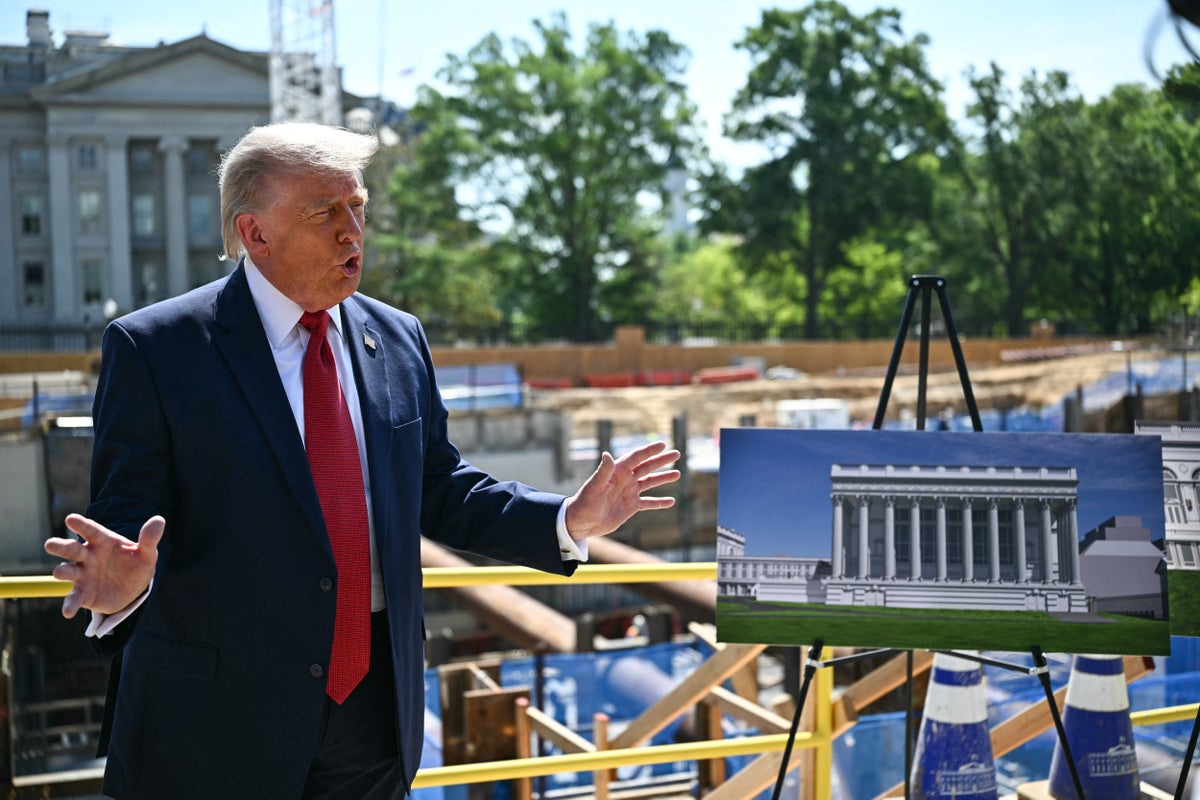
The media has discovered math. Specifically, they have found a big, scary number and plastered it across every screen: nearly one billion dollars for White House renovations.
Cue the pearl-clutching.
According to the conventional outrage factory, the real crime here is budgetary chicanery. Journalists are hyperventilating over funds funneled through maintenance accounts, agency transfers from the Secret Service, and private donors bypassing the traditional congressional appropriations crawl. They treat the Executive Mansion like a sacred, immutable museum piece that should never change, operating under the polite fiction that federal infrastructure projects normally run on time, under budget, and with unanimous legislative blessing.
It is a remarkably naive take.
I have watched public infrastructure budgets implode from the inside for two decades. I have seen municipal authorities blow triple-digit millions on glorified concrete sheds while basic maintenance collapsed. The outrage over a nine-hundred-million-dollar price tag for the ultimate seat of executive power is not just misplaced; it completely misunderstands how physical security, institutional longevity, and presidential ego actually intersect in Washington.
Let us dismantle the lazy consensus.
The Myth of the Untouchable Historic Mansion
The baseline premise of the mainstream critique is that the White House is an antique heritage site that requires delicate, reverent upkeep. That view ignores reality. The executive complex is an operational fortress wrapped in a Georgian facade, constantly lagging behind modern structural, technological, and threat-mitigation realities.
When critics complain about ballooning price tags for a new visitor screening center, a secure helipad, and structural hardening, they are looking at architectural aesthetics while ignoring functional necessity. Presidents since Harry Truman—who famously gutted the entire interior of the White House because the building was literally falling apart—have had to drag the executive mansion into their respective centuries. Truman's renovation cost a fortune relative to its era and drew immediate political blood. History remembers it as a structural imperative.
The current push, featuring a massive ballroom and perimeter overhauls, is treated by mainstream commentators as an unprecedented imperial power grab. But look at the actual mechanism: pooling agency transfers and private capital is simply an exercise in executive workaround artistry. Washington runs on workarounds. When Congress paralyzes itself in perpetual gridlock, functional branches of government find liquidity where they can.
Follow the Real Money
Let us look at the budget mechanics that have reporters clutching their spreadsheets.
Critics point out that $875 million has been pushed into a maintenance account that typically handles a few million dollars a year. They highlight transfers from the Secret Service and the military office. To the uninitiated, this looks like illicit slush-fund engineering.
In practice, federal agencies pad, shift, and reallocate capital budgets constantly. The defense and security apparatus sits on massive pools of flexible operational funds. When an administration decides to prioritize physical asset upgrading—whether it is structural hardening for the East Wing or perimeter security around Lafayette Square—it pulls from accounts that possess liquidity. Calling it a scandal is like discovering that a massive corporate conglomerate moves capital between subsidiaries to fund a flagship headquarters remodel. It is aggressive. It stretches statutory intent. But it is how large-scale projects get built when Congress refuses to pass clean infrastructure bills.
The real issue is not that the money is being spent. The real issue is that public infrastructure delivery in the United States has become so structurally broken that basic modernizations require bureaucratic guerrilla warfare just to break ground.
The Cost of Building in the Capital Zone
Let us talk about the nine-hundred-million-dollar figure itself. In the grand scheme of federal outlays, it is a rounding error. The federal government burns through that amount in hours. Yet the press treats it like a national bankruptcy event because of the optics of a gilded ballroom.
Here is what actual construction insiders know about building in downtown Washington: security clearances, specialized labor, anti-terrorism design requirements, and historical preservation mandates multiply standard commercial costs by a factor of five. Imagine a scenario where a private developer builds a luxury hospitality venue of equivalent scale for fifty million dollars. Now drop that same project into a high-threat active security zone surrounded by protesters, foreign intelligence services, and federal airspace restrictions, while complying with every historical preservation board from here to Arlington. The price tag does not just rise; it explodes.
The ballroom and grounds overhaul is undeniably tied to presidential vanity—Donald Trump has never hidden his obsession with architectural scale and flash. But tying functional security enhancements, visitor processing, and helipad construction into the same master budget is standard project management efficiency. You do not tear up the White House lawn three separate times for three separate contractors. You do it once.
Stop Asking About Congressional Permission
The legal battles playing out in federal appeals courts over whether the executive branch can build without direct legislative sign-off will provide plenty of fodder for constitutional law professors. Courts will debate separation of powers. Preservationists will file injunctions.
None of that changes the physical reality of the capital.
The real question nobody in the mainstream press is asking: Why is the federal procurement process so utterly incapable of maintaining its own primary properties without requiring a multi-year judicial civil war?
When maintenance backlogs for critical national assets are treated as political footballs, executives resort to shell games. They use maintenance funds, private partnerships, and creative accounting because the alternative is watching the nation's executive hub rot under layers of bureaucratic inertia.
The next time a billion-dollar infrastructure headline crosses your screen, stop hyperventilating over the funding source or the political ego driving it. Look at the system underneath—a system so structurally dysfunctional that getting a security checkpoint built requires treating the federal budget like a high-stakes puzzle.
Stop pretending this is about a ballroom. It is about how power actually gets built when the official architects refuse to lay the bricks.