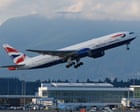
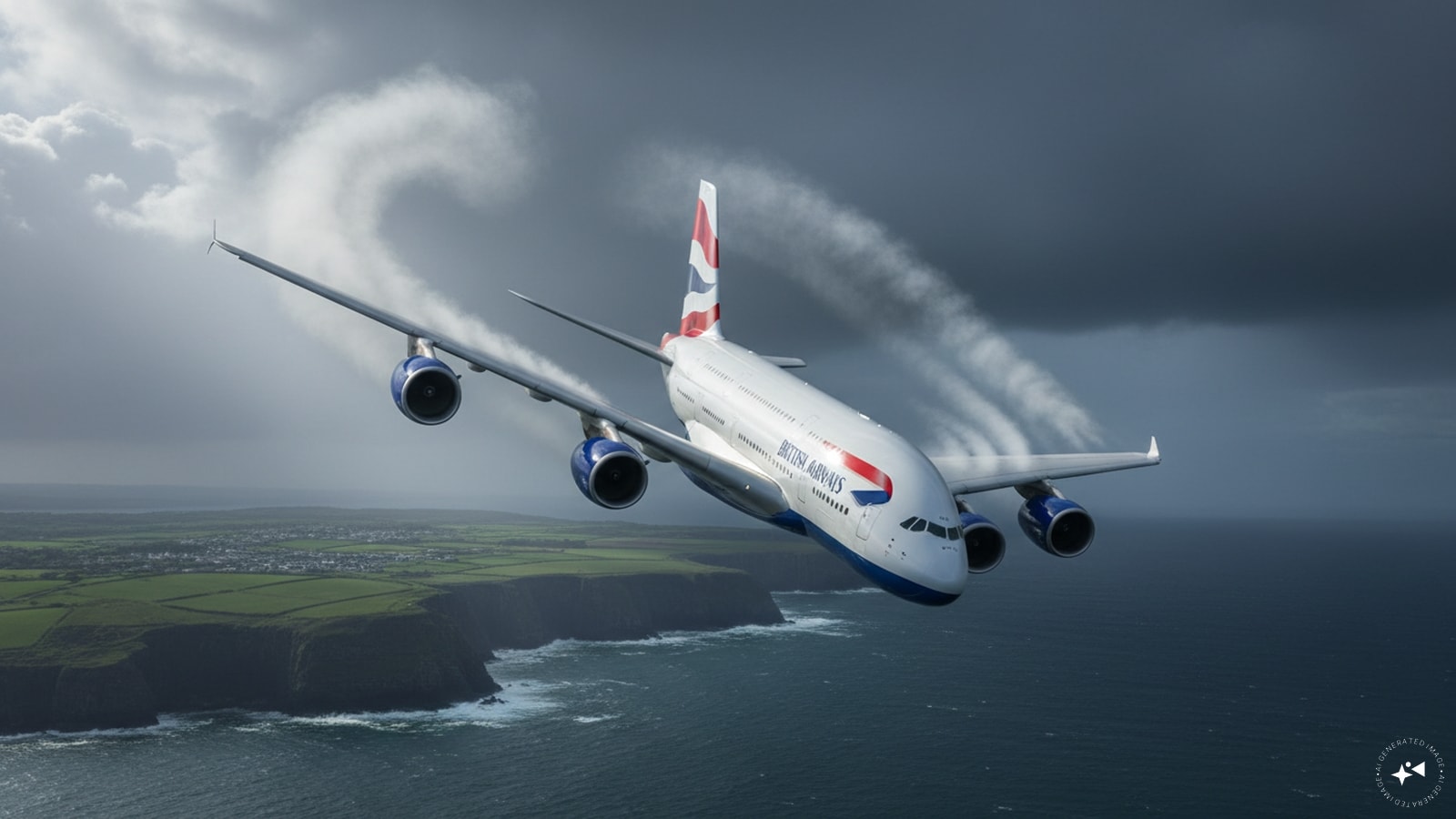
Every time a commercial jet drops thousands of feet in three minutes, the aviation commentariat loses its collective mind. Panic spreads across social feeds. Pundits scream about safety failures. Passengers swear off flying forever. The mainstream media frames a rapid descent over the Irish Sea as a brush with catastrophe.
It is absolute theater. If you found value in this article, you should look at: this related article.
I spent over a decade watching dispatch logs from operations control centers, and I can tell you the dirty secret behind every emergency descent headline: the plane did exactly what the engineers designed it to do, and the pilots executed a textbook procedure that prevented a non-event from becoming a headline of a very different kind. When a British Airways flight declares an emergency and plunges to nine thousand feet, the public sees a mechanical failure. What actually happened was a masterclass in risk mitigation that proved the system works precisely because it is paranoid.
Let us dismantle the sensationalism piece by piece. For another perspective on this story, refer to the latest update from Travel + Leisure.
The Myth of the Sudden Death Plunge
The average passenger hears "emergency descent to 9,000 feet" and pictures a cinematic nose-dive straight out of a Hollywood disaster flick. Gravity winning. Oxygen masks dangling like desperate party streamers. Pilots wrestling the yoke while the airframe screams.
Reality is far more mundane and infinitely more calculated.
Commercial airliners cruise at 35,000 feet because the air up there is thin, reducing drag and burning less fuel. But human physiology does not like 35,000 feet. If the pressurized hull loses its seal—whether through a faulty outflow valve, a cracked seal, or sensor ghosting that tricks the flight deck into thinking pressure is failing—the aircraft has to get low, fast.
Nine thousand feet is not a random number chosen in a panic. It is the altitude where the ambient air pressure allows an unshielded human to breathe normally without supplemental oxygen. The descent is rapid, yes—often dropping at 4,000 to 6,000 feet per minute—but the aircraft remains structurally sound, fully controllable, and well within its operational envelope. The autopilot does the heavy lifting. The pilots monitor the descent profile, cross-check their checklists, and coordinate with air traffic control.
Yet the headlines treat it like a near-death experience. Why? Because fear sells clicks, and aviation illiteracy is a goldmine for digital publishers.
Why the Pressurization System is Your Friend, Until It Isn't
To understand why these incidents happen, you have to look at the sheer engineering marvel of keeping a metal tube pressurized against a vacuum-like external environment. At cruising altitude, the differential pressure between the inside of the cabin and the outside air is immense. The fuselage acts like a balloon constantly fighting to burst.
When a sensor detects a drop in cabin pressure, the flight crew faces a binary choice: trust the instruments or trust their senses. Standard operating procedures dictate that they must assume the worst. If the cabin altitude exceeds 10,000 feet, the masks drop automatically. At that point, the crew initiates the emergency descent drill regardless of whether there is a gaping hole in the fuselage or a lazy pressure controller.
I have seen flight decks light up like Christmas trees over minor avionics glitches. The pilots do not stop to debate whether the warning is a false positive. They push the nose over, deploy the speed brakes, and descend to breathing altitude. That is not a sign of a broken plane. That is a sign of an obsessive safety culture built on the smoking ruins of past aviation disasters. Every single rule in that manual was written in blood decades ago.
The Air Traffic Control Nightmare Nobody Talks About
While the passengers are dealing with popping ears and the sudden drop in temperature, a synchronized ballet is happening on the ground that the press completely ignores.
When a wide-body or narrow-body jet declares an emergency over congested European airspace—especially a busy corridor like the North Atlantic tracks or Irish airspace—air traffic control has to clear a vertical and horizontal block of sky instantly. Other aircraft are vectored away. Altitude blocks are cleared from cruising altitude down to 9,000 feet across a multi-mile radius.
The coordination is ruthless and instantaneous. Controllers do not panic; they execute pre-planned contingencies. When a BA flight drops over Ireland, Shannon control is not scrambling in
Why Every Passenger Panic Over Cabin Decompression is Complete Nonsense
travel, news
Every time a commercial jet punches through ten thousand feet, drops altitude like an elevator with a snapped cable, and makes headlines about a sudden emergency descent, the internet loses its collective mind. Panic spreads across social media. Passengers tweet their final goodbyes. Armchair aviation experts scream about structural failures and pilot negligence.
Stop it.
The breathless reporting surrounding rapid descents—like recent incidents involving British Airways flights squawking emergency codes over Irish airspace—relies on a fundamental misunderstanding of how modern transport category aircraft are engineered to fail. Media outlets treat a controlled, routine emergency procedure as an apocalyptic brush with death because drama sells clicks. The lazy consensus is that dropping to nine thousand feet means the plane is moments away from breaking apart.
The reality is far more mundane, and infinitely more brilliant: the airplane did exactly what its creators intended it to do.
When a cabin altitude warning trips or pressure bleeds off at cruising altitude, the flight deck does not panic. They run a checklist that has been refined through decades of fatal lessons paid for in blood. They do not wait to see if the leak fixes itself. They do not hold a committee meeting. They push the nose down and dive toward breathable air.
Here is what the sensationalist headlines miss. A rapid descent to ten thousand feet is not an uncontrolled crash dive; it is a tactical maneuver designed to keep you from passing out from hypoxia. Above ten thousand feet, the partial pressure of oxygen drops to a point where human cognitive function degrades rapidly. Below ten thousand feet, human blood saturation stabilizes without supplemental oxygen. The pilots did not descend because the wings were falling off. They descended because they wanted your brain to keep working.
I have spent enough hours listening to cockpit voice recorders and reading air safety reports to know that the public's perception of aviation danger is completely inverted. People panic about rapid descents, turbulence, and engine failures—the exact scenarios where redundant systems and well-drilled crews shine brightest. Meanwhile, they text while driving on the highway without a second thought.
Let us dismantle the core technical myth driving these freakouts: the idea that cabin decompression means the fuselage is compromised.
Commercial jets operate with a pressure differential. The air inside the cabin is pressurized to mimic an altitude of roughly six to eight thousand feet while the aircraft cruises at thirty-five thousand feet. When a valve sticks, a seal degrades, or an avionics bay cooling duct fails, pressure equalizes. This often triggers a rush of air, fog forming in the cabin as moisture condenses, and the immediate deployment of yellow drop-down masks.
To the untrained passenger, a cabin full of fog and dropping oxygen masks looks like a movie scene from a disaster flick. To a captain with ten thousand hours in type, it is a Tuesday morning annoyance that requires pulling a pair of throttles back and rolling into a descent profile.
The masks dropping do not mean you are out of oxygen. Those chemical generators or centralized lines provide roughly fifteen to twenty minutes of breathable air—more than enough time for a modern twin-engine jet to bleed off twenty-five thousand feet of altitude and level off in thick air.
Why Ireland specifically seems to host a disproportionate share of these dramatic media cycles comes down to corridor geography. The North Atlantic tracks and European airways funnel massive volumes of heavy iron through concentrated sectors. When a transatlantic flight experiences a minor pneumatic glitch halfway between London and New York, the nearest safe diversion points often place the aircraft over Irish airspace. The local media picks up the transponder squawk, runs a wire service alert about a mid-air emergency, and the panic cycle begins anew.
The media framing always implies that the passengers were seconds away from disaster. The truth is that the emergency descent is the safest possible response to an uncommon mechanical hiccup. It is an active intervention, not a passive slide into chaos.
If you find yourself on a flight where the oxygen masks drop and the nose pitches down sharply, your correct move is not to update your Instagram story or hyperventilate. Your correct move is to pull the mask over your face, breathe normally, and trust that the two people up front have practiced this exact drill in a simulator until their hands moved like clockwork.
The next time a sensational report breaks about a jet plunging to nine thousand feet, remember what is actually happening. You are watching a masterclass in risk mitigation being treated like a tragedy by people who do not know the difference between a static port and a pitot tube.
Stop treating standard safety protocols like a crisis. The airplane is smarter than you are, and the pilots want to sleep in their own beds tonight just as badly as you do.