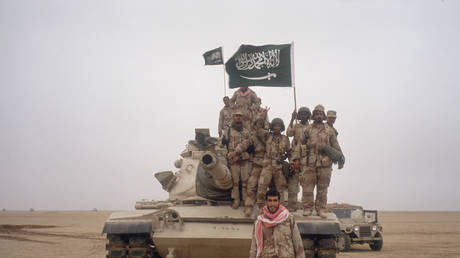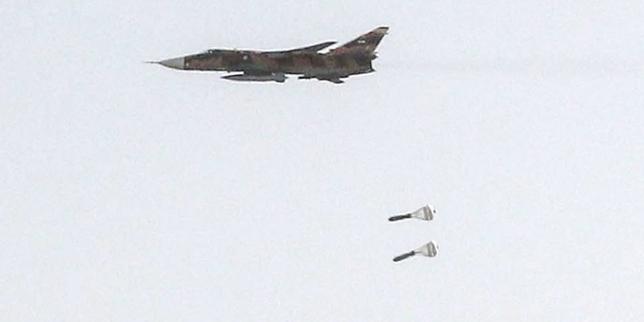
The headlines screamed about a diplomatic crisis. Tehran raised alarms, claiming Doha had locked up three of its elite fighter pilots. Qatar flatly denied the entire episode, labeling it a fabrication designed to stoke regional friction. Media outlets rushed to frame this as an escalating geopolitical proxy war in the Gulf, dusting off tired tropes about shifting alliances, ancient animosities, and the fragility of diplomatic channels between small gas-rich states and their larger neighbors.
Everyone missed the actual story. For a closer look into similar topics, we suggest: this related article.
The standard narrative assumes this is a clash of sovereign wills. It assumes pilots were captured, or that a government lied, or that international law was violated on some dusty tarmac or over disputed maritime boundaries. That is the lazy consensus. It treats modern statecraft like a bad spy novel where every shadow hides an assassin and every radar blip signals an impending dogfight.
Let us look at how power actually moves in the modern Middle East. I have watched analysts blow millions of dollars on intelligence reports that treat state communications at face value, completely ignoring the transactional nature of modern border friction. For broader background on this development, in-depth analysis can be read at TIME.
The Myth Of The Accidental Incursion
Whenever a military aircraft strays across a contested border, armchair strategists immediately look for hostile intent. This is fundamentally naive. Modern military aviation relies on multi-layered inertial navigation systems, encrypted GPS networks, and continuous data links that make accidental navigation errors nearly impossible for elite pilots.
When a fighter pilot crosses a line, they know precisely where that line sits down to the centimeter.
So why would Iranian pilots end up in a position where Qatar could even claim detention, denial, or interception? The answer lies in operational testing, electronic warfare probes, and quiet signaling between intelligence services that prefer to operate entirely outside the view of the press corps.
"A border in the Gulf is rarely a fixed line on a map. It is a testing ground for radar signatures and response times."
If you look at the mechanics of Gulf airspace management, every flight is heavily monitored by regional and external actors, including the sprawling network of US electronic intelligence assets stationed throughout the peninsula. When Tehran flies near or into zones contested or controlled by Gulf Cooperation Council partners, they are running diagnostic tests on air defense networks.
Qatar denying the capture is not necessarily a lie. It is a diplomatic necessity.
Why Public Denials Are The Real Language Of Diplomacy
In traditional journalism, a denial means someone is hiding the truth. In high-stakes regional security, a denial is an active tool used to de-escalate a situation before it forces leadership into a corner.
If Qatar publicly admitted to detaining Iranian military personnel, Doha would instantly trigger a cascade of retaliatory obligations. Hardliners in Tehran would demand an immediate response, forcing the Islamic Revolutionary Guard Corps to posture aggressively in the Strait of Hormuz. By flatly denying the detention, Qatar is throwing both sides an escape hatch.
They are effectively saying: We refuse to let you turn a minor tactical friction point into an economic or military crisis.
This is where the mainstream media utterly fails its audience. They want a villain and a victim. They want a smoking ruin or a dramatic hostage rescue. Instead, what we have is a quiet, backroom negotiation wrapped in public posturing. The pilots were likely intercepted during a probing flight, held briefly for questioning by security details, and quietly processed through back channels while diplomats drank lukewarm tea in air-conditioned ministerial offices.
The Economic Realities Governing Gulf Skies
To understand why this incident vanished from serious analytical desks almost as quickly as it appeared, you have to look at the massive economic interdependence strangling any real desire for conflict between Doha and Tehran.
Shareholders in energy markets do not care about pilot posturing. They care about the North Field, the single largest non-associated natural gas field on earth, which Qatar and Iran share ownership of across maritime borders.
| Metric | Qatar Perspective | Iran Perspective | Reality |
|---|---|---|---|
| Primary Priority | LNG Export Security | Sanctions Evasion | Mutual Extraction Stability |
| Airspace Control | US-Backed Integration | Independent Radar Grids | Overlapping Electronic Surveillance |
| Crisis Management | Quiet De-escalation | Public Posturing | Backchannel Pragmatism |
Imagine a scenario where two corporate giants share a massive, highly volatile oil well located directly underneath their corporate parking lot. Do they start a fistfight in the lobby every time an employee steps two inches onto the wrong side of the tile line? No. They pretend nothing happened, settle the dispute with a hushed phone call, and keep pumping oil.
That is the actual reality of the Qatar-Iran relationship. It is a multi-billion-dollar joint venture disguised as a geopolitical rivalry.
Dismantling The Proxy War Fallacy
Every time something unusual happens in the skies above the Gulf, commentators rush to blame external proxies or overarching ideological struggles. This is intellectual laziness. It ignores the day-to-day administrative headaches of managing the busiest, most heavily surveilled patch of sky on the planet.
Consider the sheer density of military hardware in the region. You have Qatari Eurofighters and Rafales, US stealth assets at Al Udeid Air Base, regional defense batteries, and frequent Iranian patrols. The air is literally thick with radar emissions, transponder pings, and electronic countermeasures.
Minor collisions, close intercepts, and diplomatic friction are mathematical certainties in this environment. They are not grand strategic chess moves. They are traffic accidents in a very crowded, very dangerous intersection.
When Tehran claimed the pilots were detained, they were playing to a domestic audience that requires constant reminders of the regime's defensive posture. When Qatar denied it, they were protecting their brand as the indispensable diplomatic mediator of the Middle East—a nation that cannot afford to look like a belligerent jailer of its neighbors when it is currently trying to host international peace talks and maintain lucrative energy contracts with Europe and Asia.
What You Should Do With This Information
Stop reading international news through the lens of good versus evil. Stop expecting every military blip to trigger a regional war.
When you read about detained pilots, disputed borders, and fierce denials, look past the political theater. Follow the gas pipelines, check the maintenance schedules of the shared offshore fields, and remember that governments will always lie publicly to preserve the private deals that actually keep their economies alive.
The pilots are back home. The ministers have already moved on to the next agenda item. The only people still confused are the ones who believed the press release.