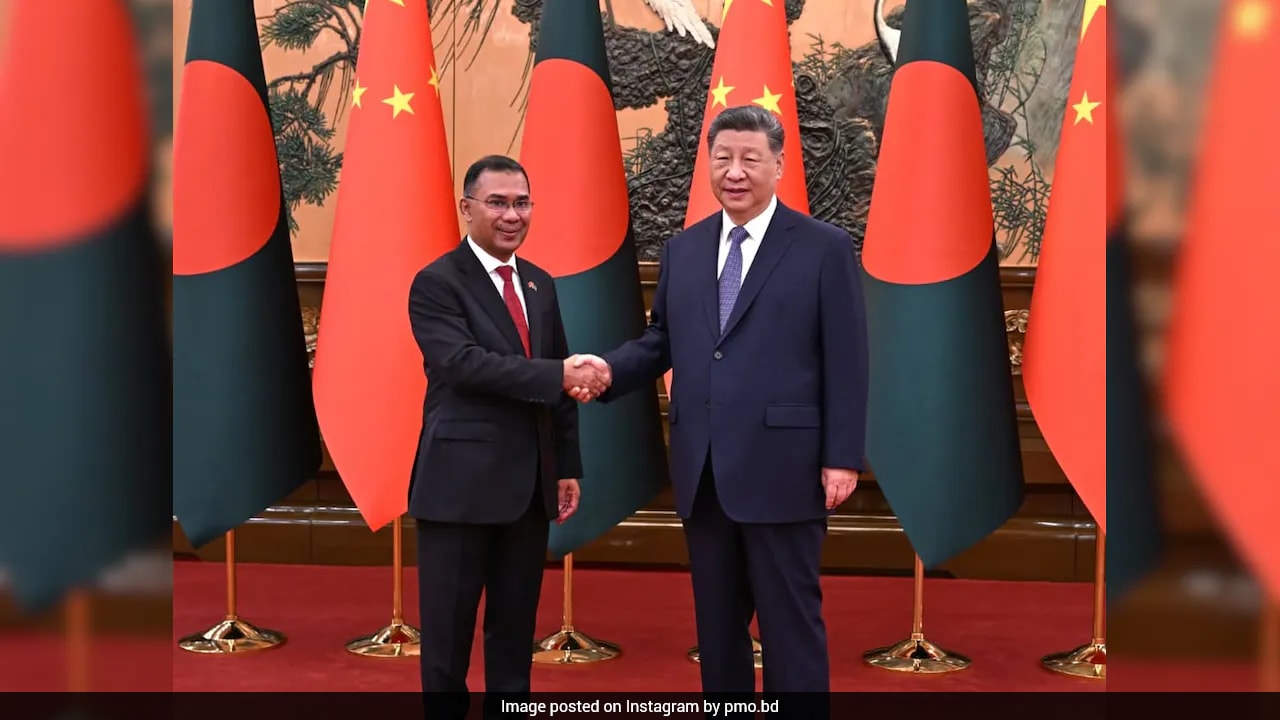
The mainstream media loves a predictable script. When Bangladesh Prime Minister Tarique Rahman shook hands with Chinese President Xi Jinping in Beijing, the foreign policy establishment immediately rolled out its favorite tired narrative. We were told to watch out for a massive geopolitical shift, a definitive exit from India's sphere of influence, and a deeper plunge into Beijing's credit net.
They are missing the entire point.
This meeting was not a celebration of shared vision. It was a high-stakes transaction driven by mutual panic. Strip away the diplomatic theater, the red carpets, and the boilerplate press releases about infrastructure, and you find two leaderships facing profound domestic vulnerabilities, attempting to bluff each other into submission.
If you think this signals Dhaka becoming a permanent outpost for Beijing's maritime ambitions, you do not understand South Asian political economy.
The Balance Sheet of Panic
The lazy consensus views Beijing as an unstoppable chess master, picking off South Asian nations one by one with endless reserves of capital. That view is stuck in 2016. Today, the reality is far messier. China is battling structural economic slowing at home, deflationary pressures, and an increasingly overextended overseas loan portfolio. The Belt and Road Initiative is no longer an open checkbook. It is an exercise in damage control.
Dhaka, on the other hand, is managing a precarious recovery. The political transition that brought Tarique Rahman to power cleared out the old guard but inherited an economy plagued by volatile foreign reserves, energy infrastructure deficits, and inflation.
Rahman did not fly to Beijing to hand over the keys to the Bay of Bengal. He went because Beijing is the only capital currently holding the specific liquidity options required to keep Dhaka’s industrial machinery humming through the fiscal year.
Step back and look at the actual math of Bangladeshi trade.
- Over 25 percent of Bangladesh’s total imports originate from China, primary raw materials for the ready-made garment sector.
- The trade deficit between the two nations sits heavily in Beijing’s favor, exceeding $15 billion annually.
- Western markets buy over 80 percent of Bangladesh's exports.
This structural reality creates an invisible ceiling. Rahman cannot pivot to China even if he wanted to, because China does not buy Bangladeshi shirts. The United States and Europe do. Any real break toward Beijing’s political orbit would jeopardize the trade preferences that keep the country’s main economic engine alive. The Beijing trip was a desperate quest for import credit lines to stabilize domestic factories, not a ideological realignment.
The Myth of the Subservient Dhaka
The prevailing fear among regional analysts is that Dhaka will repeat the mistakes of Colombo or Islamabad, swallowing massive loans for vanity infrastructure projects that eventually compromise national sovereignty. This calculation undervalues the deep-seated survival instincts of the Bangladesh Nationalist Party leadership.
I have spent years analyzing how transitional administrations manage regional heavyweights. They rarely pick a side permanently. Instead, they weaponize their weakness.
Rahman is fully aware that New Delhi is watching his every move with immense anxiety. By playing the Beijing card so publicly, he is forcing India to reconsider its hardline stance and offer better terms on cross-border electricity trade, water-sharing agreements, and transit rights. It is classic structural balancing. You don't court the rival because you love them; you court them so your neighbor starts returning your phone calls.
Beijing is equally anxious. The Chinese state enterprises have billions locked up in projects like the Padma Bridge Rail Link and the Karnaphuli River tunnel. They watched their preferred partners in various regional governments get displaced overnight over the last few years. Xi Jinping is not dictating terms from a position of absolute strength. He is trying to secure guarantees that his existing investments won't be audited into oblivion or canceled outright by a new administration eager to show it is cleaning up corruption.
Dismantling the Base Security Question
Let us address the loudest anxiety echoing through defense think tanks: the commercial ports turning into naval installations. The theory goes that Chinese funding for Mongla or Payra port will inevitably lead to a People's Liberation Army Navy presence right on India's eastern flank.
This ignores basic geography and military logistics.
Imagine a scenario where Dhaka permits a foreign military facility on its soil. It would instantly trigger an economic blockade from India, shutting off critical land ports that supply essential commodities daily. Simultaneously, it would alienate the US Navy, which maintains significant maritime security partnerships in the region. The cost-benefit analysis makes no sense for Bangladesh.
The Rahman administration is transactional, not suicidal. They want Chinese engineers to dig tunnels and lay tracks because Chinese state firms build infrastructure faster and cheaper than anyone else. They do not want Chinese warships docking in Cox's Bazar.
The High Cost of the Two-Way Bluff
The real danger of this diplomatic engagement is not a grand alliance, but the immense structural risk both leaders are taking home.
For Rahman, the downside of playing the China card is immediate domestic blowback. The political base that brought him to power is intensely nationalist and deeply suspicious of foreign entanglement. If the credit lines negotiated in Beijing come with hidden strings—such as mandatory contracts for Chinese firms or high interest rates on currency swaps—the political cost at home will outpace the economic relief.
For Xi, the risk is continuing to throw good money after bad. China’s state-backed banks are already facing massive restructuring demands across Africa and Latin America. Providing billions in fresh currency swaps or trade credit to an economy still finding its footing after major political upheaval is an unpredictable gamble.
The Real Question to Ask
Stop asking whether Bangladesh is choosing China over India. That is a fundamentally flawed question designed for cable news punditry rather than real-world statecraft.
The correct question is: how long can Dhaka run an economy dependent on Western consumers, Chinese raw materials, and Indian geography before the contradictions tear its foreign policy apart?
The Beijing meeting proved that the Rahman government intends to stretch that contradiction as far as possible. It is a high-wire act where a single miscalculation on inflation or import pricing could send the economy into another tailspin. Rahman is attempting to use Beijing's financial weight to buy time at home, while Beijing is using the photo-op to show the world its regional influence remains intact.
Both sides got their headlines. Neither side solved their core structural crisis. The handshake in Beijing was not the start of a new geopolitical era. It was the frantic opening move of an economic survival strategy that is bound to face reality the moment the next debt installment comes due.