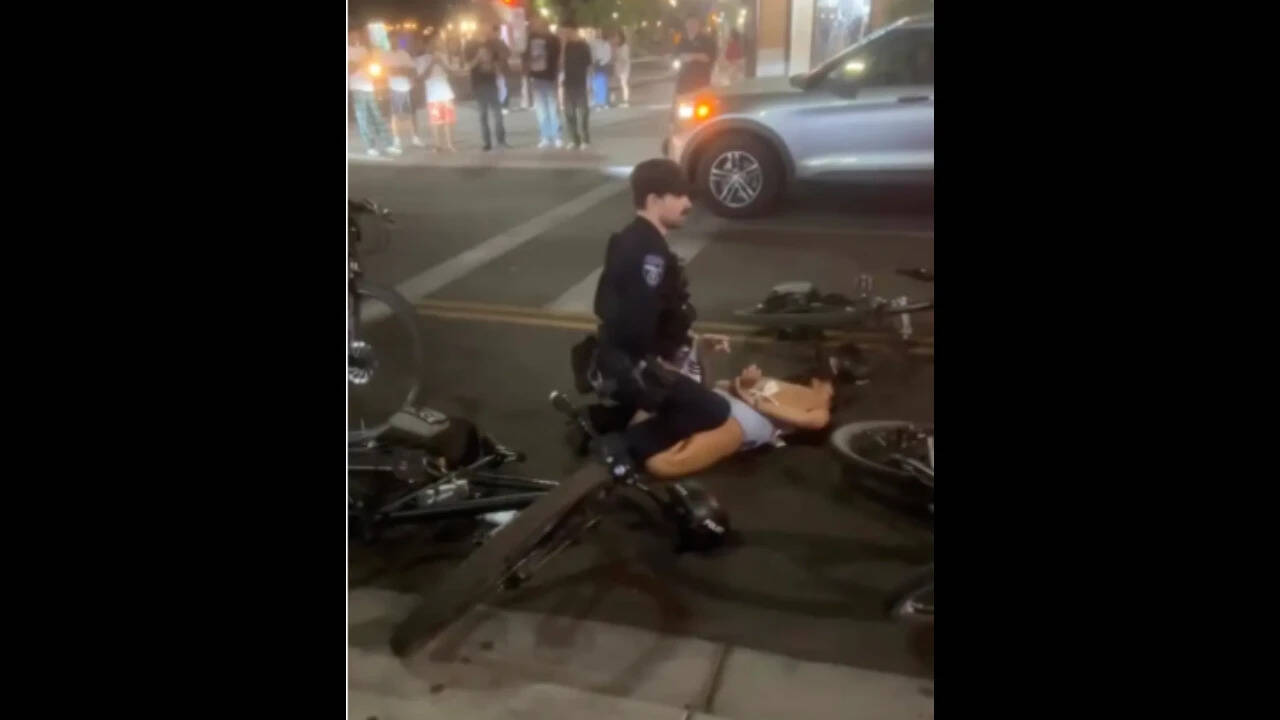
Videos blow up online in seconds. Context usually takes much longer to catch up. When a clip of Arizona State University student Eryn Bonner being forcefully shoved to the ground by a Tempe police officer hit social media, internet outrage was instant. Headlines flashed words like slammed, brutalized, and punched. Millions watched a 21-year-old college cheerleader get pinned against a bike outside a busy Mill Avenue bar, screaming for officers to let someone go.
If you only watched the ten-second snippet shared on social media, the picture looked clear-cut. But public videos rarely tell the full story. Body-camera footage, police reports, and legal filings reveal a messy mix of late-night chaos, physical interference, and disputed use of force that deserves a closer look.
What Actually Happened Outside the Bar
The incident started back in late July on Mill Avenue in downtown Tempe, a heavy nightlife hotspot near campus. Tempe police bicycle officers moved in to arrest two men involved in a confrontation. Eryn Bonner, a senior health sciences student and a standout member of the ASU Stunt Team, was nearby.
As officers cuffed the men, Bonner stepped close to the active arrest. Audio from the scene captures her shouting repeatedly, "Let him go! Let him go!"
Officers warned her to back away. She didn't. That is where the physical confrontation erupted.
According to police accounts, the situation escalated rapidly when an officer attempted to maneuver past or restrain Bonner. The police report states that an officer tripped and fell onto Bonner during the scuffle. Authorities claim Bonner then struck the officer in the face multiple times. In response to the alleged strikes, the officer threw a physical strike back at Bonner before forcing her down against a bicycle and securing her in handcuffs.
Photos released by her legal team later showed noticeable bruises on her face and body, sparking immediate condemnation from supporters and human rights advocates who argued the force used was completely disproportionate.
The Legal Fallout and Public Outcry
The Maricopa County Attorney's Office initially looked at the case, but felony charges weren't pursued. Instead, the Tempe Police Department sought misdemeanor charges against Bonner, including disorderly conduct and hindering prosecution. Bonner pleaded not guilty, setting off a legal battle led by her defense attorney, Benjamin Taylor.
Taylor pushed back hard against the police department's narrative. He called for an independent investigation, arguing that the local department could not objectively investigate its own officer's actions. Beyond the takedown itself, defense teams and online critics pointed to specific frames of the bodycam footage showing physical contact during the restraint that drew intense public scrutiny.
Meanwhile, the Tempe Police Department initiated an internal review to evaluate whether the responding officer followed proper department policy and training standards during the chaotic arrest.
Why This Case Sparks a Bigger Debate
Viral arrests involving college students always ignite fierce debates, but this case hits on a few specific flashpoints that people keep arguing about.
- The Fine Line of Bystander Interference: Stepping close to an active police scene to yell at officers is legal gray water in the heat of the moment. Legally, physical interference or failure to obey lawful orders to step back gives police grounds to act. Practically, the threshold where vocal protest turns into a physical arrest remains a massive point of contention.
- Proportionality of Force: Even if an individual is interfering, the methods used to neutralize the situation draw heavy oversight. Critics argue that specialized athletes like collegiate stunt team members can be controlled without strikes to the face or violent bicycle slams.
- The Danger of Fragmented Footage: Social media algorithms reward outrage. Clips cut right at the moment of impact guarantee millions of views, but they routinely strip away the preceding seconds where commands were ignored or physical contact was initiated.
Eryn Bonner's standing at Arizona State, her athletic achievements, and the stark imagery of the arrest ensured this story wouldn't stay local. As the legal process moves forward through pre-trial conferences and internal reviews, the footage serves as another reminder of how quickly a late-night street encounter can spiral into a permanent legal and public relations nightmare.
Look past the viral soundbites. Pay attention to the full source footage released by departments rather than relying on edited clips. When emotions run high on crowded entertainment strips, keeping physical distance from active police work isn't just about compliance—it is about staying safe.