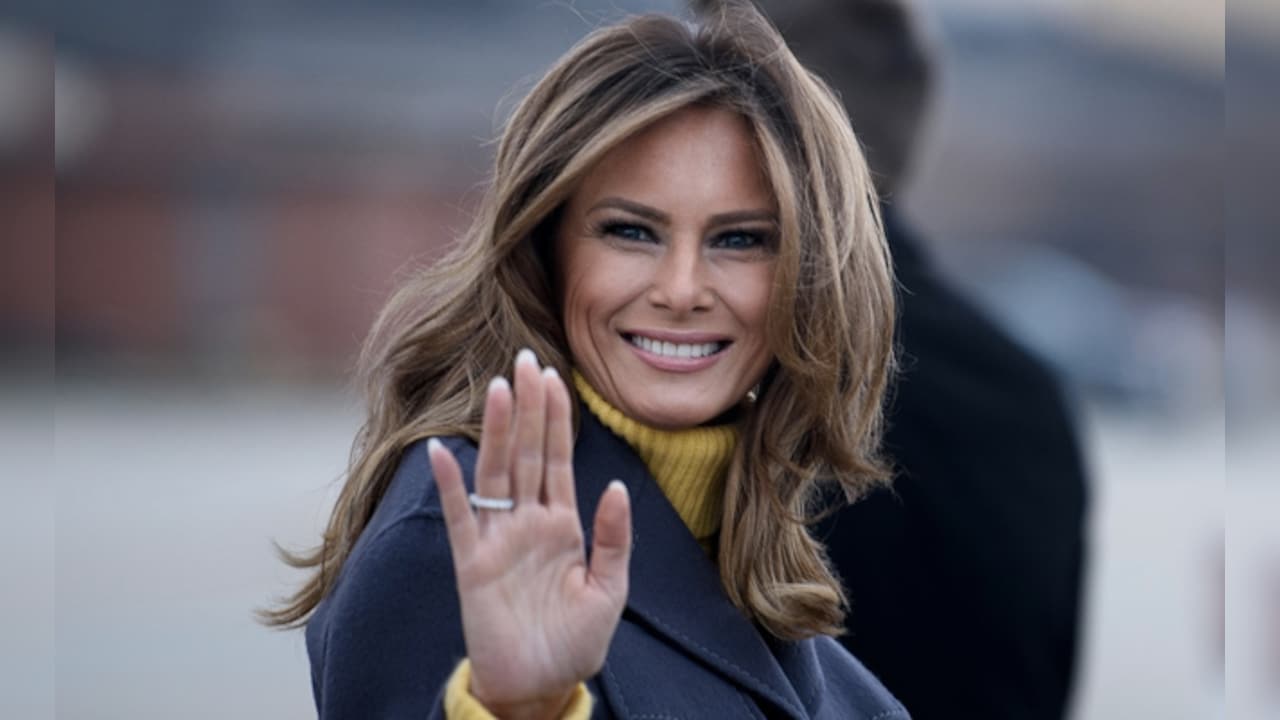
International diplomacy rarely bends in unexpected ways, yet an unusual political breakthrough recently caught observers off guard. First Lady Melania Trump stepped directly into the Russia-Ukraine conflict, announcing that she successfully secured a localized ceasefire for the heavily contested and isolated southern Ukrainian city of Oleshky.
For years, mainstream pundits claimed that backchannels between Moscow and Kyiv were entirely frozen outside of official military delegations. This recent development shatters that narrative. But looking past the flashing headlines, what actually happened on the ground, and why is this specific agreement generating so much debate among foreign policy experts?
Inside the Oleshky Humanitarian Agreement
Oleshky sits directly on the frontline across the Dnipro River in the Kherson region. Before the conflict escalated into a full-scale invasion, it was home to roughly 24,000 residents. Years of intense shelling, severe structural isolation, and the catastrophic flooding following the destruction of the Kakhovka Dam reduced large parts of the municipality to ruins.
When the White House announced that Melania Trump had initiated talks with both Russian and Ukrainian leadership during the United Nations General Assembly session, skeptics immediately questioned the feasibility of the plan. Yet, negotiators from both nations actually followed through.
The localized truce allowed critical humanitarian aid—including food, clean water, and medical supplies—to flow into a zone cut off from basic infrastructure. Furthermore, it enabled an estimated 800 trapped civilians, primarily elderly residents and children, to safely evacuate the active combat zone. Dmytro Lubinets, Ukraine's human rights ombudsman and chief negotiator, publicly acknowledged the difficulty of the arrangement while thanking the First Lady's office for moving the stalled humanitarian effort forward.
The Skepticism and Geopolitical Reality
Whenever an unorthodox diplomatic channel yields results, critics look for hidden motives. International relations analysts have raised valid questions about whether localized pauses in fighting can ever translate into broader peace frameworks, or if they simply grant occupying forces a tactical breather. Ukrainian authorities expressed initial caution, wary that military positioning could shift during a ceasefire.
At the same time, supporters view the operation as a pragmatic workaround. Traditional diplomatic channels involving state departments and international bodies often bog down in years of bureaucratic gridlock. By focusing strictly on a specific humanitarian bottleneck—getting medicine and food to civilians trapped on the front line—the mediation bypassed grand political posturing to achieve a concrete outcome.
Subsequent meetings at the White House brought high-ranking Russian and Ukrainian envoys into the same room. While this does not mean the broader war is nearing an end, it establishes an operational precedent. When human rights commissioners from both warring states coordinate demining and evacuation logistics side-by-side, it proves that technical communication lines can function even amid intense hostility.
Look past the political spin and media spectacle. The reality on the ground in southern Ukraine remains devastatingly complex. Whether Oleshky serves as a blueprint for future humanitarian corridors or remains a rare exception depends entirely on whether both governments decide that civilian survival matters more than tactical positioning. For now, hundreds of people out of the line of fire have a fighting chance at safety.