Viral clips of military protocol are the junk food of modern political media.
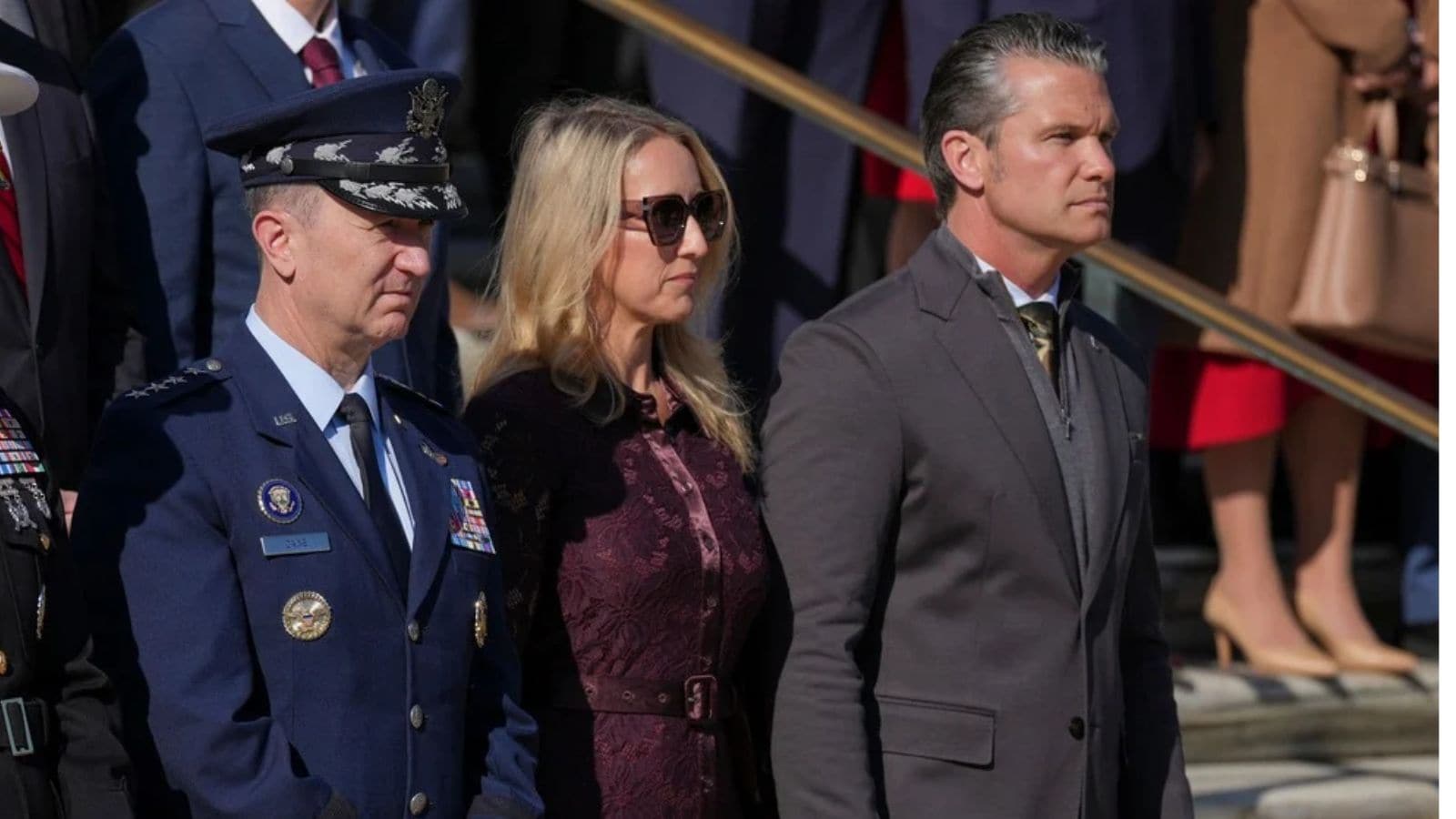
A short video surfaces showing a Tomb Guard at Arlington National Cemetery raising a voice, snapping a rifle, or issuing a sharp verbal correction to a visitor or public figure—such as the widely circulated footage involving Pete Hegseth and his team during a Veterans Day visit. Within minutes, the internet splits into two predictable camps. One side frames the moment as a humiliating public rebuke of a political figure who failed to show proper deference. The other side dismisses the whole thing as an overblown media fabrication designed to score cheap partisan points.
Both reactions miss the entire point of how Arlington National Cemetery operates.
When viewers watch a Tomb Guard bark an order, they project civilian social dynamics onto a rigid military ritual. In civilian life, getting yelled at in public means you committed a moral failing or suffered a status drop. At the Tomb of the Unknown Soldier, a verbal correction is neither a personal insult nor a political statement. It is an automated, standardized function of a 24-hour guard post governed by strict federal regulations and the 3rd U.S. Infantry Regiment, known as The Old Guard.
The Anatomy of a Tomb Guard Correction
To understand what actually happened in that footage, you have to strip away the cable news chyrons and look at the mechanics of the plaza.
The Tomb of the Unknown Soldier is not a museum exhibit. It is an active military post. Since July 2, 1937, soldiers from the 3rd U.S. Infantry Regiment have maintained a continuous, unbroken guard over the memorial, regardless of weather, holidays, or who happens to be standing behind the velvet ropes.
The Sentinels who walk the 63-foot rubber mat operate under a strict set of rules designed to preserve silence, dignity, and physical security at the plaza. Under Title 32 of the Code of Federal Regulations, visitors at Arlington National Cemetery are required to remain silent and respectful during ceremonies and while observing the changing of the guard.
When someone crosses a barrier, steps too close to the plaza chain, speaks loudly, or moves into a restricted zone—even inadvertently during a tightly packed ceremonial event—the Sentinel is trained to execute a specific, rehearsed sequence:
- Halt the walk. The Sentinel stops mid-stride and faces the disturbance.
- Execute a sharp weapon movement. The rifle is brought to port arms with a loud, deliberate slap to draw immediate visual and auditory attention.
- Deliver a standardized verbal command. The phrasing is direct, loud, and devoid of conversational pleasantries: "It is requested that all visitors remain behind the chains," or "It is requested that everyone remain quiet and standing."
Notice the phrasing. "It is requested."
Even when delivered at maximum volume across a silent marble amphitheater, the script is intentionally impersonal. The Sentinel does not know—and is trained not to care—whether the person stepping over a line is a tourist from Ohio, a television host, a cabinet nominee, or a member of Congress. The protocol is binary. Either the perimeter and silence are intact, or they are breached.
Why Viral Clips Distort Reality
The competitor narrative—and the broader social media frenzy surrounding the Veterans Day footage—relies on a lazy media trope: the "gotcha" moment.
In digital journalism, conflict drives clicks. Framing a standard Sentinel intervention as a targeted "reprimand" against Pete Hegseth and his entourage turns a routine enforcement of plaza boundaries into a morality play. For critics of Hegseth, the clip becomes instant proof of disrespect toward military traditions. For defenders, the pushback centers on arguing that his team was simply navigating a crowded ceremonial space or following staff instructions.
Both arguments treat the Sentinel's reaction as a bespoke judgment on Hegseth's character. That is factually wrong.
Anyone who has spent significant time at Arlington National Cemetery—or worked alongside ceremonial units in Washington, D.C.—knows that Sentinel corrections happen every single day. They happen to schoolchildren on field trips. They happen to veteran groups. They happen to press pools, photographers, and political staffers who lose spatial awareness while trying to capture an angle or coordinate movement during high-traffic holidays like Memorial Day and Veterans Day.
On Veterans Day in particular, the amphitheater and surrounding plaza are packed with dignitaries, security details, wreath-laying participants, and media crews. Space is tight. Sightlines are contested. People routinely misjudge where the public boundary ends and the ceremonial perimeter begins. When a group shifts slightly too far forward or murmurs during a silent phase of the ceremony, the Sentinel intervenes immediately.
Turning a routine perimeter check into a headline about a personal dressing-down misunderstands the very institution the headline claims to defend.
The Real Misconception: Confusing Protocol With Politics
When people search for details about the Tomb of the Unknown Soldier guard incident, they usually ask the wrong questions:
- "Did Pete Hegseth disrespect the Tomb of the Unknown Soldier?"
- "Why did the Army guard yell at Pete Hegseth?"
Those questions assume intent on both sides—malicious carelessness on the part of the visitor, and personal animus on the part of the soldier. Neither assumption holds up under scrutiny.
1. The Visitor Side: Spatial Friction in Ceremonial Spaces
High-profile visits to Arlington involve moving parts that the public rarely sees in a 15-second clip. Visitors are often escorted by cemetery staff, protocol officers, or event organizers. During busy commemorations, confusion over where to stand, when to move, or where cameras are permitted is common. Stepping across a line or speaking at the wrong moment in that environment is almost always a logistical misstep, not a deliberate act of defiance.
2. The Sentinel Side: Apolitical Enforcement
The U.S. military's strict adherence to nonpartisanship is nowhere more visible than in The Old Guard. Sentinels undergo months of grueling preparation—memorizing pages of Arlington history, perfecting uniform standards down to fractions of an inch, and mastering the 21-step walk—specifically so that individual personality disappears into the uniform.
To suggest that a Sentinel "reprimanded" a political figure out of personal disapproval actually insults the soldier's professionalism. A Tomb Guard is not a political commentator with a rifle. If a Sentinel tailored the volume or sharpness of a warning based on who was standing behind the rope, that would violate the core ethos of the unit.
What the Media Missed About Ceremony and Deference
There is a deeper irony in how outlets cover these moments.
Journalists and commentators love to weaponize military etiquette against political opponents, yet they rarely explain the actual rules governing those rituals. By reducing a solemn, apolitical military duty to viral outrage fodder, media coverage does the exact thing it accuses public figures of doing: it uses the Tomb of the Unknown Soldier as a stage prop for partisan warfare.
Consider how different the story looks when you apply actual domain knowledge:
- Fact: The Tomb Guard's verbal commands are scripted and standardized by Army ceremonial doctrine.
- Fact: Warnings are triggered by physical proximity to the plaza chains, noise levels, or unauthorized movement during ceremonies—not by a visitor's political resume.
- Fact: Hundreds of similar verbal warnings are issued every year at Arlington without ever making the evening news, simply because no camera crew was trained on a recognizable face at that exact second.
Does that mean public figures and their teams get a free pass when they cross a boundary at a national shrine? No. Precision matters at Arlington. Staffers, security details, and principals visiting sensitive military sites have a responsibility to know the layout, follow protocol officers' instructions, and maintain strict situational awareness. Even an unintentional step out of line disrupts a ceremony designed around absolute stillness.
Admitting that distinction is what separates serious analysis from partisan spin. You can acknowledge that a team failed to maintain proper spatial discipline during a solemn event without inventing a fictional drama in which an Army guard delivered a personal political rebuke.
How to Actually Watch Military Protocol Footage
Next time a 10-second video from Arlington National Cemetery, Buckingham Palace, or any other ceremonial military post goes viral, ignore the caption and look at three objective indicators instead:
- Look at the boundary markers. Check the chains, stanchions, or painted lines on the ground. Nearly every viral "guard yells at tourist or official" clip comes down to someone crossing an established physical perimeter by a few inches.
- Listen to the exact wording. Ceremonial guards use fixed, impersonal scripts. If the command uses passive, standardized language rather than personal address, you are watching routine crowd control, not a personal confrontation.
- Check the calendar. Major holidays like Veterans Day and Memorial Day compress thousands of visitors, press teams, and VIP escorts into narrow walkways. Friction at the perimeter spikes predictably on those dates.
The guard at the Tomb of the Unknown Soldier does not care about trending topics, cable news panels, or political rivalries. The job is to walk 21 steps, pause for 21 seconds, and keep the plaza inviolate—no matter who is watching.