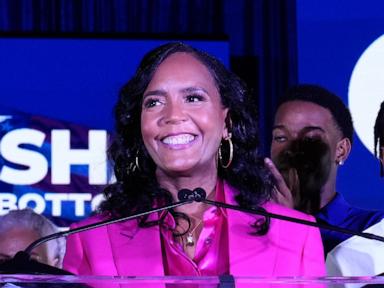
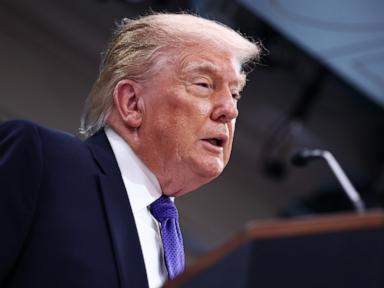
Three hundred and thirty votes out of nearly 287,000 cast. That's the razor-thin margin Democrat Chuck Hubbard needed to end 11-term Republican Representative Virginia Foxx's two-decade grip on North Carolina's 5th Congressional District—and push his party to at least 258 U.S. House seats, their biggest general-election majority since 1992.
Most national headlines treated this race like a cute postscript to Election Night. They're wrong. When you look closely at how a former small-town newspaper publisher toppled the chair of the powerful House Rules Committee, you see the exact blueprint behind the 2026 midterm wave—and the massive governing headache Democrats are about to inherit in January 2027.
Why This North Carolina Recount Actually Changes Washington
When Foxx conceded on Sunday, November 22, 2026, after a districtwide machine recount shifted the tally by a single vote, it did way more than flip one rural-and-college-town seat in northwestern North Carolina. It locked in the seventh Democratic congressional flip in the state alone and cemented a 258-seat House majority.
To put 258 seats into perspective, neither party has won that big in a general election in 34 years. Even during the 2010 Tea Party wave or the 2018 blue wave, the winning party didn't clear that bar.
Here's why that number matters so much right now:
- Speaker protection: In a 435-seat chamber, 218 votes pass a bill. Having 258 members gives Democratic leadership a 40-vote cushion, meaning a handful of moderates or progressives can't hold every procedural vote hostage.
- Subpoena and committee muscle: A majority this wide reshapes committee ratios across Capitol Hill, giving Democrats overwhelming control over oversight panels.
- Unseating an institutional heavyweight: Foxx wasn't a backbencher. First elected in 2004, she previously chaired the House Education and the Workforce Committee and ran the House Rules Committee—the panel that decides which bills even reach the floor. Losing her takes one of the GOP's fiercest procedural tacticians off the board.
Yet a giant majority brings an immediate trap. Voters handed Democrats a mandate because they're furious about grocery prices, healthcare costs, and prolonged foreign conflicts. With a Republican still sitting in the White House, winning 258 seats doesn't let Democrats pass partisan bills into law. It simply removes any excuse for internal chaos.
How a 19-Point Blowout Turned Into a Nail-Biter in Two Years
If you'd told political analysts in November 2024 that Chuck Hubbard would beat Virginia Foxx, they would've laughed you out of the room.
I've watched plenty of repeat congressional challengers burn through donor cash without moving the needle. Usually, running a second time after a double-digit loss is a vanity project. In 2024, Foxx crushed Hubbard by 19 percentage points—59.5% to 40.5%. Even then, if you looked past the top-line blowout, there was a crack in the armor: Hubbard was the first Democrat to clear 40% against Foxx since 2018.
Then two things collided in 2026.
First, redistricting reshaped the 5th Congressional District. The updated map pulled in more Democratic-leaning voters around Guilford County—including students and faculty from North Carolina A&T State University and the University of North Carolina at Greensboro—while keeping Foxx's traditional mountain and foothill strongholds like Watauga, Wilkes, Caldwell, Ashe, and Avery counties. Even with the new lines, the Cook Political Report only moved the race from "Solid Republican" to "Likely Republican," the first time since 2016 anyone considered Foxx remotely vulnerable.
Second, Hubbard didn't run like a nationalized cable-news pundit.
The Local Roots Factor
Hubbard, 64, grew up in Wilkesboro and started working in the print shop of the Wilkes Journal-Patriot at age eight, stuffing newspaper sections for the local paper his grandfather founded in 1932. He spent four decades as a local reporter and publisher.
In rural North Carolina, voters can spot a parachuted-in political operative from a mile away. Hubbard talked like a neighbor because he was one. He spoke openly about overcoming addiction and being sober for 20 years, his Presbyterian faith, and his motivation to protect equal rights for his gay daughter. He hammered Foxx for skipping local town halls, opposing disaster relief funding after Hurricane Helene battered western North Carolina, and backing policies that drove up healthcare and living costs.
Still, he didn't win on charm alone. Libertarian candidate Robert Luffman pulled 7,578 votes—roughly 2.6% of the electorate. In a race decided by 330 votes, third-party voters easily dwarfed the margin of victory.
Inside the 19-Day Post-Election Rollercoaster
Most people assume election recounts are dramatic affairs where boxes of uncounted ballots magically appear in a back room. Reality is much slower and far more tedious.
Look at how the numbers actually moved across the 10 counties in NC-05 over nearly three weeks:
- Election Night (November 3): Unofficial returns put Hubbard ahead by just 99 votes.
- One Week Later (November 10): As counties processed mail-in and early canvassing adjustments, Foxx briefly surged ahead by 38 votes.
- Provisional Ballot Count (Mid-November): Once county boards verified provisional and military ballots, Hubbard swung back into the lead by 331 votes—139,770 to 139,439, or a 0.12% margin.
- The Recount Request (November 17): Under North Carolina law, any federal candidate trailing by 0.5% or less can demand a recount. Foxx filed hers on November 17.
- The Machine Recount (November 18–21): Election workers fed hundreds of thousands of paper ballots back through optical scanners. Watauga County's recount added two votes for Foxx, and Caldwell County's final canvass adjustments shifted the net margin by one vote, leaving Hubbard ahead by 330 votes.
Why Recounts Almost Never Flip Outcomes
If there's one takeaway from North Carolina's canvass, it's that modern optical-scan tabulators are remarkably consistent. Across roughly 287,000 ballots in 10 counties, running the machines a second time altered the margin by a single vote.
FairVote, a nonpartisan electoral reform organization, has tracked statewide recounts for decades and found that the average shift is only a few hundred votes—and outcomes almost never reverse unless the initial gap is well under 100 votes. Foxx's team knew the math was steep, which is why she issued a graceful concession statement on November 22 rather than dragging the fight into protracted court battles.
One minor loose end remains: a private citizen filed an election protest alleging three voters cast ballots in multiple counties, with a preliminary hearing finding probable cause ahead of a December 1 review. Even if every single one of those three ballots were tossed out, though, three votes can't erase a 330-vote lead.
What North Carolina's Broader 2026 Wave Tells Us
Hubbard's upset didn't happen in a vacuum. North Carolina experienced a massive political jolt across the entire ballot in November 2026:
- Federal flips: Democrats flipped seven U.S. House seats in the state—including unseating Republican incumbents Richard Hudson and Brad Knott—and former Governor Roy Cooper cruised to victory in the U.S. Senate race by nearly 20 points.
- Statehouse shakeup: Democrats broke 16 years of Republican control in the North Carolina House of Representatives, winning 71 seats and unseating 18 Republican incumbents, including former party-switcher Tricia Cotham.
- Ticket-splitting isn't dead: While voting heavily for Democrats up and down the ballot, North Carolina voters simultaneously approved three conservative-backed constitutional amendments—capping the state income tax at 3.5%, limiting local property tax hikes, and requiring photo ID for mail-in ballots.
That ticket-splitting detail is huge. Voters weren't signing up for an ideological revolution. They were punishing incumbents over inflation, tariffs, and healthcare costs while still voting to keep their taxes capped.
What Happens Before January 2027
Both candidates are already looking past the recount. Virginia Foxx has already filed paperwork to run for the 5th District seat again in 2028, signaling that northwestern North Carolina is now a permanent battleground rather than a safe red stronghold.
For Hubbard, the real test starts on January 3, 2027, when the 120th Congress convenes. Surviving a recount is one thing; delivering Hurricane Helene recovery money and lower living costs in a divided Washington is another.
If you're following how this 258-seat majority plays out over the next two years, keep your eye on three concrete benchmarks:
- Watch the State Board of Elections certification and December 1 protest hearing: Official certification wraps up the legal paperwork in Raleigh, confirming whether any minor county adjustments budge that final 330-vote count.
- Track Hubbard's committee assignments in January: Freshman members from razor-thin swing districts usually get prime spots on committees tied to local infrastructure, agriculture, or disaster relief so they have tangible wins to show voters before 2028.
- Follow the 2028 rematch fundraising: Because Foxx is already running again, early Q1 2027 Federal Election Commission filings will tell you immediately whether national donors plan to pour millions into NC-05 for a rematch.