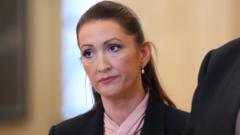
When news broke on Good Friday morning in March 2024 that Sir Jeffrey Donaldson was stepping down after being charged with historic sexual offences, Northern Irish politics shook to its foundation. DUP insiders and political rivals alike scrambled for answers. Deputy First Minister Emma Little-Pengelly admitted she felt utterly floored and devastated by the allegations facing her long-time party chief.
The shock wasn't just about party loyalty. Donaldson had spent decades building an image as a devout, unshakeable figurehead at Stormont and Westminster. He helped broker the deal that restored power-sharing just weeks prior. His sudden fall left a massive political vacuum and forced unionism into an unprecedented crisis.
Shockwaves Across Stormont
The arrest hit like a bolt from the blue. PSNI officers arrived at Donaldson’s Dromore home in late March 2024, questioning him over allegations dating back decades. By evening, charges were laid, including rape, indecent assault, and gross indecency involving two victims who were children at the time.
For Emma Little-Pengelly, the timing couldn't have been worse. Selected by Donaldson as deputy First Minister, she was suddenly tasked with maintaining government stability alongside Sinn Féin’s First Minister Michelle O'Neill. Little-Pengelly publicly voiced her shock while reiterating her faith in the legal process. Behind closed doors, party figures panicked. The DUP quickly suspended Donaldson and scrubbed his name from their website.
Political stability in Belfast always sits on a knife-edge. Donaldson’s exit threatened to tear apart the delicate balance holding the Executive together.
The Fall of Unionism's Polished Figurehead
To understand why the political fallout was so severe, you have to look at Donaldson’s track record. He wasn't a backbencher. He was the longest-serving MP from Northern Ireland, having entered Parliament back in 1997. He walked out of Good Friday Agreement negotiations in 1998, defected from the Ulster Unionist Party to the DUP in 2004, and eventually rose to lead the party in 2021.
Donaldson crafted a reputation as a shrewd negotiator. He steered the party through the turbulent aftermath of Brexit, managing complex talks over the Windsor Framework. His supporters saw him as a steady hand who restored unionist credibility in London.
That polished facade crumbled overnight. The legal process culminated at Newry Crown Court, where a jury convicted him on 18 counts. The court heard horrifying details of abuse that had been hidden under the surface for years. The DUP issued stern denunciations, labeling him a double-dealer who misled colleagues and voters alike.
What Political Institutions Must Do Right Now
Political scandals of this magnitude leave lasting damage. Restoring public faith requires concrete changes rather than political maneuvering or public relations statements.
Institutional Transparency
Political parties need rigorous, independent vetting and reporting protocols. When concerns or allegations surface internally, they must be handed directly to law enforcement without internal delay or self-policing.Protecting Victim Support Services
Court cases of this nature trigger immense stress for survivors across the community. Funding for local crisis support centers and mental health services in Northern Ireland must be expanded to handle increased demand.Rebuilding Public Trust in Government
The Executive needs to focus sharply on governance—addressing healthcare wait times, local infrastructure, and school funding—to show citizens that power-sharing can function effectively regardless of individual party crises.