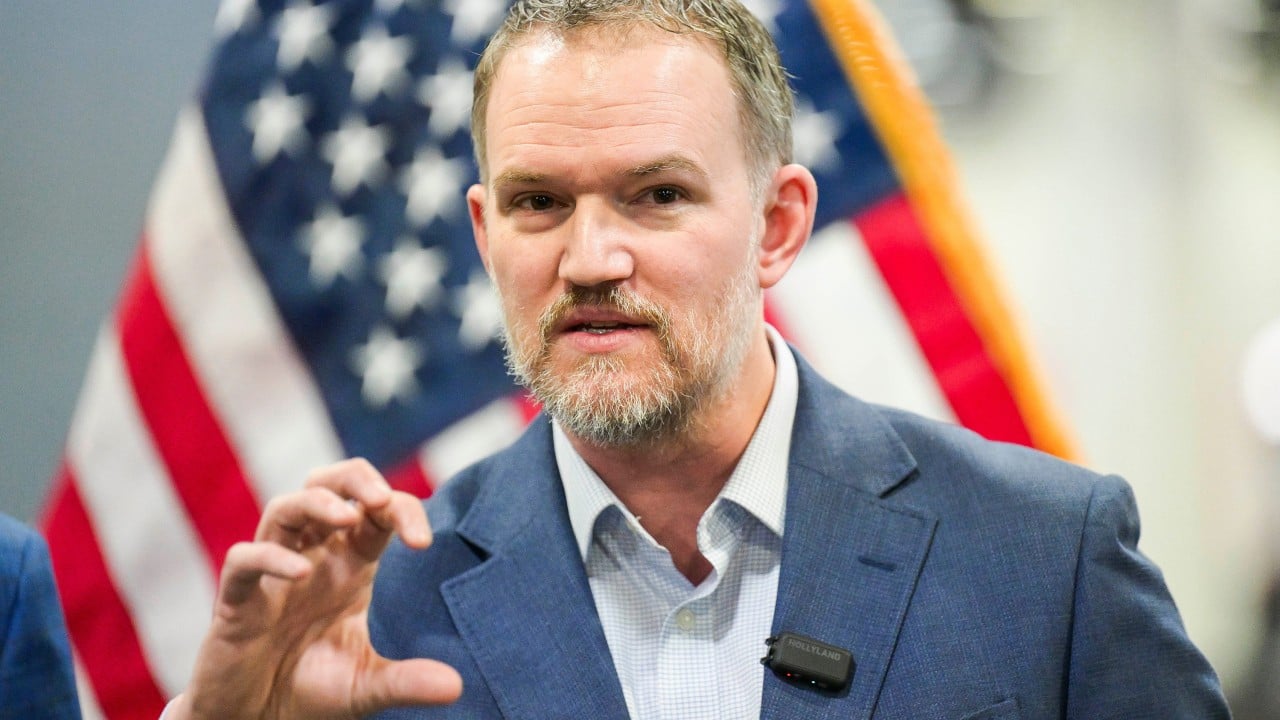
Governments love a flashy photo op. The upcoming announcement in Vancouver featuring Canada’s Energy and Natural Resources Minister Tim Hodgson locking arms with German state-backed energy giant SEFE feels like exactly that. On paper, it sounds massive. Canada plans to ship liquefied natural gas from British Columbia’s coast across the ocean to help power Germany through the 2030s and beyond.
But if you look closely at the mechanics of global energy trade, you quickly realize that the breathless headlines are missing the point. Shipping gas from the Pacific coast of Canada to Western Europe makes almost zero geographic sense.
There is a much bigger story playing out here. This agreement isn't just about molecules of methane moving from point A to point B. It's a calculated, high-stakes geopolitical maneuver designed to reduce dependence on the United States, bypass a hostile Trump administration, and keep a multi-billion-dollar Indigenous-led infrastructure project from stalling out.
The Logistics Problem Nobody Wants to Discuss
Let's look at a map. The gas for this contract will come from Ksi Lisims LNG, a proposed $10 billion floating export terminal tucked near the Alaska border in northern British Columbia.
To get that gas to Germany, a tanker would have to load up in the Pacific, sail down the entire west coast of North America, line up for the Panama Canal, pay massive transit fees, navigate chronic drought-related canal delays, and then cross the Atlantic. The other options are even crazier. Sailing all the way around Cape Horn at the bottom of South America or betting on a seasonal, ice-choked Arctic route through Hudson Bay isn't practical for consistent commercial supply.
So how does this deal actually work? The answer lies in a complex global mechanism known as cargo swapping.
You don't need to ship a specific molecule of Canadian gas to Berlin to fulfill a contract. Instead, SEFE can take the gas loaded at Ksi Lisims and sell it to a buyer in Asia, like Japan or South Korea, which is a straight, efficient shot across the Pacific. In exchange, Canada’s partners can buy an equivalent amount of gas from a supplier closer to Europe, perhaps in the US Gulf Coast or North Africa, and deliver that to Germany.
It is a shell game of global energy logistics. The trade routes get optimized, transit costs plummet, and both countries get to claim they are strategic partners. Honestly, it's a brilliant workaround, but it shows that this pact is driven by political necessity rather than simple physics.
Escaping the American Shadow
For Canada, the motivation under Prime Minister Mark Carney goes far beyond finding a customer for natural gas. It is about survival in an increasingly hostile North American trading environment.
Canada relies on the United States to buy the vast majority of its energy exports. That reliance has become a massive liability. With the Trump administration imposing unpredictable tariffs and threatening deeper economic blockades, Ottawa is desperate to diversify. Carney has been clear about his ambition to double Canadian exports to non-US markets by 2035. This agreement is his first major flag in the sand.
Germany is equally desperate, though for different reasons. After cutting itself off from Russian pipeline gas following the 2022 invasion of Ukraine, Germany nationalized SEFE, the former Gazprom unit, to secure its energy future. Middle East volatility and Red Sea shipping disruptions have made Berlin deeply uncomfortable.
More than anything, European leaders are terrified of leaning too heavily on American shale gas. Relying on a volatile US political system for your primary heating and industrial fuel is a dangerous game. Minister Hodgson noted that European allies want a reliable supplier who won't use energy as a tool for political coercion. Canada wants to be that alternative.
Saving a Ten Billion Dollar Mega Project
The timing of this pact isn't accidental. It provides a vital lifeline to a project that desperately needs to clear its final hurdle.
The Ksi Lisims project is a joint venture between Houston-based Western LNG, Rockies LNG Partners, and the Nisga’a Nation. While British Columbia Premier David Eby and provincial regulators granted the project an environmental assessment certificate, the consortium has not yet made a final investment decision.
You don't build a $10 billion floating terminal on a hunch. Banks won't lend you money unless you can prove people will buy the product for the next twenty years. By signing a long-term offtake agreement with a creditworthy, government-backed buyer like SEFE, Ksi Lisims finally gets the financial validation it needs.
Premier Eby admitted as much, stating that sealing up agreements with international buyers is the exact step required to push the partners toward greenlighting construction. This contract turns a speculative engineering proposal into an investable reality.
The Indigenous Economic Engine
A critical element missing from most international coverage is the role of First Nations. Unlike old-school energy developments that treated local communities as an afterthought, Ksi Lisims is physically located on Nisga’a treaty land and co-owned by the Nisga’a Nation.
For the Nisga’a, this project represents economic self-determination. It means thousands of jobs, long-term tax revenues, and a direct stake in global trade. The project plans to use clean British Columbia hydroelectricity to power its liquefaction process, aiming for net-zero emissions from day one.
Environmental groups like Stand.earth are already fighting the project, arguing that a 900-kilometer pipeline expansion through northern ecosystems is a climate disaster, regardless of who owns it. But the political reality is that the Canadian government will find it much easier to defend a project backed heavily by an Indigenous nation. It gives the federal government the perfect political shield against domestic climate critics.
Moving Past the Hype
If you're watching this development unfold, don't get distracted by the romantic idea of Canadian gas directly lighting up homes in Frankfurt next winter. This is a long game. The project won't even start shipping gas until the early 2030s.
Instead, watch the commercial next steps. Look for the formal final investment decision from the Nisga’a and Western LNG consortium later this year. Watch how the US energy lobby reacts to Canada locking down major European buyers, and keep an eye on whether these cargo-swapping arrangements cause friction with Asian buyers who want that same cold-weather fuel. The diplomatic chess match has just begun, and the actual shipping lanes are the least important part of the board.