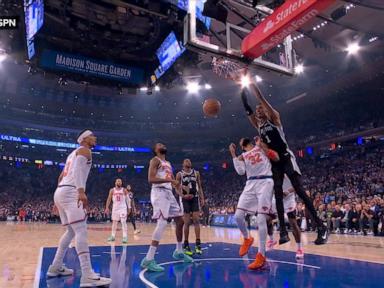
The media consensus surrounding the 2026 NBA Finals is a masterclass in lazy basketball analysis. Sit through any major sports broadcast or read any mainstream recap right now, and you are fed the exact same narrative. They paint it as a historical masterpiece: the gritty, dominant New York Knicks, carrying a historic plus-271 point differential through the Eastern Conference, clashing with the alien-like destiny of Victor Wembanyama and his hyper-young San Antonio Spurs. The narrative hounds lost their minds when New York ran off a 13-game postseason win streak, and they lost them again when Wembanyama dropped 32 points in Madison Square Garden for Game 3 to snap it.
They call this series the dawn of a golden era. They are dead wrong.
What you are actually watching is not the birth of a brand-new basketball epoch. It is a highly volatile, structurally flawed matchup masked by massive media markets and individual star power. The basketball being played is erratic, the team building models are terrifyingly unsustainable, and the takeaways everyone is extracting from these first three games will actively ruin how franchises build rosters for the next decade.
The Myth of the New York Juggernaut
Let’s start with the Knicks, because the basketball world has spent the last 46 days treating them like the 1996 Chicago Bulls. Yes, New York compiled an incredible postseason streak after dropping a lone game to Atlanta back in April. Yes, they steamrolled a weak Eastern Conference, sweeping Philadelphia and Cleveland. But anyone who looked past the point differential saw a team redlining its engine just to stay on the highway.
Mike Brown has run Jalen Brunson and OG Anunoby into the ground. Brunson’s usage rate in these playoffs is hovering near historic heights. In his Finals debut, he put up 31 field goal attempts—the most in a Finals debut since Allen Iverson in 2001. That isn't an elite offensive system; that is a heliocentric dependency.
The cracks tore wide open in the second half of Game 3. The Knicks managed a pathetic 47 points after halftime. Karl-Anthony Towns and Mikal Bridges combined for a grand total of four points in the second half. Four. When a team relies entirely on Brunson creating magic out of isolation sets or hunting fouls, a single disciplined defensive adjustment completely breaks the offense.
The mainstream press wants to talk about New York’s "gritty culture" and "championship DNA." I’ve watched front offices copy this exact model before. They overpay mid-tier stars, rely on a short rotation, and pray their primary ball-handler doesn't pull a hamstring. The Knicks aren't a dynasty in waiting; they are a high-variance team that caught a historic hot streak against an incredibly injured and flawed Eastern Conference.
The Victor Wembanyama Distortion Field
On the other side, we have San Antonio. The Spurs are the second-youngest team to ever reach the NBA Finals, averaging just over 25 years old. The narrative machine tells you this is a beautiful, organic rebuild engineered by Mitch Johnson. They point to rookie Stephon Castle dropping 23 points in Game 3 as proof that the Spurs possess a flawless corporate structure.
This completely ignores reality. The Spurs do not have a brilliant, multi-layered system. They have a 7-foot-4 genetic anomaly who erases every single organizational mistake they make.
2026 NBA Finals - First Three Games (Road Team Dominance)
Game 1: Knicks 105 - 95 Spurs  (NY leads 1-0)
Game 2: Knicks 105 - 104 Spurs (NY leads 2-0)
Game 3: Spurs 115 - 111 Knicks (NY leads 2-1)
Look at how these games have actually played out. This is only the second time in NBA history that the road team has won each of the first three games of the Finals, mirroring the weirdness of 1993. Why? Because neither of these teams knows how to execute under pressure on their own home floor. In Game 2, Wembanyama turned the ball over in the closing seconds to hand New York a one-point win. In Game 3, the Knicks came out completely flat in front of a raucous Madison Square Garden crowd, falling behind by double digits in the first four minutes.
The execution in this series is downright sloppy. San Antonio’s half-court offense without Wembanyama on the floor looks like a chaotic summer league game. De'Aaron Fox has struggled immensely to find his rhythm as the secondary creator, forcing a rookie like Castle to bail out possessions. If Wembanyama isn't playing at an All-NBA First Team level for all 48 minutes, this Spurs team is a lottery roster.
The False Promise of the Roster Models
The dangerous part of this series is what comes next for the rest of the NBA. General managers are reactionary creatures. They copy whatever is standing on the stage in June.
If the Knicks pull this out and end their 53-year drought, teams will falsely assume that the "all-in asset dump" is the correct way to build. They will see New York trading a king's ransom of first-round picks for Mikal Bridges and Karl-Anthony Towns and think that burning future draft capital for non-superstar talent is viable. It works when Jalen Brunson plays like an MVP candidate. It fails miserably the moment his shooting percentages regress to the mean.
If the Spurs mount a historic comeback from down 2-0, front offices will conclude that youth and tanking are completely viable paths to instant contention. They will look at the draft lottery wins that netted them Wembanyama, Castle, and Dylan Harper, and believe it’s an replicable strategy. It isn’t. You cannot draft a generational talent who alters the geometry of the court every ten years.
The Brutal Reality of the Modern League
Let’s answer the question the mainstream media refuses to ask: Is this actually elite basketball?
No. It’s highly entertaining, deeply chaotic basketball. We are currently experiencing the eighth consecutive year with a unique NBA champion—the longest such stretch in league history. The pundits want you to believe this parity means the league is healthier than ever.
The opposite is true. True parity means anyone can win; historical parity usually means nobody is genuinely elite. The heavy hitters of yesteryear have aged out, and the new vanguard hasn't figured out how to sustain excellence under the restrictive rules of the modern collective bargaining agreement.
New York didn't get here because they built an unstoppable machine. They got here because they survived an Eastern Conference graveyard. San Antonio didn't get here because their young core matured ahead of schedule. They got here because Wembanyama dragged a 62-win team through a grueling seven-game war against Oklahoma City, and the exhaustion carries over.
Stop buying into the romanticized version of this series. Stop expecting the winner of this matchup to dictate the rules of basketball for the next five years. This isn't the start of something permanent. It’s a beautifully masked collision of two deeply flawed teams trying to survive their own limitations.
Enjoy the highlight reels, appreciate the shot-making from Brunson and the absurd blocks from Wembanyama, but do not mistake this erratic, road-team-dominated series for a masterclass in championship basketball.