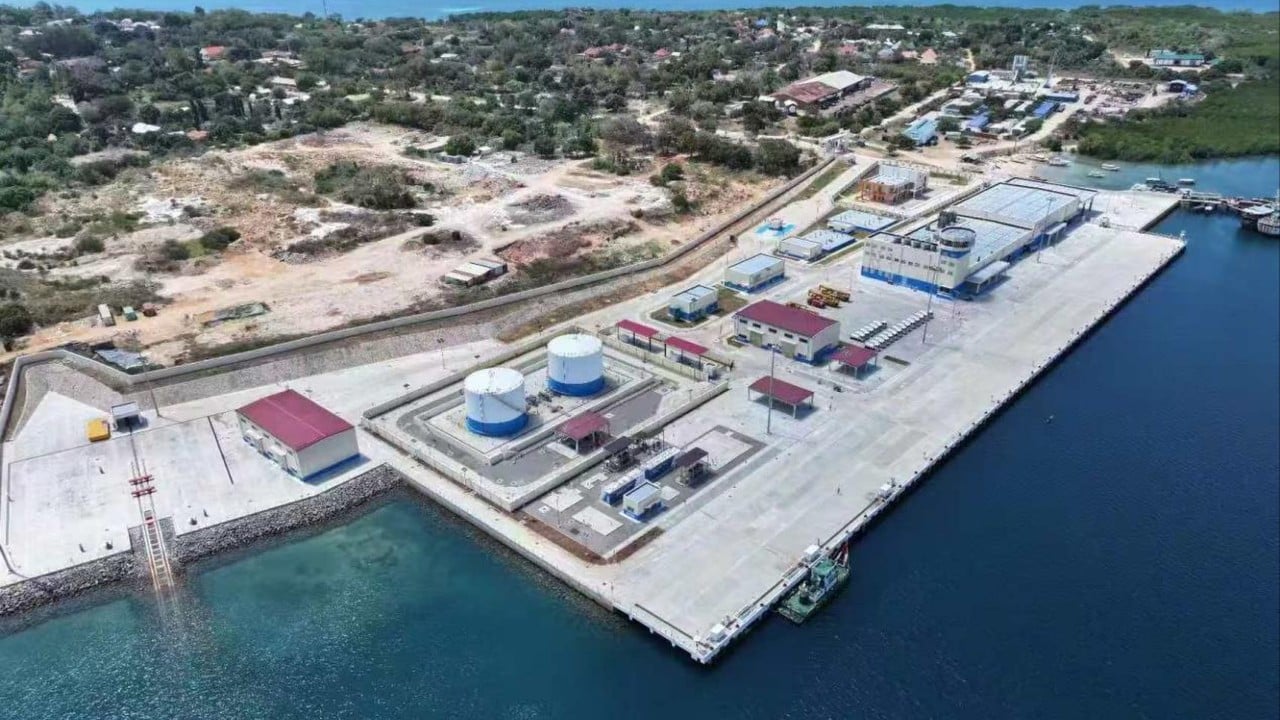
A US$110 million fishing harbour in Tanzania is not a secret naval base. Nor is it a silver bullet for feeding 1.4 billion people.
Read the standard commentary on this project and you will see the same lazy movie on repeat. Sinister trawlers. Creeping naval encirclement. Desperate Beijing planners scouring the Indian Ocean for protein. It makes for great headlines. It also fails basic maritime economics, cold-chain logistics, and naval engineering.
I have spent years analyzing maritime supply chains, sovereign infrastructure deals, and port concessions across East Africa and the Indo-Pacific. I have watched governments and corporate boards blow tens of millions of dollars on "strategic" ports that sat half-empty because nobody checked draft depths, reef clearance, reefer container turnaround, or local fish stock yields. When pundits look at a US$110 million fishing harbour in Tanzania and scream about grand master plans, they confuse ambition with arithmetic.
The real story is much sharper, much messier, and far more revealing about how modern power actually works on the water.
The Lazy Consensus Around Fishing Harbours
Conventional wisdom treats every overseas port funded or built with Chinese involvement as a piece on a geopolitical chessboard. Under this view, a fishing harbour on the Tanzanian coast serves two neat purposes: shipping frozen seafood back to Chinese tables and giving Chinese state vessels—or naval auxiliaries—a friendly foothold along key sea lanes.
Sounds tidy. Completely wrong on scale.
Start with food security. China is the world’s largest seafood producer and consumer, driven heavily by domestic aquaculture alongside distant-water fishing fleets. Feeding a country of over 1.4 billion people requires millions of metric tons of aquatic protein every year. A US$110 million harbour does not move that needle. In heavy maritime infrastructure, US$110 million buys a modest facility—quays, slipways, cold storage, basic processing, dredging, and access roads. Even if every single ton of catch landed there were exported to East Asia, the volume would be a rounding error against China's domestic demand.
Now look at hard military security. A commercial fishing harbour built to handle trawlers and reefer carriers is not a deep-water naval base with heavy dry docks, hardened fuel farms, missile magazines, and high-tonnage piers for destroyers or amphibious assault ships. Turning a fishing harbour into a true forward military base requires massive expansion, dredging, perimeter security, and political sovereignty arrangements that host nations guard fiercely. Calling every fishing quay a covert warship berth is lazy shorthand.
Precision Terms You Need Before Arguing About Ports
People throw around port labels as if they are interchangeable. They are not.
- Fishing harbour (or fishery port): Designed for fishing vessels, landing catches, ice supply, sorting, auctioning, cold storage, and primary processing. Drafts and crane capacities match fishing boats and reefer ships, not heavy cargo liners or major warships.
- Commercial deep-water port: Built for container ships, bulk carriers, and tankers, requiring deep channels, heavy gantry cranes, and high-throughput intermodal rail or road links.
- Dual-use facility: A civilian port that can host visiting naval vessels for logistics, replenishment, or maintenance under host-country permission. Most commercial ports worldwide are dual-use in practice; that is normal maritime statecraft, not a smoking gun.
- Distant-Water Fishing (DWF): Fishing operations conducted by vessels flagged to one country inside the Exclusive Economic Zones (EEZs) of other nations or on the high seas, regulated through bilateral access agreements and regional fisheries management organizations.
Once you separate those categories, the panic drops and the actual mechanics come into focus.
The Question You Should Actually Be Asking
Most commentators ask: How does this harbour help China control Tanzania and feed its population?
Wrong question.
The sharper question is: Who captures the economic rent and regulatory leverage along the value chain—and can a US$110 million fishery hub overcome East Africa’s brutal cold-chain bottlenecks?
In fisheries, the money rarely sits in simply pulling fish out of the water. It sits in post-harvest preservation, grading, freezing, processing, compliance with export hygiene standards, and shipping. Across much of sub-Saharan Africa, post-harvest fish losses are notoriously high because ice plants fail, cold storage is scarce, and road links to inland markets or export terminals are slow. A modern fishing harbour with proper cold storage and landing infrastructure addresses a real physical bottleneck.
At the same time, infrastructure creates dependency through standards and operations, not sci-fi mind control. Whoever builds, equips, and helps manage landing sites, cold chains, and vessel monitoring systems shapes how catch is handled, recorded, and moved. That is commercial and institutional influence. It is quieter than a battleship—and often far more durable.
"People Also Ask" — Dismantled Without Mercy
Is a Chinese-backed fishing harbour in Tanzania a military threat?
Not on its own. A fishing harbour is not a naval base. Any port can host visiting ships if the sovereign host government says yes, and any foreign naval presence in the Western Indian Ocean is closely watched by regional powers and global navies. Treat a fishing harbour as a naval base and you waste intelligence bandwidth chasing shadows while missing commercial and ecological leverage right in front of you.
Does Tanzania actually benefit from foreign investment in a fishing harbour?
Potentially, yes—if the deal enforces domestic landing, local value addition, artisanal fisher protections, and transparent fee collection. If foreign industrial boats vacuum up high-value stock while local fishers get pushed into crowded inshore waters, the local payoff shrinks fast. Infrastructure without enforceable governance is just concrete.
Can small ports really shift global food security?
No. Global food security moves on aggregate supply, feed grain prices, fuel costs, climate shocks, trade rules, and aquaculture output. A single US$110 million harbour is a regional supply-chain node, not a global food lever.
A Thought Experiment: Follow the Tuna and the Fuel
Imagine a scenario where a modernised fishing harbour in Tanzania operates at full capacity for five years.
Trawlers and purse seiners unload pelagic catch—tuna and related species—alongside reef and coastal landings. Blast freezers lock in quality before spoilage hits. Processing lines trim and pack fillets for export and domestic distribution.
Now trace where the value goes. Fuel costs eat a massive chunk of any fishing trip. Crew wages, vessel maintenance, gear replacement, and port tariffs take another slice. Export markets demand strict traceability, sanitary certification, and reliable container schedules. If the harbour processes and ships high-value catch efficiently, export revenues rise and local jobs appear in cold storage, logistics, and maintenance. If instead foreign vessels land catch for transshipment or basic freezing with minimal local processing and weak stock monitoring, most of the margin leaves with the boats and traders.
Notice what is missing in that thought experiment: any magic formula where a US$110 million harbour solves China’s domestic protein needs. Even thousands of tons of seafood spread across a billion-plus population barely registers. For Tanzania, by contrast, landing, processing, and preserving that volume locally can be a very real economic event. Asymmetry is the point.
The Heavy Hitters and What the Data Actually Shows
Serious analysts of maritime security, fisheries economics, and African port development—figures and institutions such as fisheries economists at the Food and Agriculture Organization (FAO), maritime security researchers at the Center for Strategic and International Studies (CSIS), and scholars tracking Indian Ocean maritime affairs like Christian Bueger or Isaac Kardon—have repeatedly pointed out a crucial distinction: commercial port footprint does not automatically equal military basing rights or strategic dominance.
Consider the real-world constraints of the Western Indian Ocean:
- Fish stock realities: Indian Ocean fisheries face heavy pressure from both coastal and distant-water fleets, with target stocks like yellowfin tuna long subject to quota debates and sustainability strain in regional bodies such as the Indian Ocean Tuna Commission (IOTC). You cannot build fish into the ocean with concrete.
- Capital scale: Compared to multi-billion-dollar deep-water container terminals or major naval installations, a US$110 million fishing harbour sits in the small-to-mid-sized infrastructure tier.
- Host-country agency: African governments are not passive mannequins. Port authorities, ministries of livestock and fisheries, customs agencies, and regional diplomats negotiate terms, renegotiate contracts, and push back when local interests are sidelined.
I have seen plenty of analysts treat sovereign states in East Africa as blank canvases where outside powers simply paint their wishes. That mistake gets exposed every time local politics, port labor, environmental rules, or budget realities collide with outside plans.
The Downside of My Own Contrarian Take
Being contrarian has its own blind spots, and I will own mine.
Downplaying immediate military or food-security drama can make you underestimate incrementalism. Strategic positions in maritime affairs rarely arrive with a brass band and a plaque reading Forward Base. They often accumulate through small, legal, commercial steps: berth access agreements, fuel and provisioning arrangements, repair services, data systems, and familiar operational routines. Over a decade or two, small commercial footprints can lower friction for broader state activity.
There is also a risk of underestimating local ecological and social friction. Even if a US$110 million harbour is modest by global geopolitical standards, a concentrated industrial fishing hub can strain local fish stocks, undercut small-scale fishers, or spark political backlash in coastal communities if benefits are lopsided. A project does not need to be a superpower masterstroke to cause real local disruption.
Actionable Moves for Decision-Makers
If you run a maritime business, advise a government, or track Indo-Pacific trade, stop arguing over cartoons and start watching operational realities:
- Audit the cold chain, not the conspiracy theories. Check blast-freezing capacity, cold-storage reliability, power backup, and reefer turnaround times. Cold-chain performance determines whether a fishing harbour actually cuts waste and creates export value.
- Track catch origin, transshipment, and quota compliance. Watch landing logs, vessel tracking, and regional fisheries rules. Overfishing and illegal, unreported, and unregulated (IUU) practices wreck long-term commercial value faster than any geopolitical rival.
- Demand hard contractual guardrails for host states. Insist on clear rules covering local employment, skills transfer, domestic supply quotas, environmental impact enforcement, and transparent concession terms.
- Separate commercial presence from naval capability. Judge military capability by pier dimensions, fuel and ordnance storage, dry docks, and legal basing agreements—not by the presence of fishing boats and cranes.
A US$110 million fishing harbour in Tanzania is a supply-chain and diplomatic move in a crowded ocean, not a secret weapon or a pantry for a billion people. Measure the concrete, count the fish, read the contracts.


