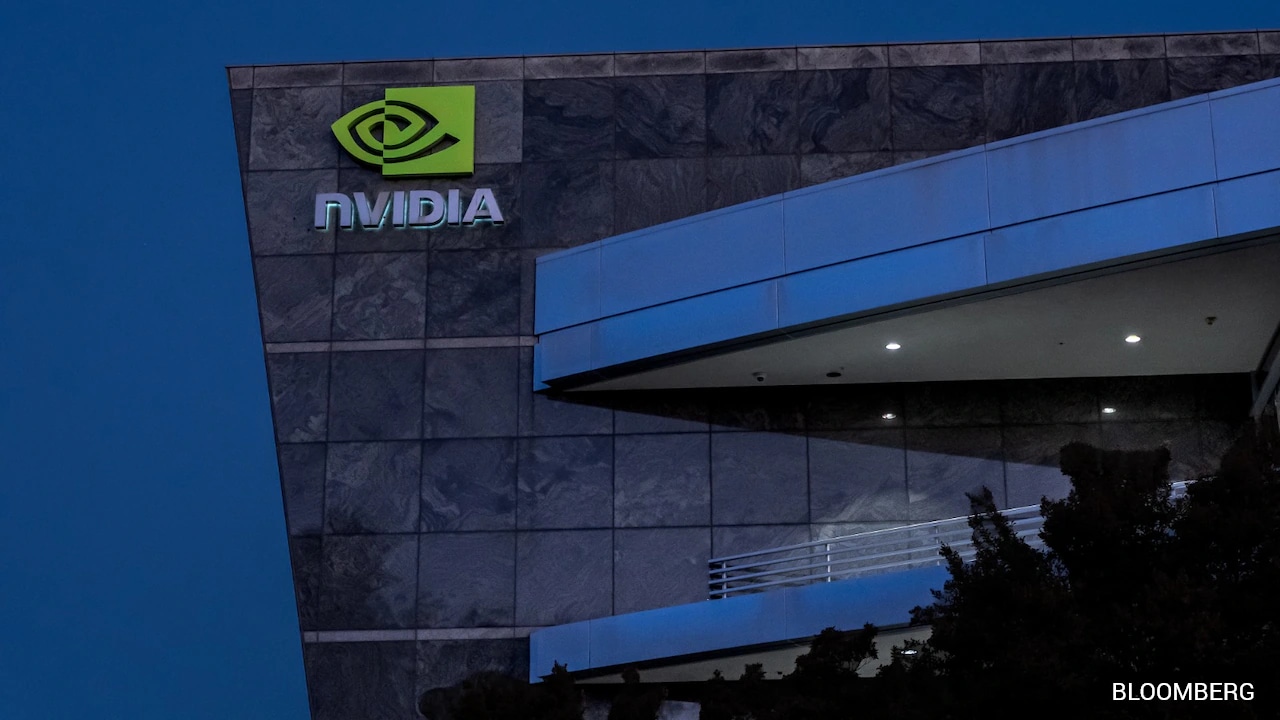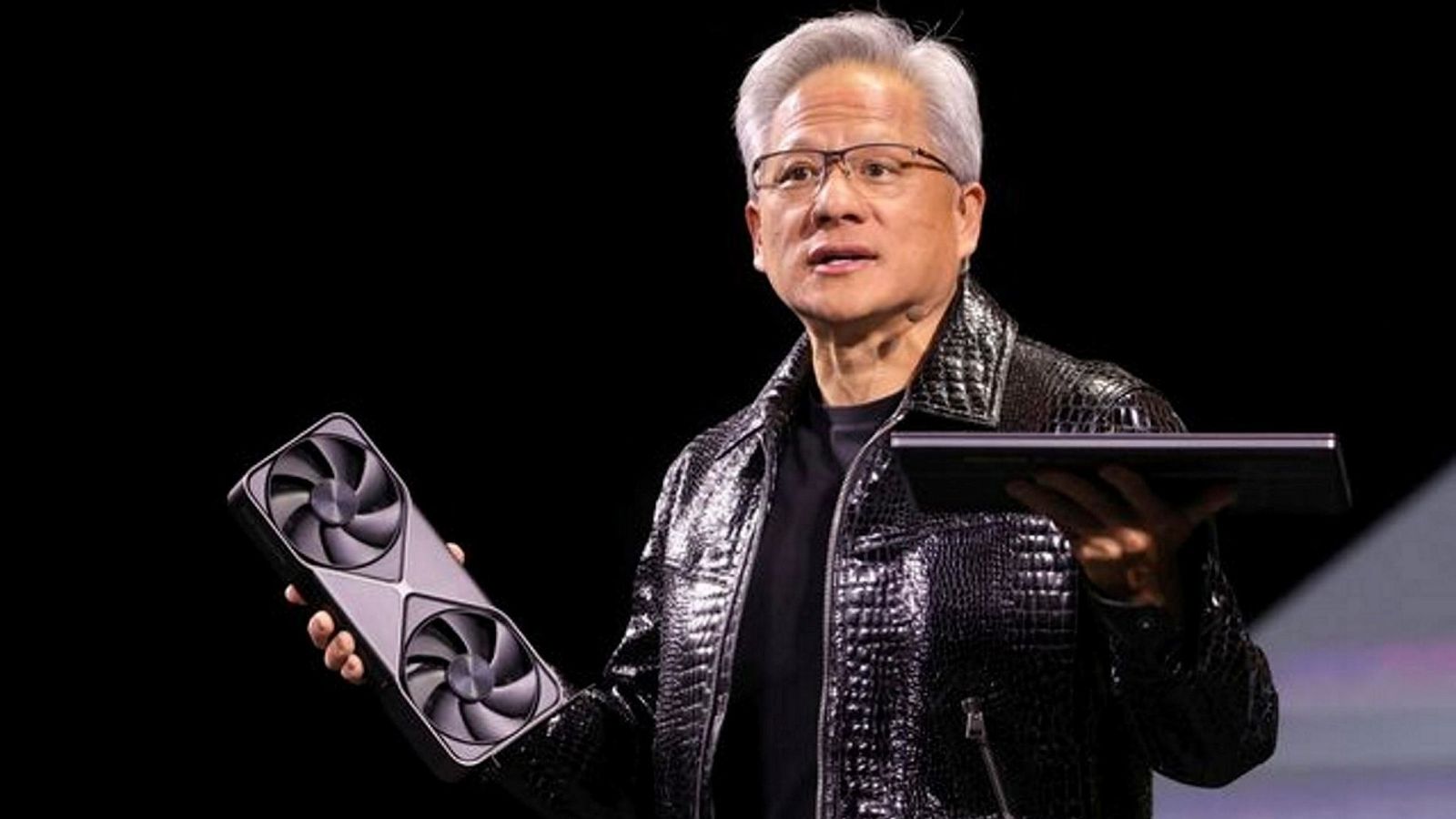
The tech press loves a good superhero rescue fantasy. Right now, the viral narrative sweeping Silicon Valley and Washington is that Elon Musk, Sam Altman, and Donald Trump are forming an unprecedented alliance to "bring Jensen Huang back to Nvidia" or secure his undivided allegiance to save the American AI stack.
It makes for thrilling clickbait. It is also completely detached from reality.
First, let us clear up the most glaring factual hallucination embedded in that viral headline. Jensen Huang never left Nvidia. He co-founded the company in 1993 and has served as its uninterrupted Chief Executive Officer for over three decades. You cannot "bring back" a founder who is still sitting in the leather jacket at the head of the table, steering a multi-trillion-dollar juggernaut. When viral aggregators spin up rumors about tech titans rallying to "bring him back," they are either falling for engagement-bait hallucinations, confusing executive boardroom politics with actual departures, or misinterpreting a much darker, far more ruthless reality.
Musk, Altman, and Trump are not rallying to save Jensen Huang. They are trying to contain him.
If you buy into the lazy consensus that these four power brokers are holding hands to protect American semiconductor dominance, you are missing the actual war happening beneath the surface. In my years tracking hardware supply chains and watching hyperscalers burn billions trying to escape single-vendor lock-in, I have never seen a more misunderstood power dynamic. What looks like a coalition of allies is actually a hostage negotiation disguised as a dinner party.
The Myth of the Silicon Valley Super-Friends
To understand why the mainstream narrative fails, look at the incentives of the men involved. Tech journalists love to treat billionaire CEOs and politicians like characters in a comic book crossover. They see Sam Altman and Elon Musk praising Nvidia's hardware, or Trump emphasizing the need to keep chip manufacturing on American soil, and they immediately write a story about a unified front.
That is amateur-hour analysis. Follow the capital expenditure, not the press releases.
Every single entity in this supposed alliance has a massive, existential conflict of interest with Nvidia's current business model:
- Sam Altman and OpenAI: Altman is actively trying to raise hundreds of billions of dollars to build custom fab networks and design proprietary AI accelerators. Why? Because paying Nvidia's gross margins—which regularly hover north of 70 percent—is a tax on OpenAI's survival. Altman does not want to rally around Jensen Huang; he wants to commoditize him.
- Elon Musk and xAI: Musk famously burned through massive capital to wire up the Colossus supercluster in Memphis using over 100,000 Nvidia H100 and H200 GPUs. He needed Huang to get that cluster online in record time. Simultaneously, Tesla is pouring billions into its own Dojo supercomputer and custom inference chips specifically to stop writing checks to Santa Clara.
- Donald Trump and Washington: Political leadership views advanced semiconductors through the lens of national security and trade leverage. While they want Nvidia to dominate global markets over Chinese competitors like Huawei, they are acutely aware that having the entire Western economy bottlenecked through a single fabless designer in California—which relies almost entirely on TSMC in Taiwan—is a catastrophic single point of failure.
When you see these figures speaking favorably about Huang or pushing for favorable regulatory conditions around Nvidia's supply chain, you are witnessing tactical appeasement. You cannot insult the guy who controls your allocation of Blackwell racks.
What People Actually Mean When They Ask About Huang Leaving
Because viral headlines rarely die even when they are factually broken, search engines are flooded with confused queries. People are asking whether Jensen Huang stepped down, why he would need to be brought back, or if a secret boardroom coup took place.
Let us dismantle the premise of those questions immediately.
Did Jensen Huang ever leave Nvidia?
No. Not for a single day. Any article claiming he resigned, retired, or was ousted is flat-out wrong or referencing a fabricated rumor mill. Unlike Sam Altman, who was famously fired by OpenAI's board in November 2023 only to return days later after a staff revolt, Huang holds ironclad authority at Nvidia. He has survived near-bankruptcy in the late 1990s, the crypto-mining crashes, and the failed Arm acquisition without ever relinquishing the CEO title.
Why do Musk and Altman publicly praise Huang if they want to replace him?
Because of allocation asymmetry. Right now, compute is the sovereign currency of the tech sector. Nvidia does not just sell chips; it rations them. If you are a frontier AI lab, your valuation depends entirely on how many clusters you can bring online before your competitors. Publicly antagonizing Jensen Huang is the fastest way to watch your next shipment of racks get delayed by six months while your rival gets moved to the front of the line. Musk and Altman praise Huang because they are currently dependent on his supply chain to build the very models they hope will eventually help them design his replacement.
Is Trump actually intervening to help Nvidia?
Washington's interest is strictly transactional. Tariffs, export controls, and domestic manufacturing mandates are the tools on the table. When political leaders engage with Nvidia, the goal is rarely to protect Nvidia's profit margins; it is to force supply chain resilience—specifically pressuring TSMC and Nvidia to shift packaging and fabrication onto US soil—while preventing advanced architectures from leaking into restricted foreign markets.
The Real Bottleneck Nobody Talks About
If you want to understand the true leverage Jensen Huang holds over Musk, Altman, and the federal government, stop looking at the silicon. Look at the software.
Amateur analysts think Nvidia is a hardware company. They think that if OpenAI, Google, Amazon, and Microsoft just throw enough money at Broadcom or Marvell to design custom ASICs (Application-Specific Integrated Circuits), Nvidia's monopoly will evaporate overnight. I have watched tech giants blow hundreds of millions of dollars on custom silicon initiatives only to watch their engineering teams quietly crawl back to Nvidia when deployment deadlines hit.
The real moat is CUDA (Compute Unified Device Architecture).
For nearly twenty years, Nvidia has embedded CUDA into every university computer science program, every research lab, and every machine learning framework on earth. PyTorch, TensorFlow, and virtually every modern AI library are deeply optimized to speak CUDA natively.
Imagine a scenario where you are a startup founder or an enterprise CTO. A cloud provider offers you a custom AI chip that is 20 percent cheaper per FLOP than an Nvidia H200. Sounds great on a spreadsheet. Then you realize your engineers have to spend six months rewriting kernels, debugging compiler errors, and dealing with broken memory management just to get your model to train without crashing. Meanwhile, your competitor plugs into an Nvidia cluster and ships their product in two weeks.
That is why Musk and Altman cannot simply walk away. Even if they build superior raw silicon, overcoming twenty years of software ecosystem entrenchment is a brutal, multi-year slog.
The Downside of the Contrarian View
I am arguing that Nvidia's grip on the market is an iron cage that its biggest customers are desperately trying to escape, rather than a cozy partnership. However, betting blindly on Nvidia's permanent invincibility carries massive risks that even the sharpest bulls tend to gloss over.
First, inference is a completely different battlefield than training. Training massive frontier models requires the bleeding-edge interconnect speeds (like NVLink) and unified software stack where Nvidia is untouchable. Inference—running those models in production to answer user prompts—is much easier to port onto cheaper, specialized hardware. Companies like Groq, Cerebras, and AWS with its Trainium and Inferentia chips are already chipping away at inference workloads where cost-per-token matters more than raw training flexibility.
Second, the hyperscaler revolt is funded by infinite cash. Unlike the 1990s or 2000s, Nvidia's largest customers today are trillion-dollar monopolies in their own right. Microsoft, Alphabet, Meta, and Amazon account for a massive chunk of Nvidia's data center revenue. They do not need to beat Nvidia everywhere; they only need to make their internal silicon "good enough" for 40 percent of their internal workloads to severely compress Nvidia's pricing power.
Third, geopolitical single-point failure. Nvidia is a fabless designer. It draws the blueprints, and TSMC builds the chips in Taiwan. Any severe disruption in the Taiwan Strait—whether military, economic, or environmental—instantly severs Nvidia's ability to ship product, regardless of how brilliant its architecture is or how many politicians rally behind its CEO.
How to Operate When Titans Collide
If you are building a business, investing capital, or architecting infrastructure in the middle of this tug-of-war, stop reading breathless headlines about billionaire bromances. Base your strategy on the mechanics of the supply chain.
- Never build your unit economics around permanent GPU scarcity. Right now, hardware margins are bloated because demand outstrips supply. As TSMC's CoWoS packaging capacity expands and hyperscaler custom silicon matures, compute costs will deflate violently. If your business model only works when you control scarce hardware, you are sitting on a melting ice cube.
- Abstract your software layer immediately. Do not let your engineering team write raw, proprietary CUDA kernels unless you are literally building foundational infrastructure. Keep your workloads abstracted at the highest possible framework level (such as standard PyTorch or open-source inference engines like vLLM) so you can migrate between Nvidia, AMD, and custom cloud accelerators the moment the price-to-performance ratio shifts.
- Watch capital expenditure guidance, not press conferences. When Sam Altman, Elon Musk, or Mark Zuckerberg talk about their admiration for Jensen Huang, ignore it. Look at their quarterly CapEx disclosures and their job boards. When you see them aggressively hiring compiler engineers and physical design architects, you know exactly what they are actually doing.
The next time a headline tells you that Washington and Silicon Valley are rallying to rescue or bring back Jensen Huang, laugh and close the tab. Jensen Huang is not waiting to be saved, and he certainly never left. He is sitting atop the most lucrative tollbooth in the history of technology, collecting rent from the very people trying to build a bypass road around him.