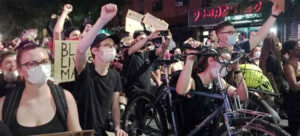
The outrage machine is firing on all cylinders. Protests are mounting over US plans to cap visas and restrict access for specific foreign journalists. Press advocacy groups are hyperventilating in public forums. They claim the sky is falling on the First Amendment. They insist that restricting the movement or credentialing of foreign correspondents is a slide into authoritarianism.
They are entirely missing the point.
The standard narrative demands we treat every individual holding a press badge as a sacred guardian of truth. The prevailing assumption across Western democracies is that a reporter for a state-run apparatus in Beijing or Moscow operates with the exact same editorial independence, ethical framework, and professional intent as a freelancer for an independent paper in London or Tokyo.
This is a fatal miscalculation. It is intellectual cowardice masquerading as moral superiority.
We are watching a systemic failure to differentiate between independent journalism and state-directed information warfare. When the United States attempts to restrict specific foreign state media operatives, it is not attacking the free press. It is defending the information environment against adversarial intelligence agencies that have weaponized our own democratic ideals against us.
The Illusion of Universal Editorial Independence
Let us get our definitions straight. A journalist seeks facts to inform the public, hold power accountable, and uncover hidden truths. An information operative seeks narratives to advance specific state objectives, collect intelligence, and destabilize adversarial institutions.
The failure to separate these two distinct professions is the root of the current protests. Activists and naive media critics look at an employee of Russia’s TASS or China’s Xinhua and see a "colleague." They see someone who attends the same press briefings, carries the same audio recorders, and asks questions in the same briefing rooms.
This surface-level similarity is entirely by design.
Autocratic regimes do not send rogue truth-seekers to Washington or New York. They send highly vetted, state-compensated proxies. These individuals do not answer to an independent editorial board; they answer to state security apparatuses and propaganda ministries. Their output is not dictated by the newsworthiness of an event, but by the strategic directives of their host government.
I have watched administrations tie themselves in knots trying to play fair in a rigged game. I have seen the visa applications cross desks in DC where the stated purpose is "reporting," yet the subsequent behavior is entirely indistinguishable from low-level espionage. They map out sensitive infrastructure, photograph the private residences of political dissidents living in exile, and build detailed profiles on mid-level government staffers.
Calling these individuals "journalists" is an insult to every reporter who has actually risked their life or freedom to publish a dissenting opinion. By demanding universal protection for state proxies under the banner of press freedom, the protesters are actively cheapening the very institution they claim to defend.
Weaponized Credentials and the I-Visa Loophole
The mechanics of how foreign media access the United States are critical to understanding why these restrictions are not just necessary, but long overdue.
Foreign journalists typically enter the US on an I-visa, a nonimmigrant visa category specifically designated for representatives of the foreign media. For decades, the State Department issued these visas with a generous, open-handed philosophy. The working theory was simple: if we allow their reporters to see our open, functioning democracy, they will report the truth back to their home populations.
That theory died the moment the internet age matured. The adversaries realized they could exploit the I-visa process to insert personnel directly into the heart of American political institutions without the heavy scrutiny applied to traditional diplomatic or intelligence visas.
A press pass in Washington D.g. grants extraordinary access. It opens doors to the White House briefing room, the halls of Congress, Pentagon press gaggles, and private political events. When an independent journalist holds that pass, they use that access to question authority. When an operative from a designated foreign mission holds that pass, they use that access to gather intelligence, harass dissidents, and inject state-approved propaganda directly into the American media bloodstream.
Restricting these visas is not a crackdown on speech. It is a necessary administrative correction. The United States is simply refusing to issue VIP access passes to adversarial intelligence networks. If a foreign government wants to send an operative to monitor American politics, they can attempt to do so through traditional, heavily monitored diplomatic channels. They should not be allowed to use the First Amendment as a Trojan horse.
The Sunk Cost of Diplomatic Reciprocity
The loudest critics of these restrictions constantly point to the concept of diplomatic reciprocity. They argue that if the US caps visas for Chinese or Russian journalists, those nations will immediately retaliate by kicking out the few remaining American journalists in Beijing or Moscow.
This argument relies on a glaring historical amnesia. The playing field has never been level.
American journalists operating in autocratic nations are subjected to constant surveillance, physical harassment, and the perpetual threat of arbitrary arrest. Their sources are jailed. Their movements are severely restricted. They are routinely denied access to government officials and are frequently expelled on entirely fabricated charges.
To argue that the US must maintain a totally open door for foreign state operatives just to preserve the "access" of American journalists abroad is to fundamentally misunderstand the current reality. Our journalists already have virtually zero meaningful access in those countries. We are trading the keys to the castle for the privilege of being allowed to stand outside the moat and take notes under armed guard.
The fear of retaliation is a sunk cost. Autocratic regimes will expel American journalists whenever it suits their domestic political needs, regardless of US visa policies. Binding our own national security decisions to the unpredictable whims of dictatorships is a failed strategy. The current policy shift is an acknowledgment that the old rules of diplomatic reciprocity do not apply when one side fundamentally rejects the concept of a free press.
The Foreign Missions Act Was Built For This
The legal framework supporting these restrictions is rarely discussed by the protesters because it entirely dismantles their core argument.
The US government has increasingly relied on the Foreign Missions Act to designate certain foreign media outlets not as news organizations, but as foreign missions. This is a precise, legally binding classification. It means the US government has determined that the entity is "substantially owned or effectively controlled" by a foreign government.
Once designated, these entities must register their properties, declare their personnel rosters, and abide by the same rules as an embassy or consulate. This is exactly how state-directed media should be treated.
Critics attempt to blur the lines by asking, "What about the BBC? What about CBC?" This is a lazy, bad-faith comparison. The BBC and CBC, while publicly funded, operate with strict, verifiable editorial independence from the British and Canadian governments. Their reporters routinely investigate, criticize, and expose the failings of their own ruling parties.
Show me the Xinhua investigation that exposes corruption within the highest ranks of the Chinese Communist Party. Show me the RT broadcast that questions the military competence of the Kremlin. They do not exist, because these organizations are entirely incapable of independent thought. They are branches of the government tree. Treating them under the Foreign Missions Act is not censorship; it is accurate classification.
The "Slippery Slope" Fallacy
We must address the central fear driving the protests: the slippery slope. The argument goes that if we allow the government to restrict specific foreign journalists today, they will eventually use those same powers to silence domestic journalists or friendly foreign correspondents tomorrow.
This is a valid fear rooted in a deep misunderstanding of how policy actually works.
Governance requires drawing hard lines. It requires the maturity to distinguish between an independent critic and a foreign adversary. Refusing to draw that line out of fear that it might one day be moved is a paralyzing, fatalistic approach to national security.
Imagine a scenario where the military refuses to establish restricted access zones around domestic bases because they fear it might eventually lead to martial law. We would call that absurd. Yet, when it comes to the information space, we allow this exact brand of hysterical paralysis to dictate our actions.
The protections afforded to the press under the Constitution are designed to protect the governed from their own government. They are designed to ensure transparency, accountability, and the free exchange of ideas among free people. They were never intended to serve as a suicide pact that forces a nation to harbor adversarial operatives intent on its destruction.
Yes, there is always a risk of bureaucratic overreach. Yes, any administration could theoretically attempt to abuse these restriction powers. That is why we have a judicial system. That is why we have congressional oversight. But you do not abandon a necessary defense mechanism entirely just because it requires careful maintenance.
The True Cost of Inaction
The protesters who march against these restrictions believe they are taking the moral high ground. They believe they are defending the sacred flame of journalism from heavy-handed government intervention.
In reality, they are providing cover for authoritarians.
Every time a Western media advocacy group defends the credentials of a state-sponsored operative, they validate the autocratic model. They signal to adversarial regimes that their strategy of exploiting Western openness is working perfectly. They dilute the definition of journalism, expanding it to include individuals whose sole professional purpose is to obscure the truth and disseminate state-sanctioned lies.
This dilution has profound consequences. When the public sees no structural difference between an investigative reporter and a foreign propaganda mouthpiece, trust in the entire institution of media collapses. If the press refuses to police its own borders, if it insists on throwing its arms around anyone with a microphone and a camera regardless of their actual intent, it will lose whatever credibility it has left.
We are operating in an era of hyper-accelerated information warfare. The battles are no longer fought solely over physical territory; they are fought over narratives, cognitive biases, and the foundational truths that hold societies together. In this theater, a press credential is a high-value asset. It grants proximity to power and the presumption of legitimacy.
Allowing hostile foreign governments to issue themselves these assets without restriction is not a victory for free speech. It is an unmitigated operational failure.
The policy to restrict visas and cap access for designated state media operatives is a rare example of the government actually waking up to the reality of the threat. It is a necessary pruning of the credentialing system. It forces adversaries to operate without the camouflage of journalistic integrity.
It is time to discard the naive assumption that everyone who calls themselves a journalist actually is one. The true defense of press freedom requires the courage to exclude those who exist solely to destroy it.
Stop treating the wolves like sheep just because they figured out how to forge a press badge. Revoke the credentials. Close the door. Let them complain.