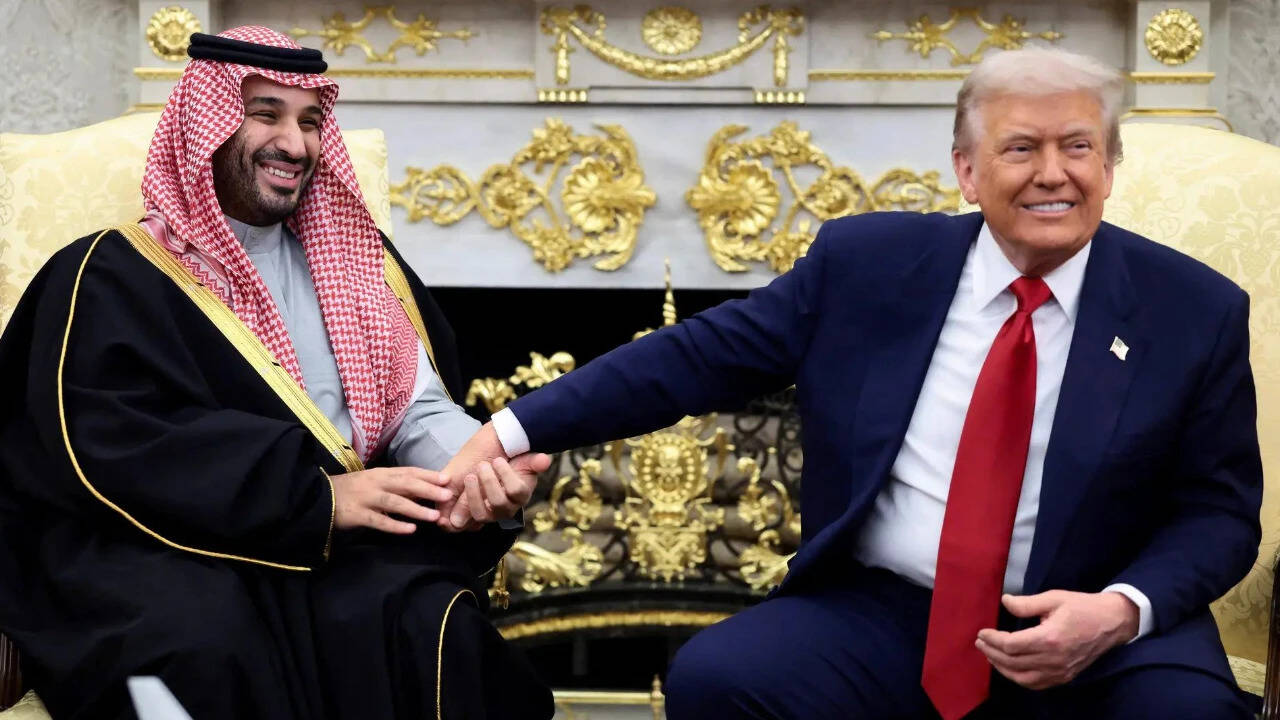
The foreign policy establishment is currently having a collective meltdown over Donald Trump’s approval of a 30-year Section 123 civil nuclear cooperation agreement with Saudi Arabia.
Turn on any cable news channel or scan the think-tank dispatches, and you will hear the exact same lazy consensus: Washington has abandoned the non-proliferation gold standard. Allowing Riyadh a potential pathway to enrich uranium on its own soil is an unforced error that will trigger a regional arms race.
It is a comfortable narrative. It is clean, morally superior, and completely out of touch with geopolitical realities.
I have spent years watching Western diplomats make the same arrogant mistake in foreign policy negotiations: assuming American prohibitions carry the force of physical law. The critics wringing their hands over the collapse of the 2009 UAE-style "gold standard"—where Abu Dhabi pledged to never enrich fuel domestically—are mourning a policy ghost that died years ago.
Riyadh was never going to sign a deal that stripped its sovereign right to process fuel. The choice in Washington was never between a nuclear-free Saudi Arabia and an enriched Saudi Arabia. The real choice was between an American-built, American-monitored nuclear architecture in the Gulf, or a Russian and Chinese one.
Washington did not surrender. It executed a cold-blooded strategic maneuver that anchors Gulf security to the American defense-industrial base for the next three decades.
The "Gold Standard" Is a Nostalgic Policy Ghost
Every pundit crying foul over the Saudi deal keeps invoking the 2009 U.S.-UAE 123 Agreement as the holy grail of foreign policy. Under that agreement, Abu Dhabi renounced domestic enrichment and spent fuel reprocessing. It was hailed as the benchmark for clean energy expansion without security risks.
That was 2009. The world changed.
Thinking Crown Prince Mohammed bin Salman would accept the UAE model in 2026 ignores every single thing Riyadh has done over the last decade. Saudi Arabia sits on an estimated 90,000 tons of uranium ore reserves. Riyadh views nuclear fuel development not just as a power grid supplement, but as an essential hedge against domestic oil depletion and regional security threats.
When the State Department tried to force the "gold standard" on Riyadh during earlier rounds of talks, the Saudis did not back down. They simply picked up the phone and invited China National Nuclear Corporation (CNNC) and Russia's Rosatom to survey sites in the Eastern Province.
China does not demand non-proliferation pledges. Russia does not require IAEA Additional Protocol sign-offs as a prerequisite for building reactors.
Demanding that Riyadh accept zero enrichment capability was a policy guaranteed to produce one result: foreign state-owned energy companies building reactors right along the Persian Gulf, completely dark to Western intelligence.
Beijing and Moscow Were Already Measuring the Soil
Consider what happens when Washington insists on ideological purity in civil nuclear exports.
Look at what happened across Africa and South America over the last twenty years. While the U.S. dragged its feet with endless regulatory reviews, non-proliferation litigation, and moralizing demands, Rosatom locked down contracts for over 30 reactors worldwide. Moscow built the supply chains, trained the nuclear engineers, and controlled the fuel cycles.
Had the Trump administration walked away over domestic enrichment, CNNC would have stepped in with easy financing.
Imagine a scenario where China builds Saudi Arabia's nuclear reactors:
- Beijing secures a 50-year operational footprint in the heart of the Middle East.
- Chinese technicians staff the facilities.
- Chinese hardware forms the backbone of the Saudi grid.
- American intelligence loses all structural visibility into the kingdom's atomic infrastructure.
Instead, the newly approved 123 Agreement steers the kingdom directly toward American legacy nuclear firms like Westinghouse and its AP1000 light-water reactors.
It commits Riyadh to tens of billions of dollars in U.S. technology, components, and long-term service contracts. More importantly, it embeds American personnel directly inside the infrastructure. You do not build a covert weapons program inside a system engineered, maintained, and operated alongside American nuclear contractors.
Why a Black Box Beats a Paper Ban Every Single Time
The loudest criticism of the deal centers on the proposed joint two-year feasibility study for domestic uranium enrichment. Media coverage treats this provision as an open invitation for Riyadh to spin gas centrifuges at weapons-grade levels.
They are missing the core technical nuance of how this framework is constructed.
Under the provisions negotiated by Energy Secretary Chris Wright, any potential enrichment facility built on Saudi soil would not be an uncontrolled Saudi enterprise. It is designed around a "black box" operational model.
What does a black box nuclear facility actually mean in practice?
- Ownership without Operational Access: Saudi Arabia funds the civil infrastructure, but U.S. companies and personnel hold sole operational command over the centrifuges.
- Proprietary Enclosure: The enrichment technology itself is physically restricted. Saudi engineers do not get access to the internal mechanics, software, or cascade designs.
- Low-Enriched Uranium (LEU) Caps: Enrichment levels are hard-capped at commercial fuel grade (3% to 5% U-235). Weapons-grade material requires highly enriched uranium (HEU) above 90%.
- Bilateral Interlocks: The physical fuel supply and technology access are linked directly to Washington. If Riyadh violates the terms, the facility is rendered completely non-functional overnight.
Compare a U.S.-run black box enrichment plant to the alternative: an independent, indigenous Saudi enrichment effort developed out of sight using third-party equipment.
Paper bans do not stop determined states from enriching uranium. Physical operational control by American personnel stops them.
The Pakistan Hedge Nobody Wants to Talk About
To understand why Washington had to make this deal now, you have to look at what was happening behind closed doors between Riyadh and Islamabad.
For decades, the worst-kept secret in regional intelligence was the implicit nuclear agreement between Saudi Arabia and Pakistan. Saudi oil money backed Pakistan's early nuclear weapons development. In return, Islamabad maintained an unwritten promise: if Saudi Arabia ever faced an existential threat, Pakistan’s strategic assets would act as a shield.
That quiet understanding recently burst into the open. Riyadh and Islamabad signed a mutual defense pact. Senior Pakistani officials explicitly stated that their nuclear deterrent would be made available to Saudi Arabia if regional security disintegrated.
That was the nightmare scenario for Washington: an unmonitored nuclear bridge between Pakistan and Saudi Arabia, completely outside the framework of global non-proliferation oversight.
By offering Riyadh a legitimate, commercial nuclear energy pathway under U.S. oversight, Washington effectively cut the ground out from under that covert Pakistan channel. It gives Saudi Arabia a transparent civil energy ecosystem, removing the justification for reliance on foreign military nuclear hedges.
The Hard Realities Washington Must Accept
Taking a contrarian position does not mean ignoring the genuine risks involved in this arrangement. This strategy carries real tactical friction that Washington will have to manage carefully.
1. Congressional Pushback and Bipartisan Friction
The administration must submit this 123 Agreement to Congress. Lawmakers on both sides of the aisle are already preparing to challenge the national security waiver that bypasses standard inspection protocols. Overriding a Congressional veto will consume political capital that Washington needs elsewhere.
2. The Israeli Security Calculus
Jerusalem views any enrichment capability in the Arab world with extreme suspicion, regardless of who operates the centrifuges. Israeli leaders worry that political shifts in Washington or Riyadh over a 30-year span could leave a operational enrichment plant in host nation hands. Managing Israel’s strategic qualitative military edge while building this civil framework will require delicate diplomacy.
3. Regulatory and Enforcement Creep
Maintaining a "black box" facility over three decades requires total operational discipline. If political relations between Washington and Riyadh sour in fifteen years, managing a sensitive technical facility on foreign territory creates an immediate point of friction.
The Myth of the Non-Proliferation Double Standard
Critics love to point out the glaring contrast: Washington demands "zero enrichment" for Iran while creating a structured enrichment pathway for Saudi Arabia. They call it a hypocritical double standard that ruins American credibility.
That argument fails because it treats a non-compliant rogue actor and a strategic partner as if they occupy the same legal and political standing.
Tehran spent decades operating clandestine enrichment sites at Natanz and Fordow, concealing centrifuge development from IAEA inspectors, and enriching uranium up to 60% purity—a hair’s breadth from military grade. Tehran earned its sanctions and non-enrichment demands through decades of deliberate treaty violations.
Saudi Arabia, by contrast, is integrating its energy program into the Western security umbrella from day one. It is inviting U.S. firms to design, build, and run the physical assets.
Treating a partner who invites American operational control the exact same as an adversary who builds underground enrichment bunkers is not sound foreign policy. It is geopolitical blindness.
Stop Fighting Yesterday's Foreign Policy Battles
The debate over the U.S.-Saudi nuclear agreement exposes the massive gap between theoretical non-proliferation idealism and real-world execution.
The critics wanted a fairy-tale outcome: Saudi Arabia spending hundreds of billions of dollars on American solar panels while quietly agreeing to never touch advanced nuclear tech, all while Iran spins centrifuges across the Gulf.
That world does not exist.
In the real world, states with vast capital and deep security fears will get the energy and deterrence capabilities they want. The only question for Washington is whether those capabilities are powered by American technology and managed by American companies, or built by geopolitical rivals.
Donald Trump did not open a dangerous door to the Middle East. He walked into an open room, evicted Russia and China, and put an American lock on the door.
Stop evaluating 2026 security realities with a 2009 playbook. The deal is signed, the commercial market has shifted, and Washington just secured its foreign policy presence in the Gulf for the next thirty years.


