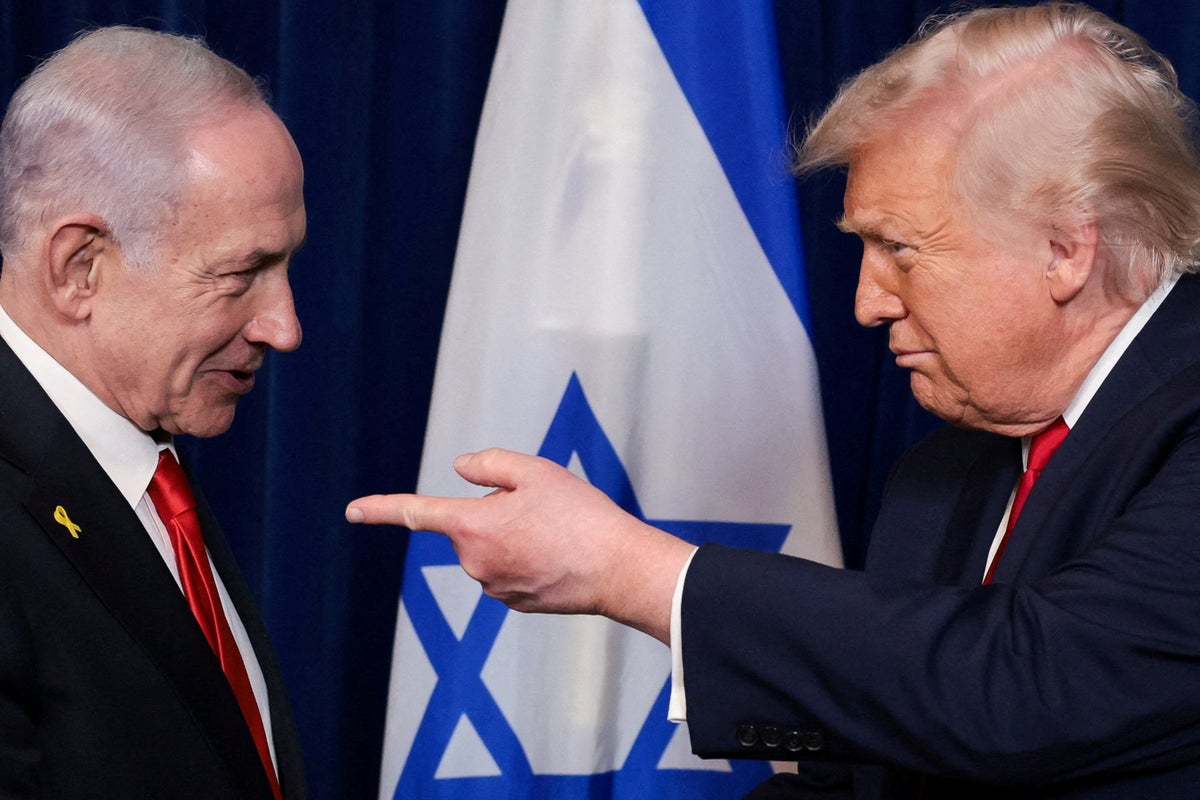
The corporate media is predictable. They hear a rumor about a phone call full of four-letter words and immediately draw the same superficial conclusion: Donald Trump is furious with Benjamin Netanyahu because Israel is acting like it is in charge, sabotaging Washington’s grand plans for regional peace.
Every mainstream foreign policy desk is pushing this exact script. They paint a picture of a rogue Israeli prime minister defying a frustrated American president, creating an irreparable fracture in the historic alliance.
It is a comforting narrative for pundits who view geopolitics as a high school drama. It is also entirely incorrect.
I have spent decades watching these two political survivalists trade blows, sign treaties, and leak controlled fury to the press. If you think Monday's expletive-laden phone call regarding operations against Hezbollah in Beirut signifies a fundamental breakdown of American leverage or an out-of-control Israel, you are misreading the entire board.
Trump is not angry because Israel is in charge. He is angry because the theater of war is threatening the theater of his ultimate deal. What the mainstream press labels a toxic breakdown is actually a highly calculated, transactional negotiation between two leaders who understand power better than any of their critics.
The Myth of the Imperial Client State
The core fallacy of the competitor's argument rests on a lazy assumption: that the United States treats Israel as a simple client state that must always ask permission before pulling a trigger.
When Axios reported that Trump yelled at Netanyahu, calling his military maneuvers "crazy" and accusing him of risking regional escalation with Iran, the chattering class gasped. They viewed it as proof that the tail was wagging the dog.
Let us fix the nomenclature immediately. Geopolitics is not a chain of command; it is a marketplace of leverage.
Israel does not operate on a leash, and Washington does not hold a remote control. Netanyahu’s decision to push into southern Lebanon or to threaten strikes in Beirut isn't an act of defiance against a superior officer. It is a sovereign nation executing a doctrine of strategic deterrence based on its own immediate security calculations.
Consider the raw mechanics of the relationship. The upcoming 2027 National Defense Authorization Act includes Section 224, the United States-Israel Defense Technology Cooperation Initiative. This provision moves the alliance beyond simple military aid and into deep institutional integration between the two nations' defense industries.
Does that look like a relationship on the verge of collapse? Of course not. It looks like a permanent structural alignment. The loud arguments at the top are merely renegotiations of the premium on that insurance policy.
The Real Source of Trump's Friction
To understand the friction, you have to look at what Trump actually values: the deal.
Trump is currently balancing an incredibly delicate diplomatic tightrope. Washington is actively negotiating a massive, comprehensive memorandum with Iran to de-escalate the broader Middle East. Tehran has explicitly conditioned this deal on a truce in Lebanon.
Every time Netanyahu orders an airstrike on a target in Beirut's Dahiyeh district, he is not just hitting a missile silo; he is altering the price of Trump’s Iranian negotiation.
Imagine a scenario where a real estate developer is trying to buy an entire block of buildings, and one of his partners keeps throwing bricks through the windows of the holdout tenant. The developer isn't mad because the partner is "in charge." He is mad because the partner is messing up the closing costs.
Trump’s anger is completely transactional. It is the fury of a CEO whose chief regional contractor is blowing up the project timeline for a local dispute. When Trump took to Truth Social to announce a unilateral halt to the fighting, claiming he "turned the troops around," he was attempting to force reality to match his preferred narrative. Netanyahu’s immediate, public pushback in Hebrew was simply a counter-offer.
This is not a constitutional crisis between nations. It is a public price discovery mechanism between two alpha negotiators.
Dismantling the Pundit Premise
The standard "People Also Ask" circuit is filled with fundamentally flawed questions that deserve a brutal correction:
Does Trump's anger mean the US will cut off military aid to Israel?
No. To believe this is to misunderstand how the American defense apparatus functions. US aid to Israel is not a reward for good behavior. It is a massive subsidy for the American defense sector, which manufactures the hardware, and a vital node in US regional intelligence gathering. No administration is going to dismantle a decades-long security architecture over a tense phone call.
Is Netanyahu intentionally trying to sabotage Trump’s foreign policy?
Netanyahu’s sole priority is his own political survival and domestic security posture. He isn't thinking about Washington’s diplomatic calendar; he is thinking about his upcoming elections and the security of northern Israel. He will push the line right up to the breaking point because he knows the fundamental architecture of US support cannot be withdrawn without catastrophic consequences for American interests in the region.
The Risk Nobody Wants to Admit
To be absolutely fair, this contrarian reality carries a massive downside that the hawks like to ignore.
When the US and Israel engage in this public game of chicken, it creates a dangerous predictability vacuum. Iran and its proxies are watching this theater. If they miscalculate and believe that Trump’s anger means a genuine American abandonment of Israel, they might execute a catastrophic strategic gamble that forces a much larger, unavoidable Western military intervention.
The theater of a fractured alliance is a dangerous game. It creates short-term leverage for both Trump and Netanyahu domestically, but it risks inviting the exact regional conflagration that both leaders claim they want to avoid.
Stop reading the breathless headlines about shouting matches and broken friendships. The shouting is the point. Trump uses public pressure to force concessions; Netanyahu uses military facts on the ground to establish his baseline.
The competitor's piece wants you to believe that the alliance is broken because Israel refuses to follow orders. The truth is far more cynical: the alliance is working exactly as intended, fueled by mutual dependency, public posturing, and a shared understanding that in the brutal arena of international relations, noise is cheap, but the structural alignment remains untouchable.