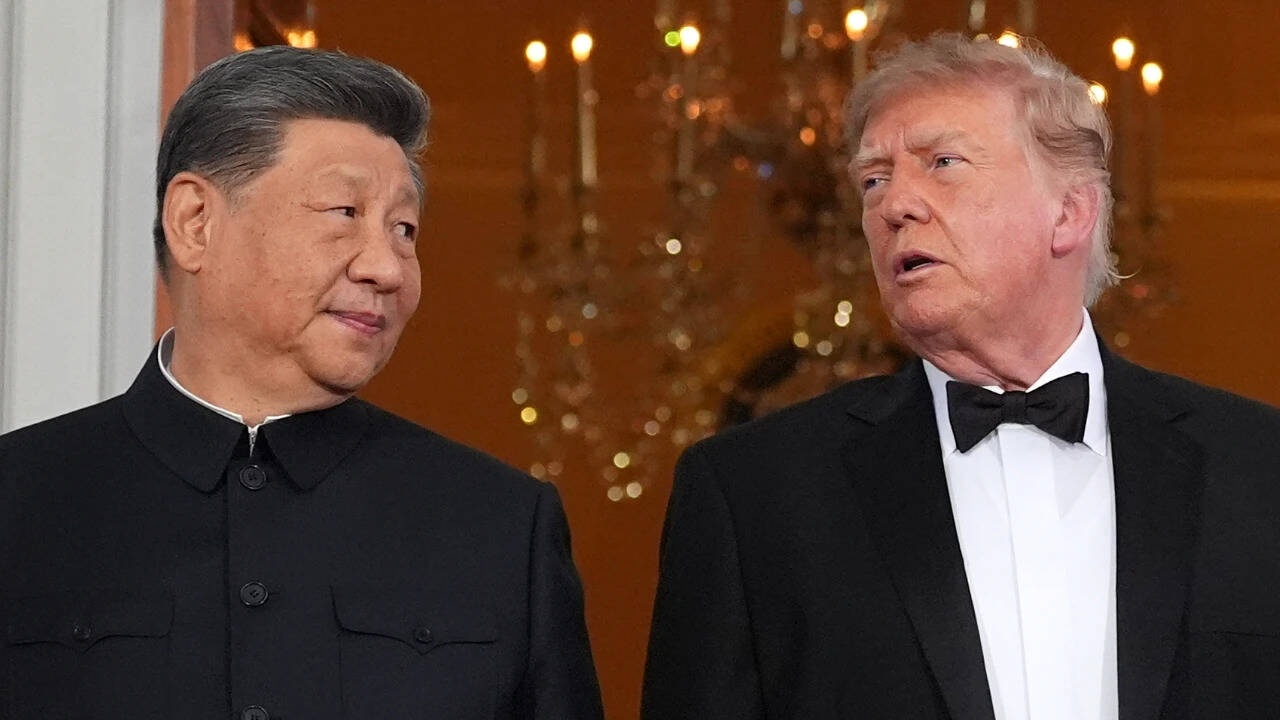
The foreign policy commentariat is losing its collective mind once again. Every time a microphone is thrust near Donald Trump and he speaks about cross-strait relations, cable news networks erupt into collective pearl-clutching. Pundits who have never negotiated a commercial lease, let alone managed a superpower standoff, rush to declare that a diplomatic apocalypse is nigh. They listen to a soundbite where Trump notes that Chinese leadership understands his mindset, and they immediately translate it into a surrender note for Taipei.
It is a remarkably shallow reading of geopolitical reality.
The lazy consensus in Washington and European capitals rests on a comforting fairy tale. This narrative claims that post-World War Two international order was built entirely on shared democratic values, solemn treaty commitments, and moral clarity. According to this view, any leader who treats national security like a commercial ledger is dismantling the ramparts of civilization.
This view is dangerously naive. It mistakes the decorative wallpaper of diplomacy for the structural steel holding the building up.
When Trump claims that Taiwan is not a major point of friction or that Beijing understands his psychology, he is not signaling an abandonment of East Asian stability. He is doing something far more disruptive. He is stripping away decades of diplomatic double-speak and replacing it with raw transactional calculation. To understand why his approach terrifies the establishment, you have to look past the cable news chyron and examine the brutal economic machinery actually driving modern statecraft.
The Myth of the Moral Crusade
For decades, the Washington foreign policy establishment operated under the doctrine of strategic ambiguity. The text was deliberately vague, designed to keep both Beijing and Taipei guessing. Washington would arm Taiwan to the teeth while maintaining diplomatic ties with Beijing, reciting formulaic declarations of one-China adherence while secretly assuring Taiwanese leaders that Uncle Sam would come running if the cannons started firing.
This system worked for a bipolar world or a unipolar American moment. In a multipolar age defined by economic interdependence and peer competition, it is a recipe for catastrophic miscalculation. Ambiguity invites aggressive probing. When Beijing sees a predictable bureaucracy bound by procedural norms and moralistic rhetoric, they calculate risk through a bureaucratic lens. They measure how many committee hearings a crisis would trigger versus how many months of diplomatic protest would follow.
Trump operates outside that bureaucratic matrix. His worldview rejects the idea that nations fight wars over ideological purity. He views great power competition through a balance sheet of costs, benefits, and personal relationships with other strongmen.
When he remarks that Xi Jinping understands him, he is describing a shared language of power. Both men understand that sovereign states do not launch amphibious invasions of heavily fortified islands simply to fulfill historical poetry. They move when the perceived gains outweigh the catastrophic costs, or when they believe an opponent is too weak or distracted to extract a price.
By removing the predictable moral posturing of traditional presidencies, Trump introduces a wild card into Beijing’s strategic models. Autocrats thrive on predictable democracies. They model their aggression around election cycles, congressional pushback, and coalition management. A transactional leader who views alliances through an economic lens scrambles those models entirely.
The Silicon Shield is Real, But It Cuts Both Ways
You cannot discuss Taiwan without addressing the physical reality that keeps global markets functioning: the semiconductor monopoly centered in Hsinchu.
Taiwan Semiconductor Manufacturing Company produces over ninety percent of the world’s most advanced microchips. Every smartphone, fighter jet, data center, and guided missile system on earth relies on the silicon pouring out of Taiwanese foundries. This is the ultimate strategic deterrent, often called the Silicon Shield. The conventional wisdom states that because the world depends on Taiwanese chips, the United States is morally and physically obligated to defend the island at any cost.
Here is where the establishment's analysis completely collapses. They treat the Silicon Shield as a permanent insurance policy paid for by American goodwill.
It is not. It is a ticking economic time bomb.
American policymakers across multiple administrations realized that depending entirely on an island ninety miles off the coast of an adversarial superpower for the backbone of modern technology is national suicide. That realization birthed industrial policy legislation aimed at dragging semiconductor manufacturing back onto American soil. Billions of dollars are flowing into fabrication plants in Arizona, Ohio, and Texas.
From a purely transactional standpoint, this changes the calculation of American intervention. If the primary vulnerability of American supply chains is the concentration of advanced manufacturing in a single seismic zone vulnerable to blockade, then the rational strategy is dual-track: build domestic capacity while forcing allies to pay their own way for security.
When Trump questions whether America should automatically defend Taiwan without extracting proper compensation or trade concessions, he is applying capitalist logic to national security. He is telling Taipei that insurance isn't free. In the eyes of career diplomats, this is heresy. In the eyes of a real estate developer who understands leverage, it is basic risk management.
The Transactional Superpower
Critics love to paint this transactional stance as isolationist weakness. They claim that walking away from traditional security guarantees invites immediate aggression.
History suggests the exact opposite. Weakness invites aggression; unpredictability deters it.
Consider the alternative. A traditional administration issues sternly worded warnings, deploys an aircraft carrier group to the Taiwan Strait on a scheduled rotation, and delivers predictable speeches about rules-based international orders. Beijing watches this routine play out like a rerun of a bad television show. They calculate the logistical costs, absorb the rhetorical blows, and continue building their naval fleet.
Now, imagine the transactional alternative. A leader sits across the table from Xi Jinping and makes it explicitly clear that any kinetic action against Taiwan will result in immediate, catastrophic economic devastation directed personally at the ruling elite in Beijing. Not through abstract sanctions that take years to negotiate, but through immediate trade embargoes, financial asset freezes, and targeted technological blockades that threaten the domestic legitimacy of the Chinese Communist Party.
This is what Trump means when he talks about understanding and being understood by Xi. It is not about personal affection. It is about a mutual recognition of leverage. Dictators do not care about the United Nations charter. They care about regime survival. When you frame security not as a charitable defense of democracy, but as a hard-headed commercial contract with severe default penalties, the incentive structure shifts.
The Terrifying Flaw in the Machinery
To maintain intellectual honesty, we must confront the dangerous downside of this approach. Transactional diplomacy has a fatal flaw: it relies entirely on the personal credibility and psychological calibration of the negotiator.
Traditional alliances are institutional. A treaty survives changes in administration because it is backed by laws, bureaucracies, and bipartisan consensus. Even if a president is erratic, allies trust the system.
When you replace institutional architecture with personal transactions, the system becomes fragile. If foreign leaders believe American commitments can be bought, sold, or abandoned based on the outcome of a trade negotiation or a personal grievance, deterrence becomes volatile. If Beijing ever calculates that a transactional president is distracted, financially entangled, or simply uninterested in defending an island that no longer holds a monopoly on chip production, the deterrent fails catastrophically.
This is the real risk of Trump’s rhetoric. It is not that he is secretly working for Beijing. It is that by treating global alliances as optional commercial arrangements, he trains adversaries to look for the exit price. If the price drops low enough, they will test the theory.
Dismantling the Noise
So why does the media focus endlessly on whether Taiwan is a major point of friction? Because nuance does not generate advertising revenue.
The media needs a simple morality play: heroes defending democracy against cartoonish villains, with a chaotic populist threatening to ruin the script. That framing allows pundits to ignore the messy, uncomfortable reality of modern geopolitics.
The reality is that Taiwan's security is not guaranteed by American goodwill, nor is it doomed by blunt rhetorical flourishes. It is secured by a delicate, shifting matrix of semiconductor dominance, military geography, economic interdependence, and the cold calculations of men who measure power in market share and missile counts.
When Trump speaks about Taiwan, he is refusing to play the hypocritical game of the foreign policy establishment. He is not pretending that America bleeds purely for abstract democratic ideals. He is treating security as a scarce, valuable commodity that requires proper compensation and hard-headed realism.
Stop panicking over the soundbites. Start looking at the balance sheet. The future of the Pacific will not be decided by what politicians say on a debate stage or whisper in diplomatic salons. It will be decided by who controls the technology, who pays the bills, and who blinks first when the ledger is balanced.