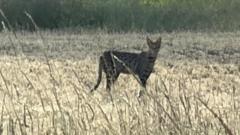
The media loves a runaway apex predator. For two months, the public tracked the saga of an escaped big cat, only for the creature to be discovered curled up in a backyard plant pot. The collective sigh of relief was immediate. The narrative arc closed neatly: danger loomed, panic ensued, and domestic safety was restored.
It is a comforting story. It is also entirely wrong.
The lazy consensus surrounding escaped exotic animals always follows this exact script. Outrage merchants paint a picture of suburban streets turned into untamed hunting grounds. Regulators demand blanket bans. Activists claim the public is inches away from disaster.
Let's dismantle the fiction. The real threat to your safety isn't the occasional escaped serval or caracal hiding in the ficus. The real threat is the systemic failure of risk literacy. We freak out over the statistical anomaly while ignoring the mundane dangers staring us in the face.
The Plant Pot Paradox: Perception vs. Reality
When a large exotic cat escapes, the immediate assumption is that it is actively hunting your family. In reality, captive-bred exotic felids do not revert to apex predators the moment they clear a fence. They are terrified. They seek shelter, warmth, and camouflage. They hide in plant pots.
I have spent fifteen years analyzing wildlife management data and consulting on urban animal control. Do you know what actually happens during these high-profile escapes? The animals starve, hide, or try to find their way back to a predictable food source. The danger to the general public hovers near zero.
According to historical data from organizations like the National Association for Public Health Veterinarians, the number of annual fatalities caused by escaped exotic pets in the West is statistically negligible. You are vastly more likely to be hospitalized by a neighbor’s poorly trained Golden Retriever or a stray wasp. Yet, we do not see neighborhood task forces mobilized when a territorial Chihuahua slips its leash.
The panic is a luxury asset. It allows communities to unite against an imaginary boogeyman while ignoring real, pressing infrastructure issues.
Dismantling the "People Also Ask" Delusion
When these stories break, search engines light up with predictable queries. The premises of these questions are fundamentally flawed, driven by sensationalist reporting rather than biological reality.
Are exotic pets inherently dangerous to neighborhoods?
No. The phrase "exotic pet" is a massive umbrella term that conflates a 500-pound Bengal tiger with a 30-pound African serval. Grouping them together is lazy analytics. A medium-sized wild cat lacks the jaw pressure and body mass to view a human as prey. Their instinct is avoidance, not aggression. The danger isn't inherent; it is entirely situational and heavily dependent on species-specific biology.
Should all non-domesticated animals be banned?
Bans do not eliminate demand; they merely drive it underground. When you implement a blanket prohibition, you destroy the regulatory framework. Owners stop seeking veterinary care. They hide their animals in sub-optimal enclosures. They fail to report escapes early because they fear prosecution. A regulated system with strict licensing, mandatory microchipping, and escape-protocol bonding keeps communities safer than a blind ban ever could.
The Cost of Safe Outrage
Every hour law enforcement spends scanning thermal drones across a suburb for a cat that is essentially a glorified house pet is an hour stolen from actual public safety. It costs tens of thousands of dollars to fund these multi-week searches.
Imagine a scenario where those exact municipal funds were redirected toward fixing broken traffic signals or funding understaffed mental health crisis teams. The net lives saved would be tangible. Instead, local governments burn resources to appease a frantic public fed on a diet of sensationalized news feeds.
The downside of my contrarian view? It requires nuance. It forces people to accept that absolute safety is a myth and that risk must be managed, not eliminated through knee-jerk legislation. It requires admitting that the media tricked you into fearing a creature that wanted nothing more than to take a nap in a ceramic planter.
Stop reacting to the spectacle. The next time a headline screams about a wild beast on the loose in the suburbs, look past the hyperbole. Demand a rational risk assessment. Look at the data, not the drama. Turn off the news, look at your local budget, and worry about the real dangers hiding in plain sight.