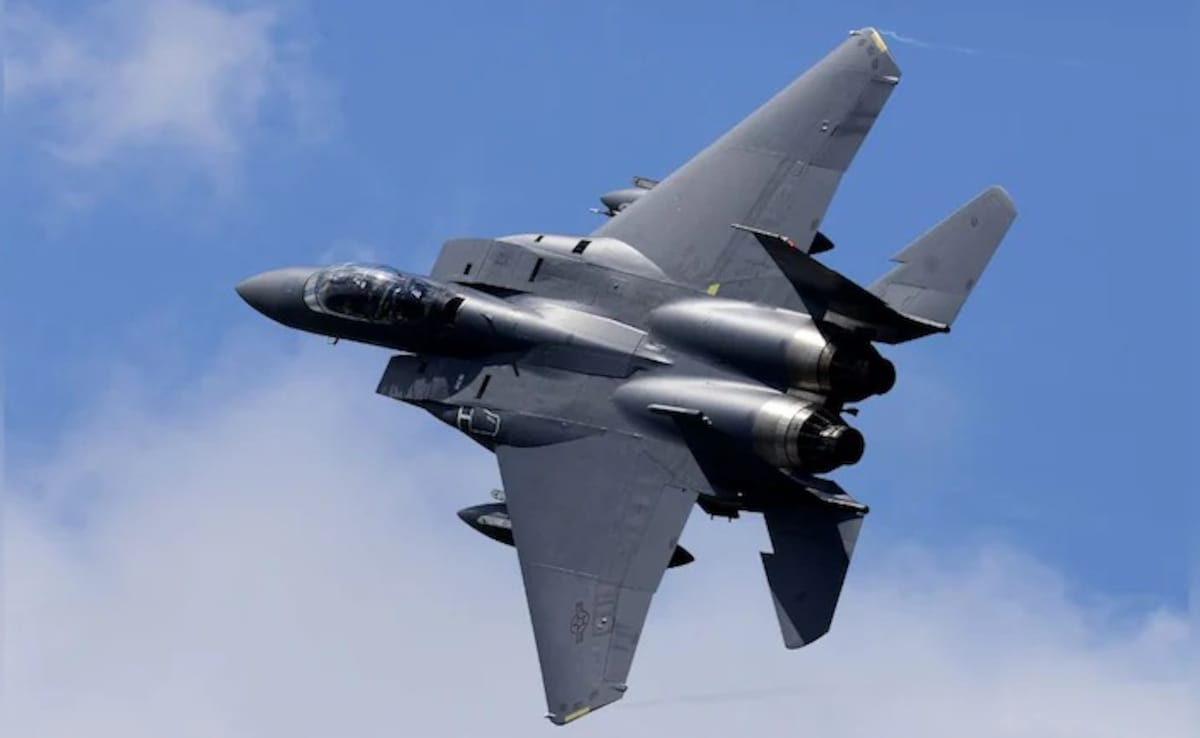
The headlines are bleeding panic. Mainstream defense analysis is throwing a collective tantrum over a recent report alleging that the United States lost 42 aircraft—including F-15s, F-35s, and MQ-9 Reaper drones—in a hypothetical or projected conflict scenario involving Iran. The talking heads look at that number and see a disaster. They call it a failure of American air supremacy. They question the billions invested in fifth-generation stealth hardware.
They are missing the entire point of modern attrition mechanics.
Losing 42 aircraft in a high-intensity, contested peer-level or near-peer theater is not a sign of failure. It is evidence of a system operating exactly under the brutal math of modern warfare. The lazy consensus in military journalism assumes that western air forces should operate with the immaculate, zero-loss impunity enjoyed during the 1991 Gulf War or over the skies of Belgrade. That era is dead. If you are preparing for a conflict against an adversary equipped with sophisticated, multi-layered integrated air defense systems (IADS) and you expect zero losses, you are not planning a war; you are writing fan fiction.
Let us dismantle the panic and look at the cold reality of hardware, strategy, and what those 42 lost airframes actually mean.
The Flawed Premise of Zero-Loss Warfare
The obsession with pristine airframes is a luxury born of fighting asymmetric insurgencies for two decades. When the biggest threat to an aircraft is a shoulder-fired man-portable air defense system (MANPADS) or AAA from the 1970s, keeping every jet pristine is achievable.
Against an adversary possessing deep inventories of radar-guided surface-to-air missiles (SAMs) like the S-300 series, domestic variants like the Bavar-373, and electronic warfare suites designed to jam GPS and radar return signatures, air superiority is not bought once at the start of the campaign. It is leased hourly. And the rent is paid in aluminum, titanium, and carbon fiber.
When a report states that F-15s or F-35s were lost, the immediate, uneducated reaction is to assume the platform failed. This ignores the basic doctrine of Suppression of Enemy Air Defenses (SEAD) and Destruction of Enemy Air Defenses (DEAD). To dismantle a dense SAM network, you must force the enemy to turn on their radars. You must saturate their tracking systems. You must draw fire.
The MQ-9 Reaper is Built to Die
Look at the breakdown of the alleged 42 aircraft. A significant portion of any realistic projected losses in this theater consists of unmanned aerial vehicles like the MQ-9 Reaper.
Grouping an MQ-9 Reaper in the same breath as an F-35 Lightning II to generate a shocking headline is journalistic malpractice. The Reaper is a non-stealthy, slow-moving turboprop drone. It was designed for long-endurance loitering in permissive environments. In a high-end fight against a nation with a serious air defense network, the Reaper is essentially a high-tech decoy or a sacrificial sensor node.
If the US military loses two dozen drones while locating and neutralizing the mobile radar units of an enemy IADS, that is an overwhelming tactical victory. The hardware did exactly what it was bought to do: it substituted capital for human life. The dollar cost of a Reaper is a rounding error in a Pentagon budget, and its pilot is sitting safely in a trailer in Nevada, ready to log into another airframe five minutes later. Calling a drone loss a "defeat" betrays a fundamental ignorance of how unmanned systems are integrated into modern force structures.
The Brutal Math of Fifth-Generation Attrition
Now let us address the stealth platforms. The F-35 is often criticized as an overpriced project that should be invincible because of its price tag. This is a misunderstanding of what low-observability technology actually achieves.
Stealth is not an invisibility cloak. It is a time-and-space compressor.
$$R_{detect} \propto \sqrt[4]{RCS}$$
The fundamental radar equation dictates that the detection range ($R_{detect}$) of a radar system is proportional to the fourth root of the aircraft's Radar Cross Section ($RCS$). A fifth-generation fighter reduces its RCS drastically, which means an enemy SAM system cannot track or lock onto it until the aircraft is much closer to the radar site.
This reduced detection envelope allows the F-35 to get inside the enemy's defensive perimeter to launch precision-guided munitions like the AGM-88G Advanced Anti-Radiation Guided Missile (AARGM-ER) or Small Diameter Bombs (SDB). However, "reduced envelope" does not mean "zero risk."
Imagine a scenario where an F-35 squadron enters a highly congested airspace. They are dodging mobile systems that are popping up unexpectedly, utilizing passive infrared tracking, and firing salvos of interceptors. Some of those interceptors will find their mark through sheer volume of fire or lucky tracking handoffs.
If the United States loses a handful of F-35s but succeeds in completely blinding the strategic radar networks protecting an adversary's command centers and retaliatory strike capabilities, the exchange ratio is heavily tilted in America's favor. The loss of the airframes is the price of admission to the inner tier of the battlespace.
Why the F-15 is Still on the Front Line (And Taking the Hits)
The report highlights losses among F-15s—likely the F-15E Strike Eagle or the newer F-15EX Eagle II. Critics ask: why are we losing fourth-generation fighters when we have spent billions on stealth?
Because war is an ecosystem, not a duel.
The F-35 and F-22 act as the quarterbacks. They sneak in, map the battlespace, jam communication nodes, and pick off high-value targets. But they have limited internal weapon bays to maintain their stealth profiles. They cannot carry the massive payload required to sustain a prolonged bombardment.
Enter the F-15. These non-stealthy workhorses act as missile trucks, flying behind the stealth vanguard, loaded to the teeth with external ordnance. They fire at targets painted by the advanced sensors of the F-35s.
Because they lack low-observable characteristics, they are visible on long-range search radars. They are the primary targets for long-range enemy interceptors and heavy SAMs. They take the hits so the stealth assets can keep hunting. Losing F-15s in a heavy slugfest is predictable because they are explicitly deployed to do the heavy lifting in high-threat zones once the initial door has been kicked open by fifth-generation assets.
The Logistics of Replacement Versus the Economics of Denial
The true metric of success in a near-peer conflict is not zero losses; it is the sustainability of the attrition rate.
Critics point to the loss of 42 aircraft as an unsustainable blow to American prestige. Let us look at the actual numbers of the industrial base. The United States and its partners have built over 1,000 F-35s. The industrial machinery behind western aerospace, while currently struggling with peacetime supply chain bottlenecks, possesses a depth and a technological lead that no regional power can match in a protracted scenario.
Conversely, when an integrated air defense network loses its major strategic components—its long-range early warning radars, its central command bunkers, its production facilities for surface-to-air missiles—they cannot be replaced. A regional power operating under sanctions or tight industrial constraints cannot simply order more high-end radar chips or solid-fuel rocket motors.
When the US loses 42 aircraft, it hurts the ledger. When an adversary loses its integrated air defense network, they lose the war. The infrastructure of denial is completely shattered, leaving the entire state vulnerable to conventional strategic bombardment.
Stop Demanding Flawless Victory
The coverage of this report highlights a dangerous cultural shift in how civilian observers view military conflict. We have become soft. We have been conditioned by operations against poorly armed adversaries to believe that American technology should guarantee bloodless victory.
It does not. War against a nation with a mature military doctrine and modern equipment is a chaotic, destructive exercise in industrial meat-grinding. It is a sequence of calculated sacrifices.
If a conflict occurs, planes will fall from the sky. Pilots will eject. Drones will be blasted into scrap metal. This is not proof that the equipment is flawed or that the strategy has failed. It is simply the cost of doing business in the most hostile environments on earth.
The real takeaway from a report detailing 42 lost aircraft is that the US military is planning for a real war, not a theoretical exercise where the opponent refuses to shoot back. They are factoring in the price of victory. It is time for the armchair generals to do the same.